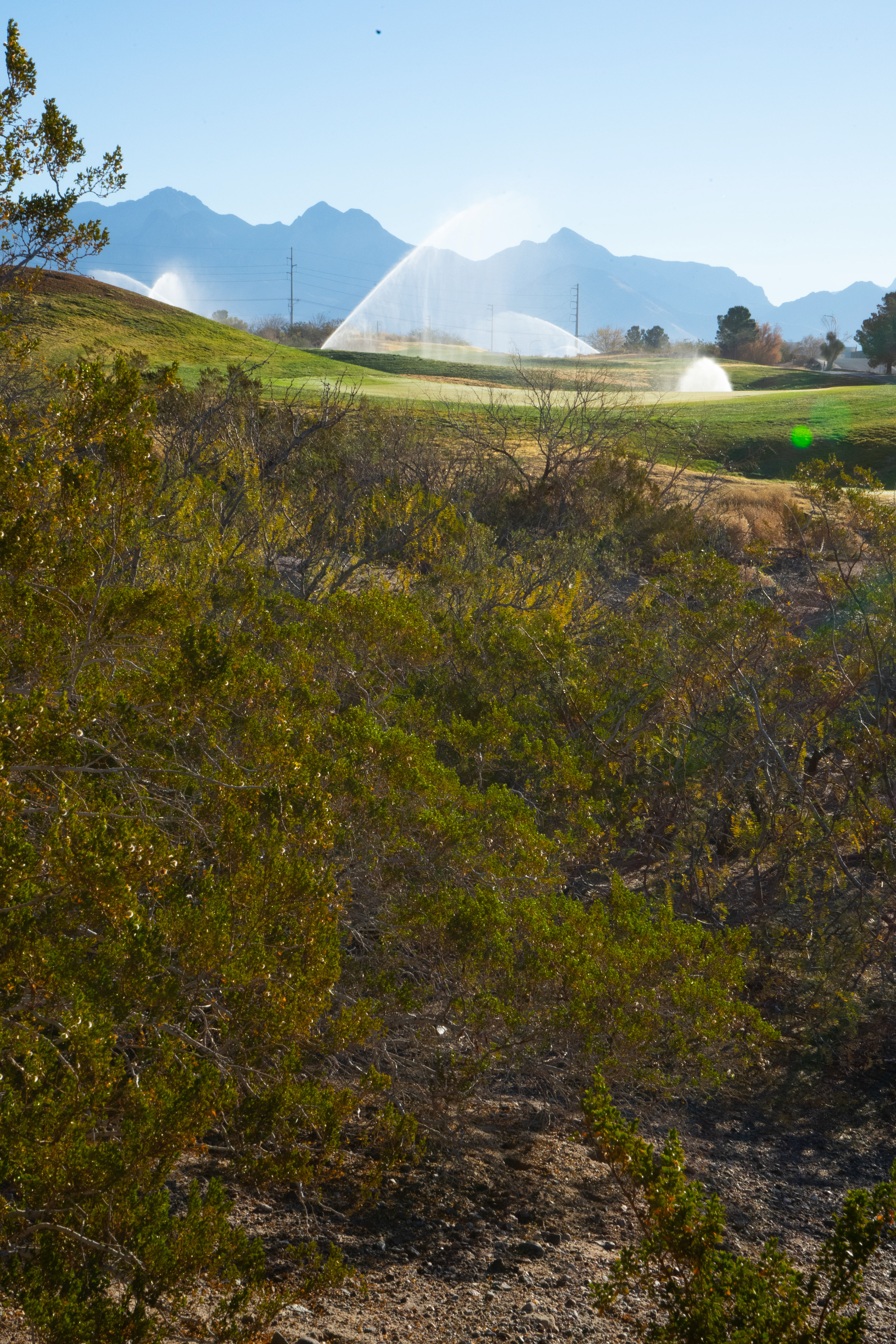
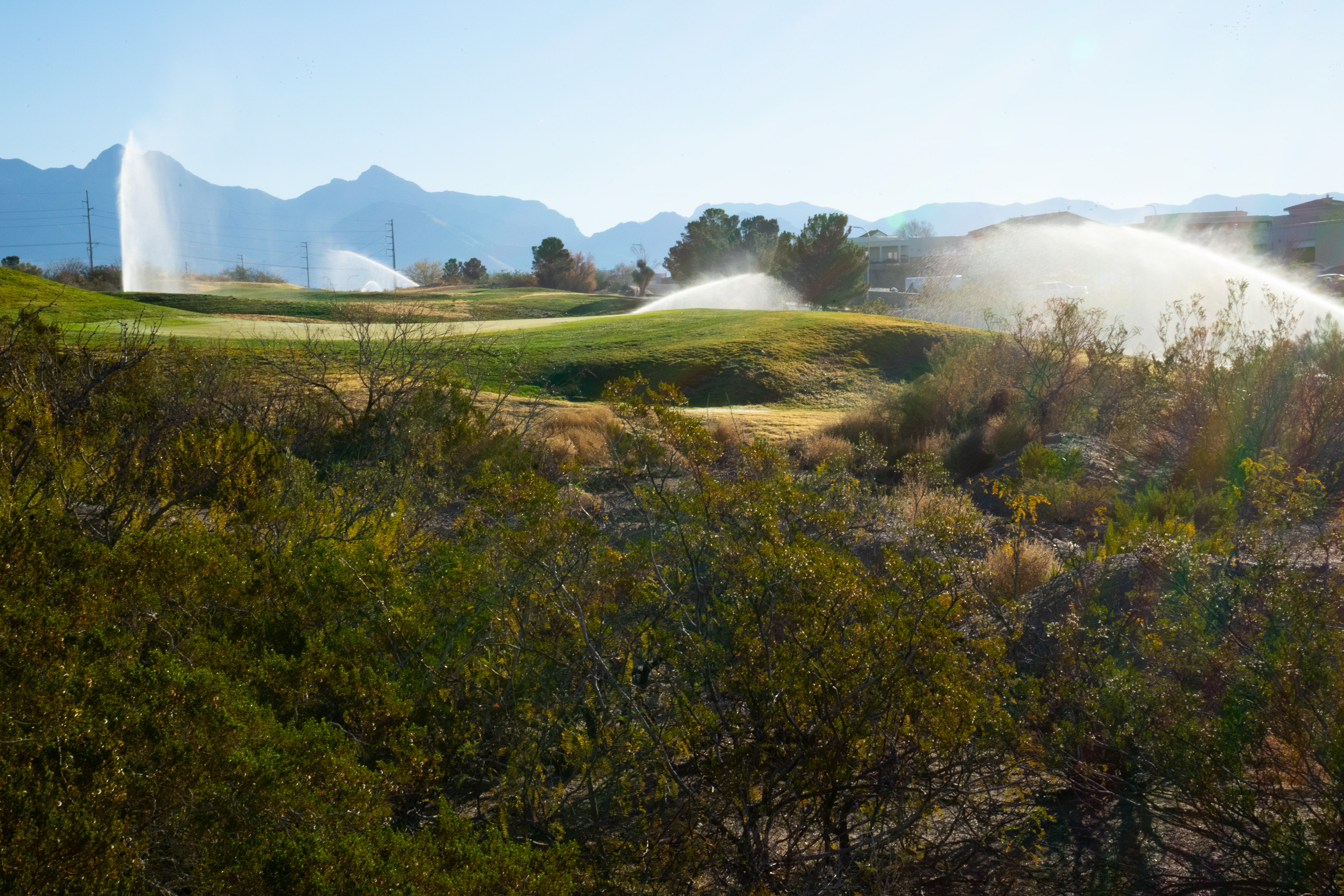
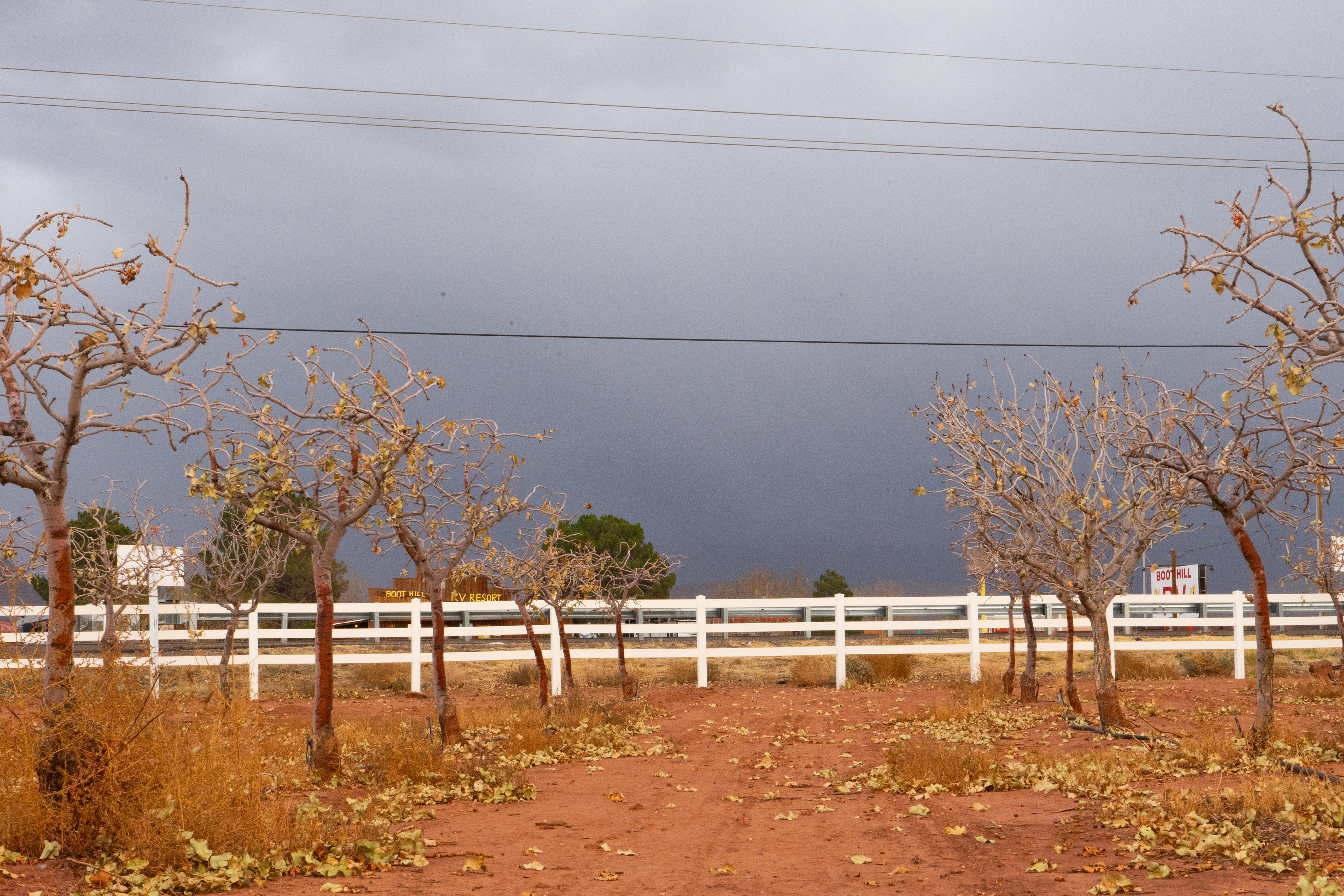
Golf Course in Las Cruces, 2025, digital photograph, 4000x6000 pixels
~Las Cruces, New Mexico~
Christmas time is approaching in New York. Running into people usually precedes the question, “Going anywhere?” New Yorkers love New Mexico. Very few have ever been, so it remains fantastic for them, colored by Agnes Martin and Georgia O’Keefe in their imagination, by scores of American Van Goghs dreaming of a studio in the sunny south and a yellow house all their own to be sad in. It is stunningly beautiful. Ansel Adams and all the Hudson River School and the Frederick Remington cowboy painters were telling the truth about the American West. Everything you do, everywhere you go, it seems like you’ve wandered onto a John Wayne movie set, and that you shouldn’t be there. The Target shopping bags and Hoka trekking shoes, and the stuff of modern life, whatever is in focus, is less real than the mountains and the periphery. And these only seem so real because you remember them from a colorized movie you dreamt about. You could take a camera there, point it at anything, and the beauty of that place would infiltrate it. It, that beauty, is unavoidable. Because they’ve also dreamt this John Wayne—Van Gogh—Agnes Martin—Bruce Nauman—Manifest Destiny—American Dream, New Yorkers ask me, “Oh wow, that must be beautiful?” And then, “Are you be excited to go?”
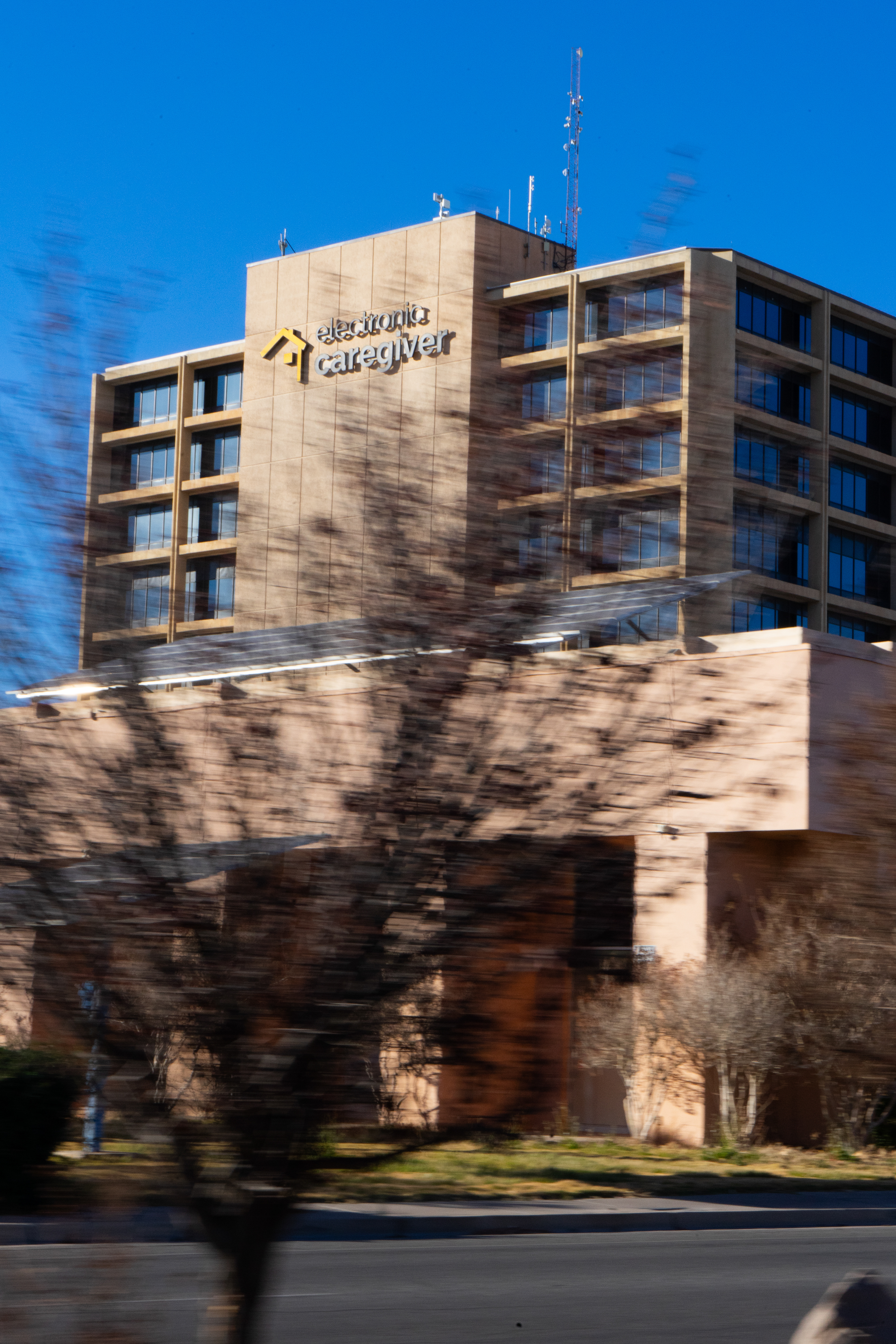
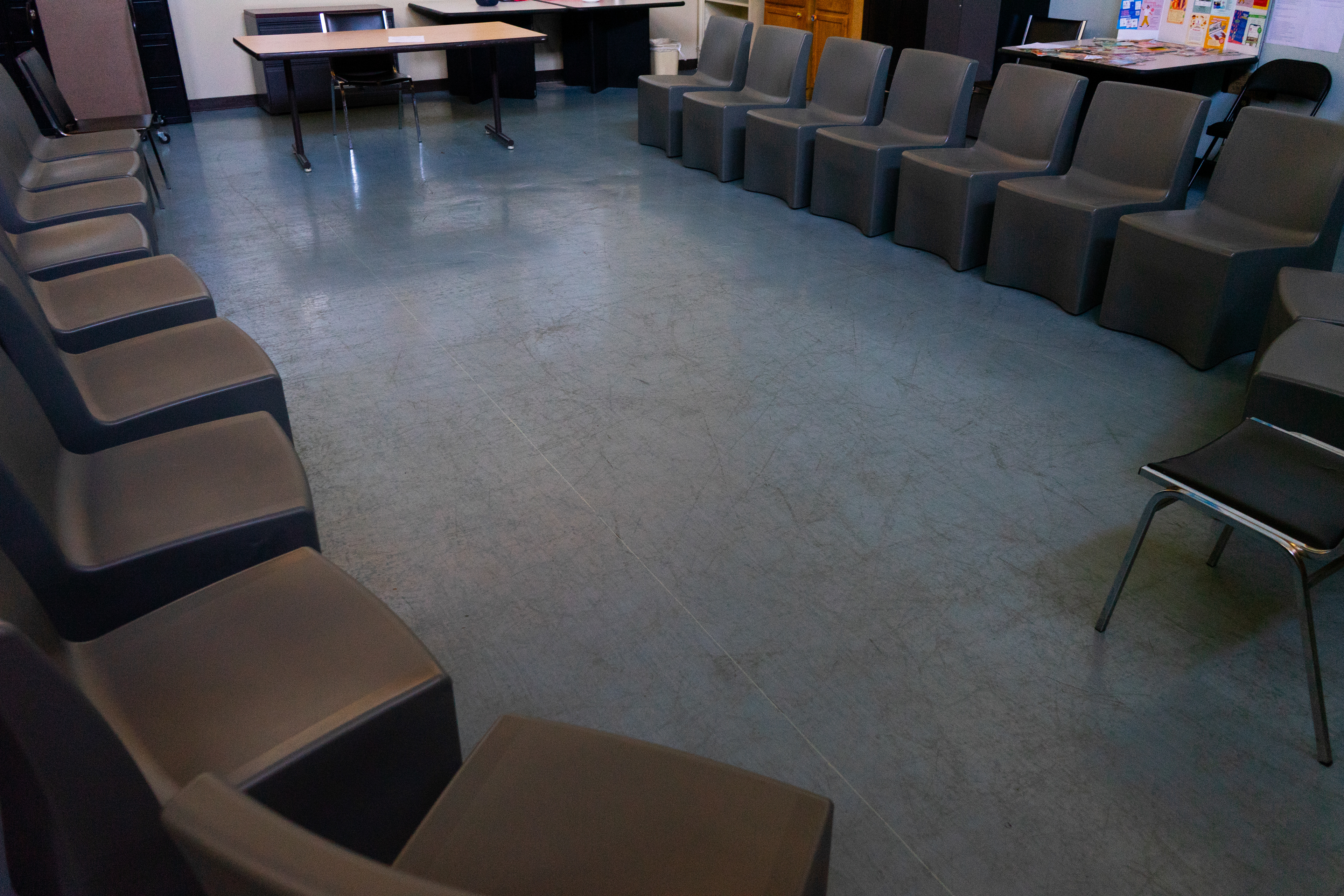
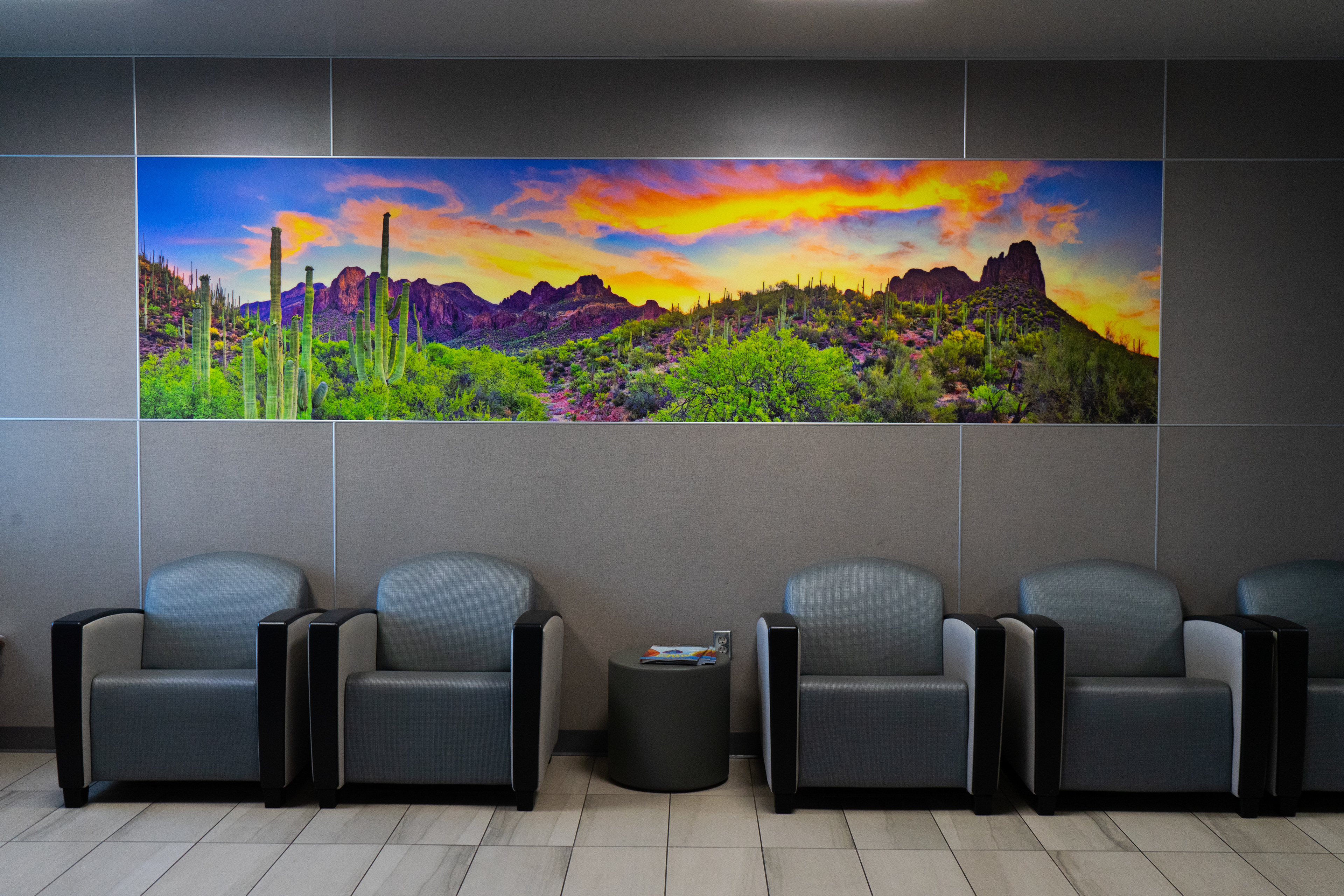
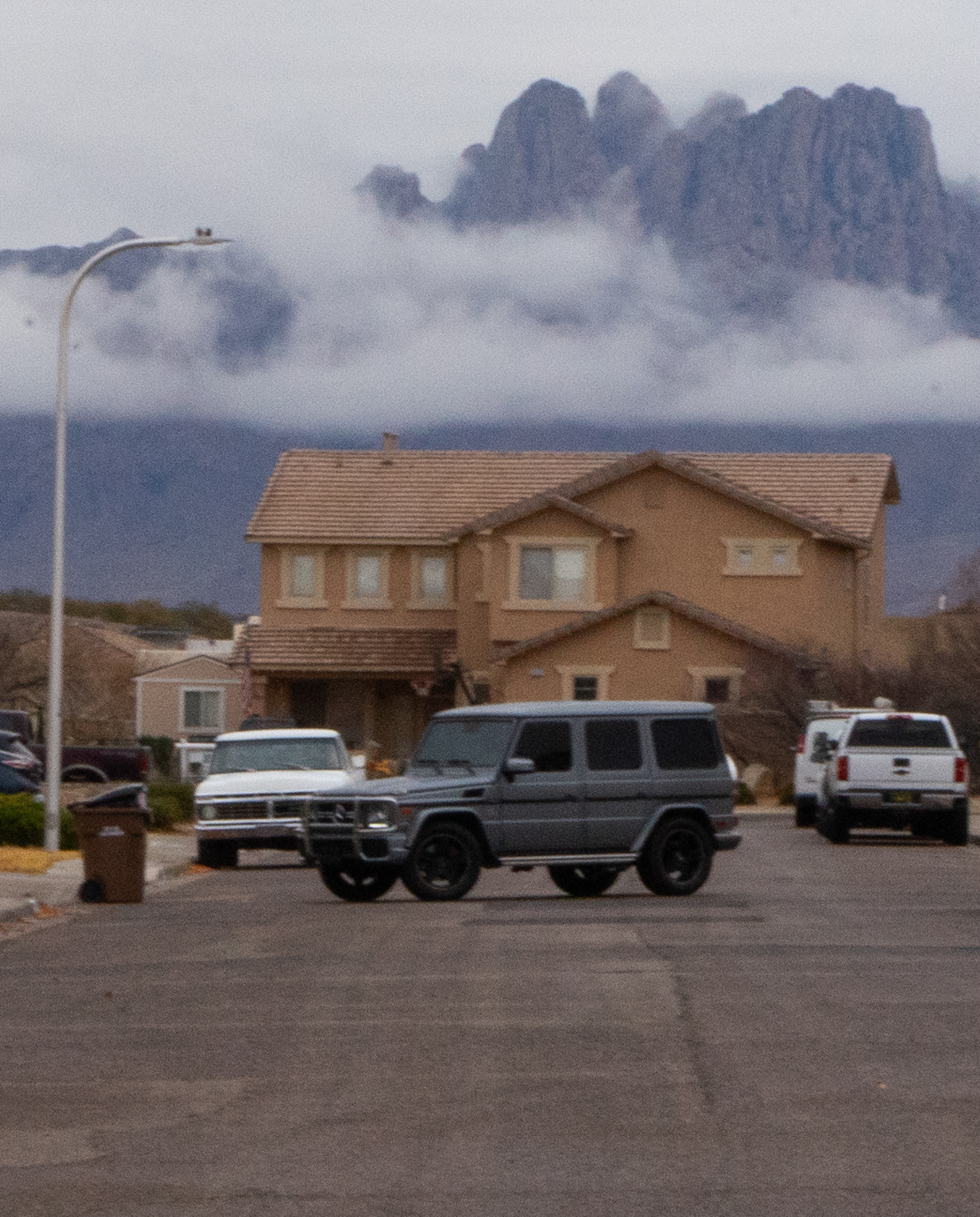
My stomach runs queasy at this question. Yes, it is beautiful. Yes, I do love my family and look forward to seeing them. But, no, I am not excited to go per se, and I do not love Las Cruces. They do not live in Santa Fe, or Taos (and no, I have not yet read Dave Hickey’s critique of Santa Fe in favor of the obvious falseness of Las Vegas. Up until right now, I have been totally unwilling to consider New Mexico. I’m from West Virginia, so if I’m going to go to or think about some where rural, I want there to be trees). Las Cruces doesn’t have the romance or history of those older, better known places. What it does have is the stark beauty of the high desert. The John Wayne movie set. What this ever-present setting screams at me, wherever I turn, is that a city should not exist there. Maybe Taos and Santa Fe get a pass because they’ve been there a while. There is a 1000 year old Pueblo near Taos. So maybe, even though the scale has gotten out of hand, there are geological and hydrological reasons these places exist. Las Cruces seems to have none. It exists only because of cars and other petrochemical technologies that have allowed us to dig further for water, to live further apart from one another, and to deny that the outside exists as anything other than a remarkably beautiful back drop for our lives, one that we could switch out like a job. The receptionist at the psych hospital (I’ll explain why I was there later) told me to be sure that I took a picture of the Organ Mountains. She saw me taking a picture of the picture of them hanging on the wall of the reception room. She gave me that advice as if it was possible not to have noticed them. Not to have been overcome by the mindless impulse to pull your phone out of your pocket and snap a gorgeous keepsake of those mountains visible from every point in this city.
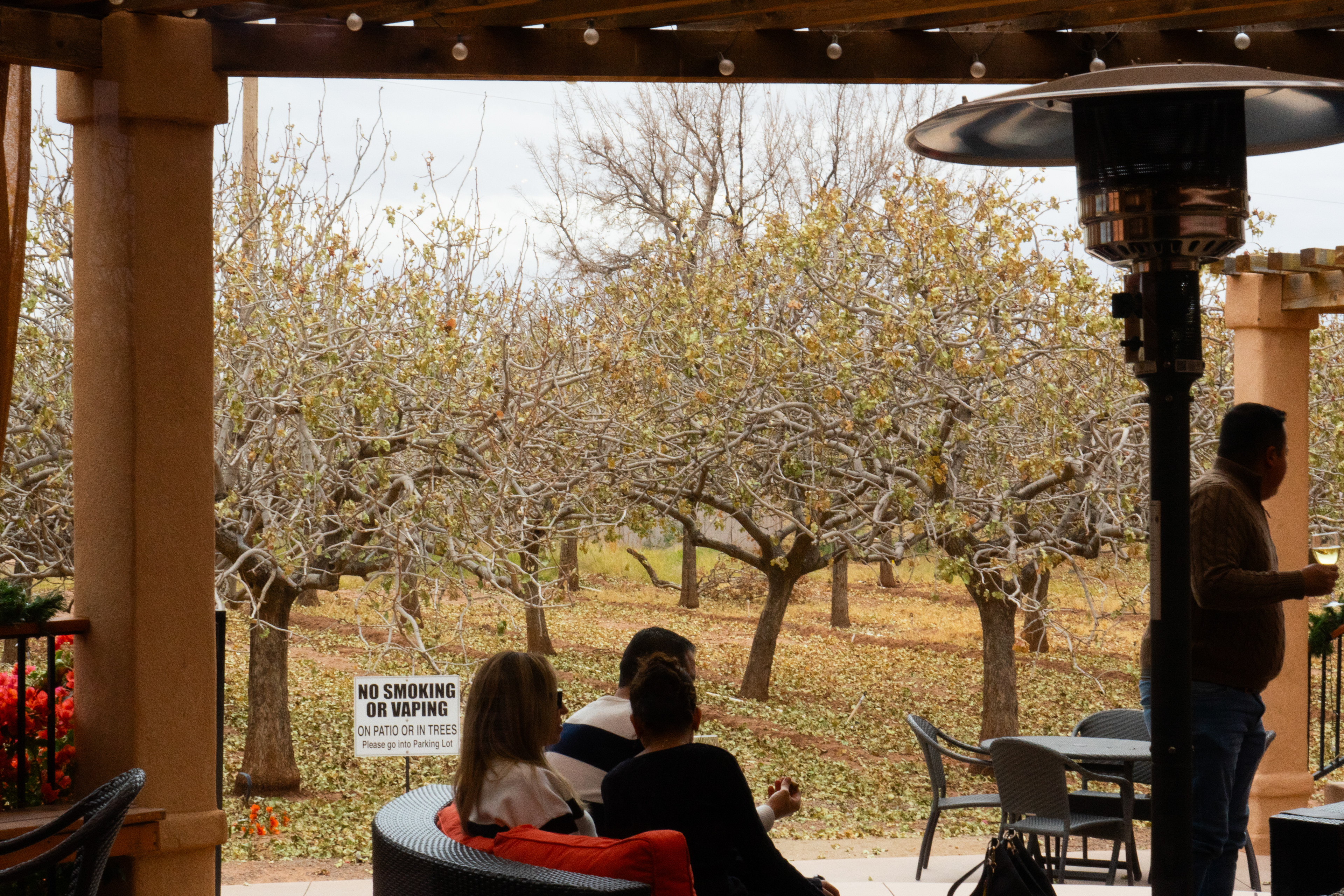
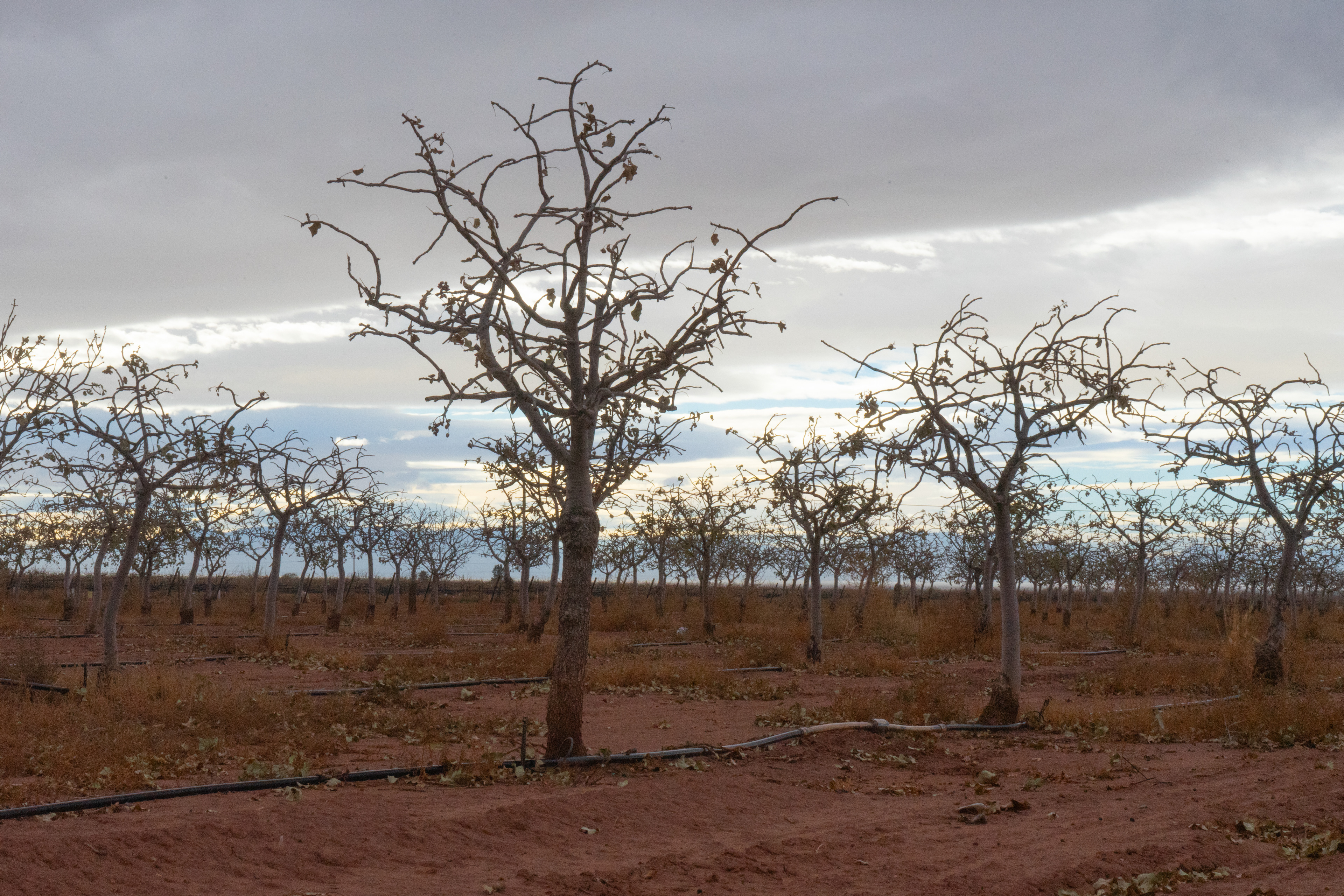
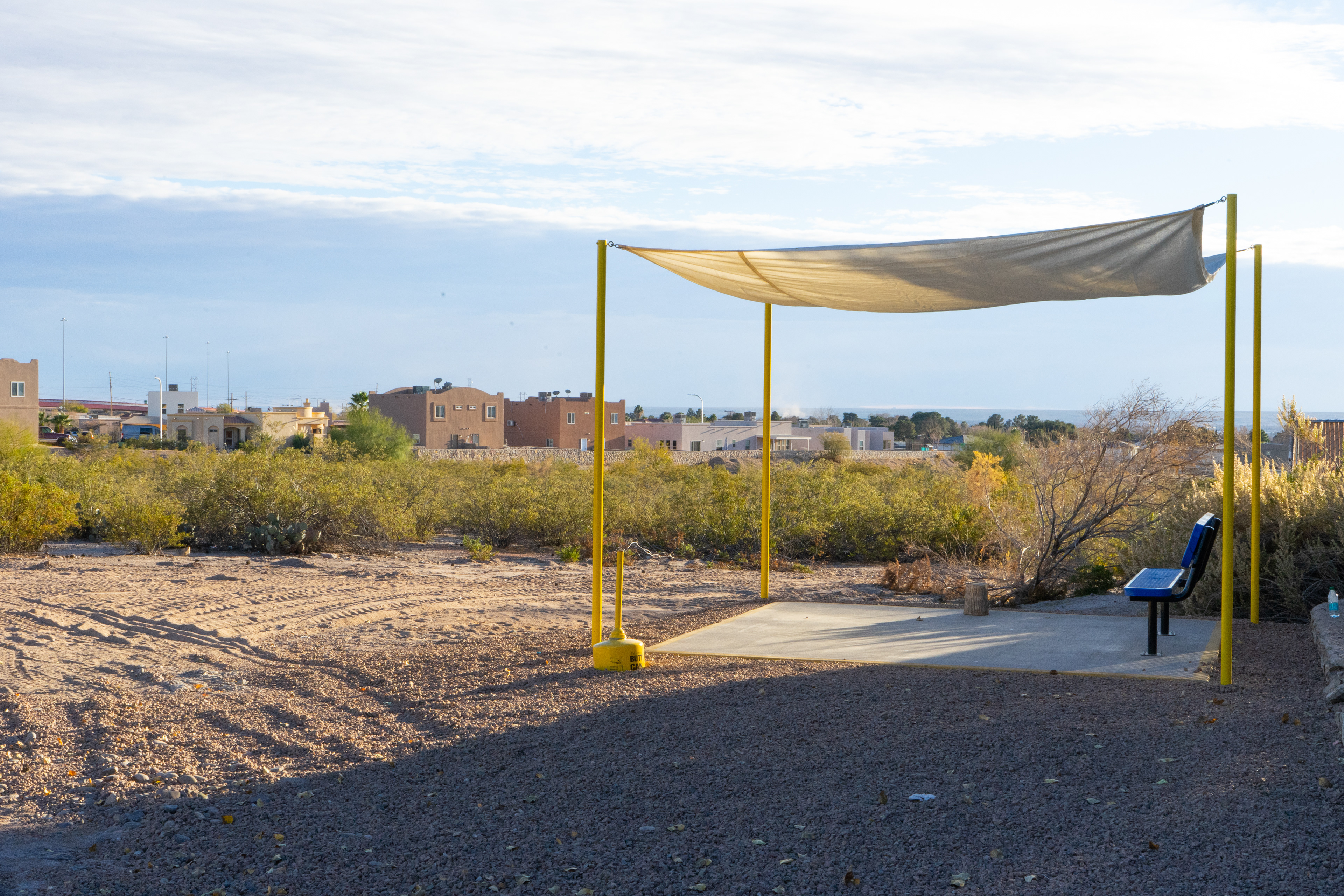
But, beautiful as it is, the Earth is warming and the Ogallala Aquifer is running dry. Las Cruces is the physical manifestation of American hubris. Our defiance, our will to exist, wrought real in wide boulevards made for big cars. Riding by, in an Escalade, you can watch sprinklers arc water from God-knows-where over the Organ Mountains, going click, click, click, as they flick back and forth to get better coverage of the golfing greens, casting rainbows in their own spray. It’s endearingly human. Las Cruces is Icarus, and the sun is still the sun. It’s morbidly beautiful, like a vanitas painting is intended to be. But this is real, and I wonder if anyone else sees it? The skewmorphic skull in the center of The Ambassadors. Or are they just happy to golf in the sun, and go to Walmart? Have I just been a pretentious 20 something trying to be a New Yorker, trying to be better than the rest of America? Refusing to enjoy what the President and the Armed forces have done for me? Kicking Native and the Mexican ass and delivering me this prime, dry-aged land to water? To grow grapes, and pistachios for whatever reason on? I’ll go to Las Cruces this Christmas, to visit my mom. I’ll take a camera and point it at as much of that place as I can, trying to find out the answer to this question: Does God act through the power of the American Government? Just kidding, to find out the answer to this question: Why the hell did my parents move to Las Cruces, New Mexico? Why does anyone live there?
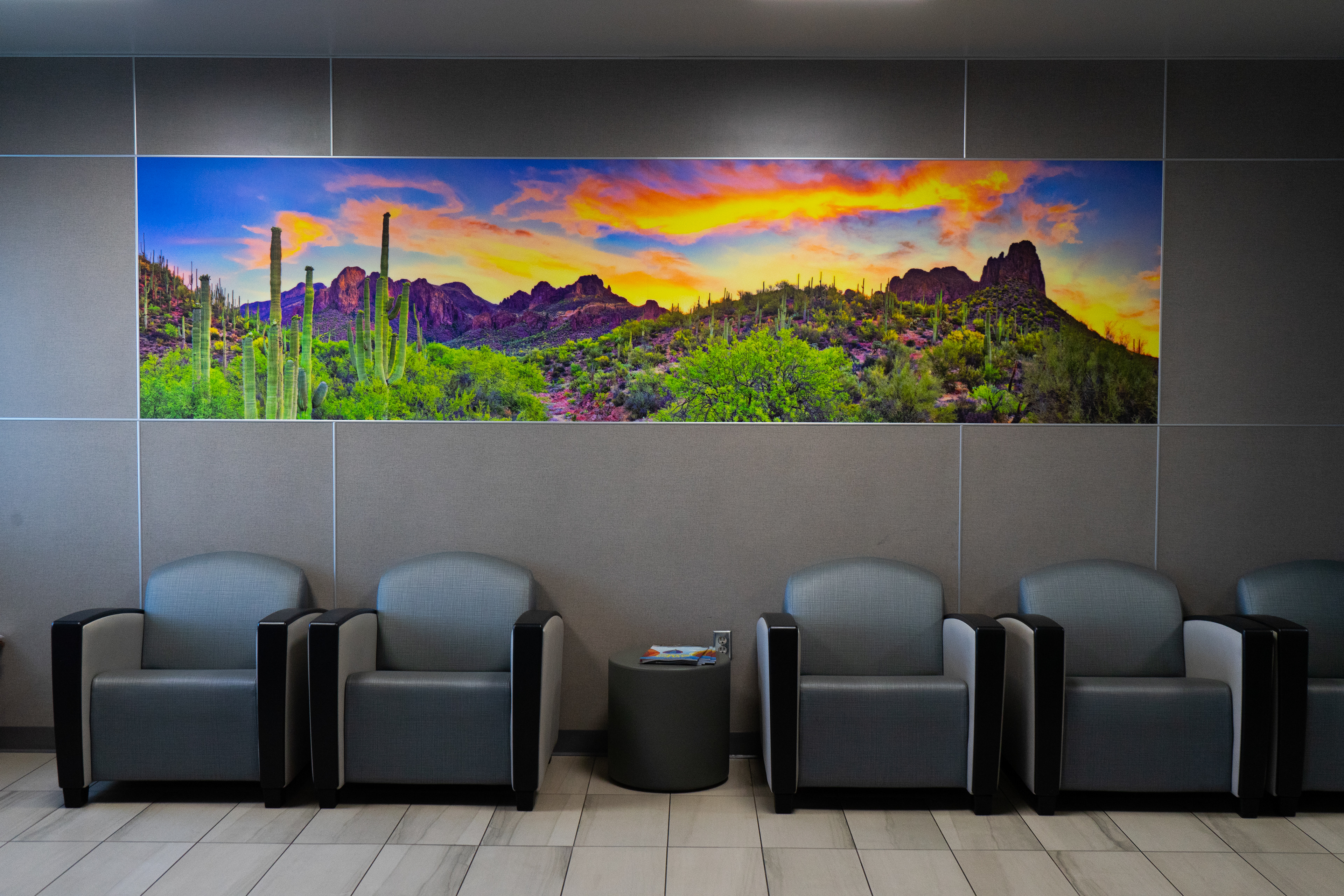
Psych Hospital Reception Room, 2025, digital photograph, 4000x6000 pixels
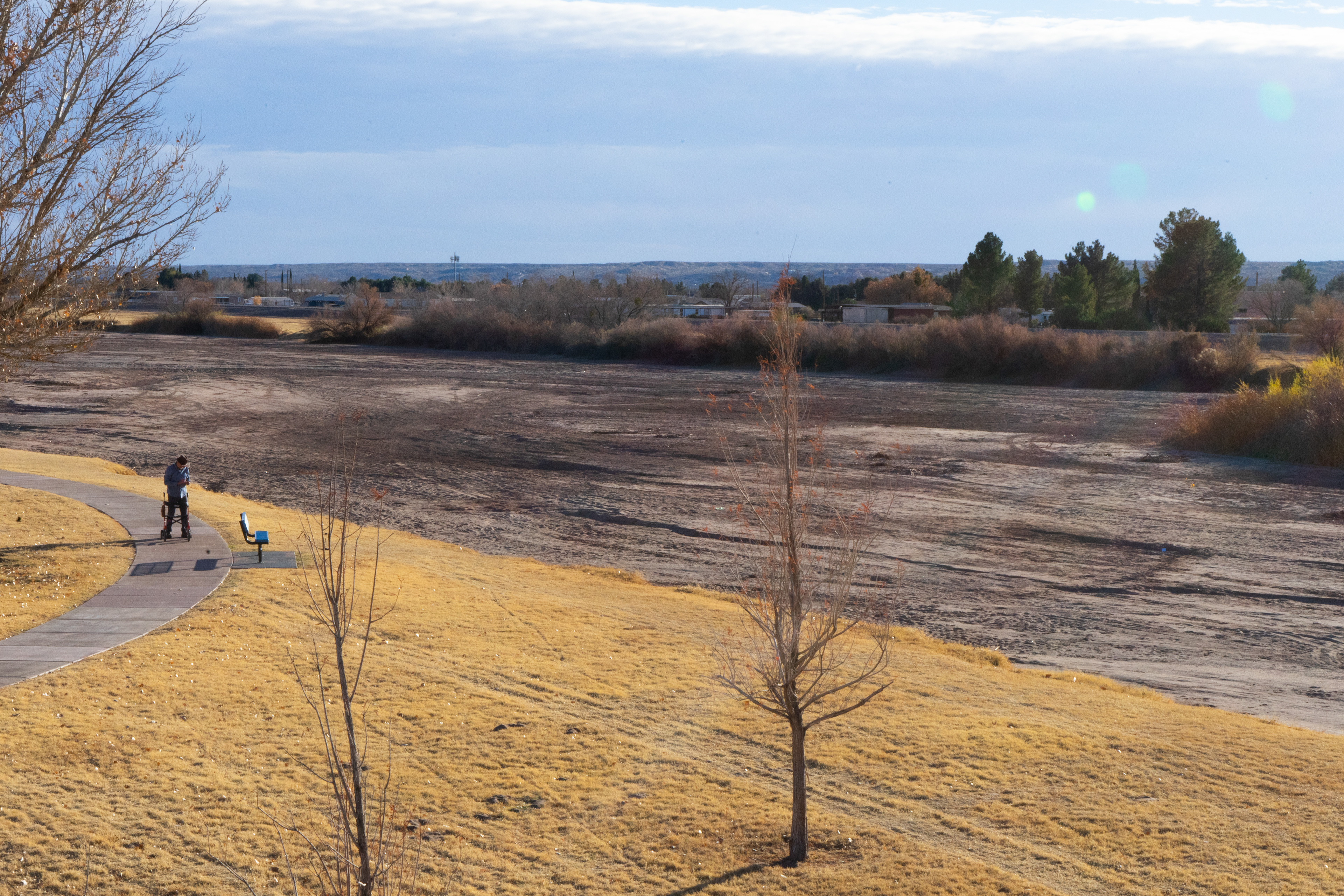
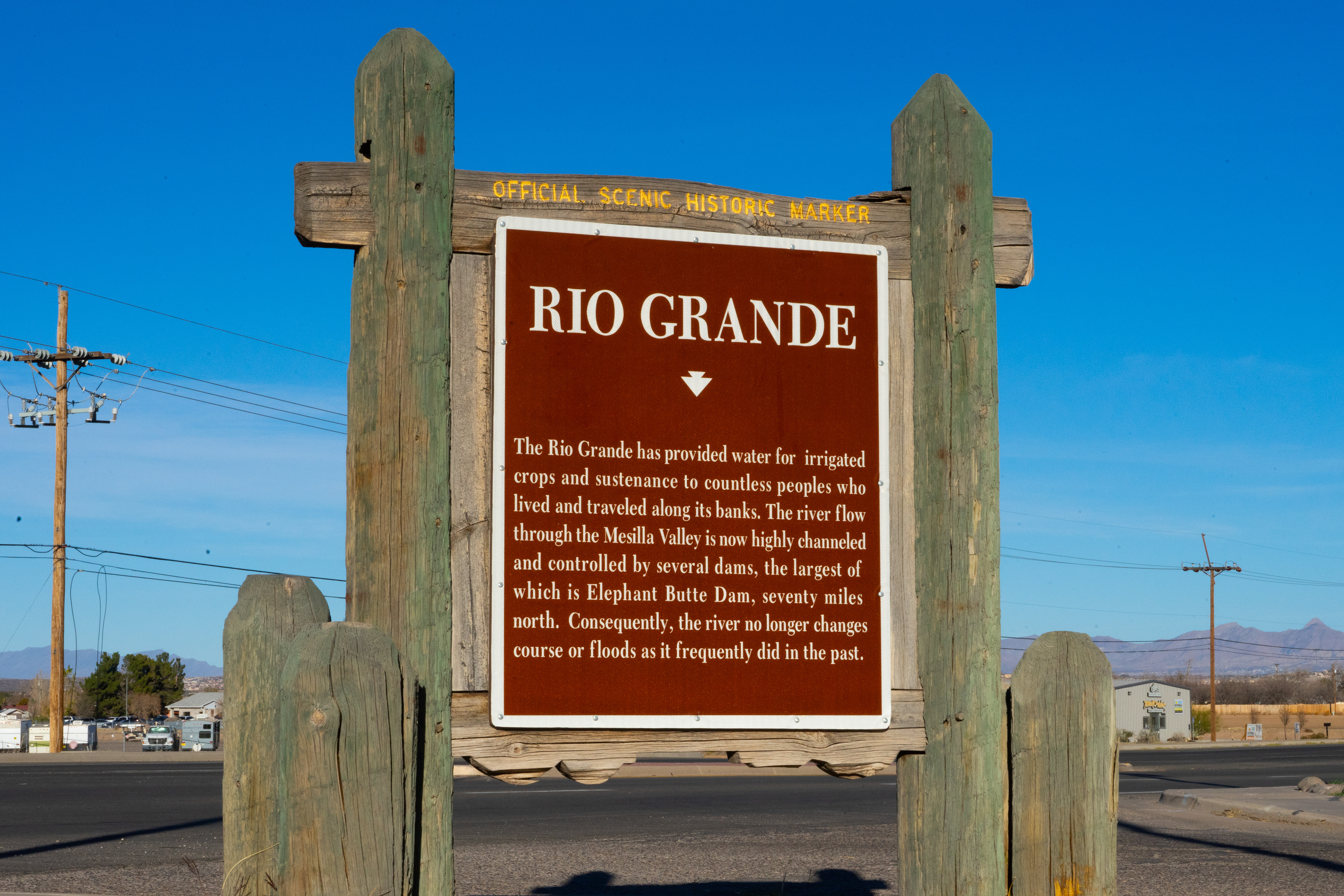
This question came up shortly after landing. In the comfortable privacy of the car, my aunt told me that Mom was putting her up to convincing me to move there. Knowing that I wouldn’t go for it, my aunt asked what it was about Las Cruces that I didn't like. We discussed unstable equilibria by way of the James Webb Space Telescope. It sits on a ridge of gravitational forces, and it must exert energy to keep from falling off it toward the Earth, or the Sun, or the deep abyss. NASA calls this a Lagrange Point. Spiritual writers often discuss knife edges. She turned to me and said that she had had a spiritual awakening here in the desert. So that’s one reason to be here. There remains, however, the fact that the mighty Rio Grande does not flow through Las Cruces. A sign at the city park along the banks of the former river comforts one’s suspicion at finding the lack of river. “The Rio Grande has provided water for irrigated crops and sustenance to countless peoples who lived and traveled along its banks. The river flow through the Mesilla Valley is now highly channeled and controlled by several dams, the largest of which is Elephant Butte Dam, seventy miles north. Consequently, the river no longer changes course or floods as it frequently did in the past.” Yes, the American Government has brought order to this chaotic river, this source of destruction and fear, and they have made it profitable. A man in a cowboy hat and sneakers gets out of his car for a walk in the river bed, just so. A spiritual awakening. It must be said that the desert has a history producing spiritual awakenings in people. Because the Truth glimpsed in such a state is typically formulated in the aphorism, here are three:
“The best wine is made of grapes grown in the harshest soil. You taste that soil in this wine, and this sense is highly prized. It is known as terroir. I like to think that one can taste the grapes' screaming, their spirit.”
“Do you know how much money and effort went in to make the James Webb telescope sit on a gravitational knife edge in space? Do you have any idea how many brilliant people worked on that and how many dinosaurs and plankton died over how many millions of years to make that happen? And it just shoots out a little gas every once in a while to stay on top of its gravitational hill, to keep from rolling down either side into an inferno or an abyss.”
“Abbot Bessarion, dying, said: The monk should be all eye, like the cherubim and seraphim.”
Some of these, no points for guessing which, can be found in The Wisdom of the Desert; Sayings from the Desert Fathers of the Fourth Century. People who, upon the legalization of their faith in Rome, sought out a new form of self imposed persecution to test their faith, to give it meaning. Unforgiving nature and the burning sun would persecute their very existence in the deserts of Egypt. It must be remembered that man had already worshipped the sun disk for thousands of years in that same desert. The sun disk and wide open space seem to bring man’s soul out of his head, and to make it, along with his immanent death, more plain to him. More visible. And this facet of the desert, this seduction, is certainly at play even for those of us who seek to deny it in our routine lives here. In the safe warmth of our cars and our Patagonia jackets, on the way to Walmart, we avoid both our death and our God. My aunt says that she had a spiritual experience out here, and that it inspired her move to the desert. I’ve been having a spiritual experience back in New York, but mostly in books, and in quiet prayers. Through these, I’ve come to see everything in my life, including this project, this writing right now, as a distraction. The monks of Scete sold everything they had, even the books that told them to sell everything they had, and followed Christ. And I am afraid to.
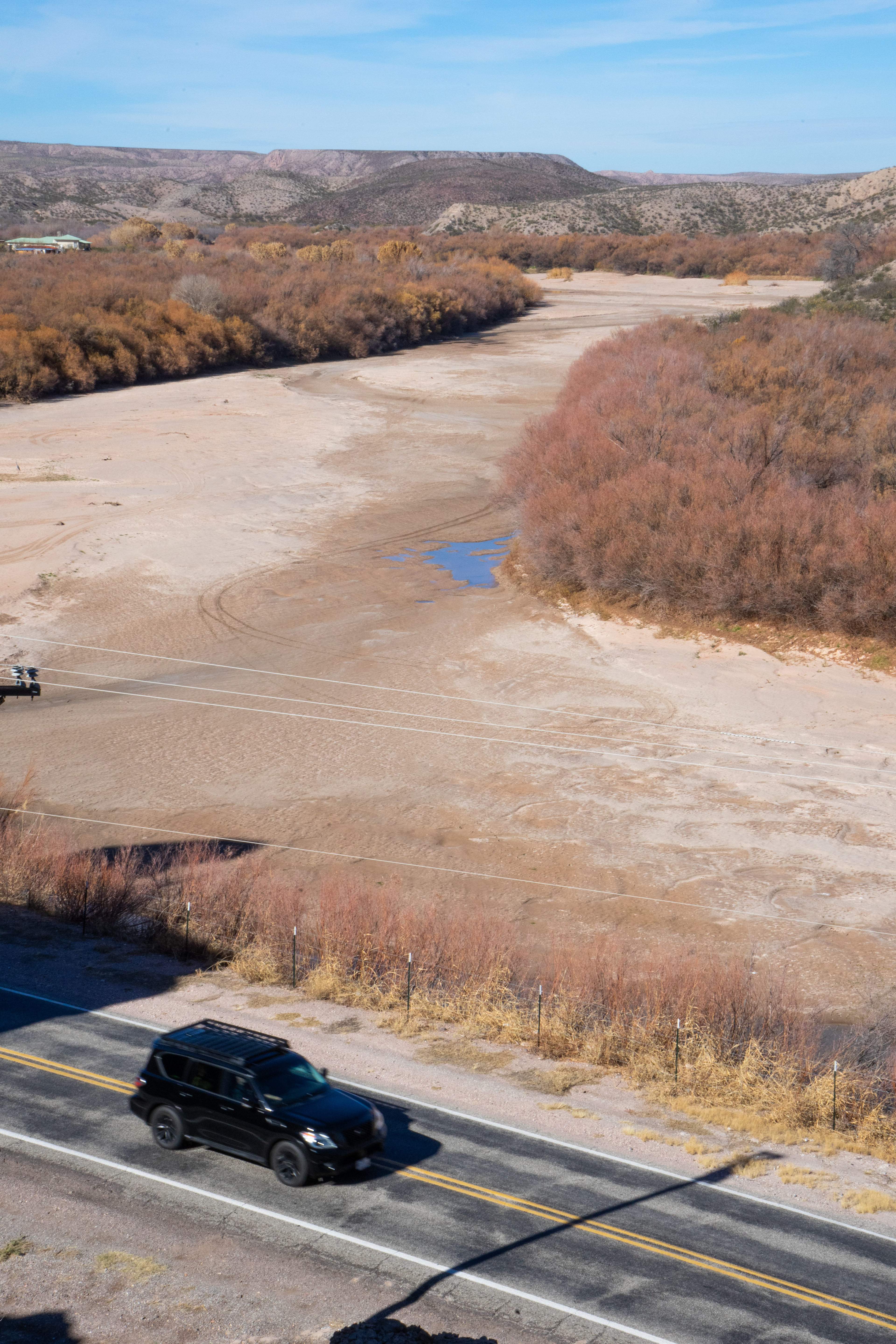
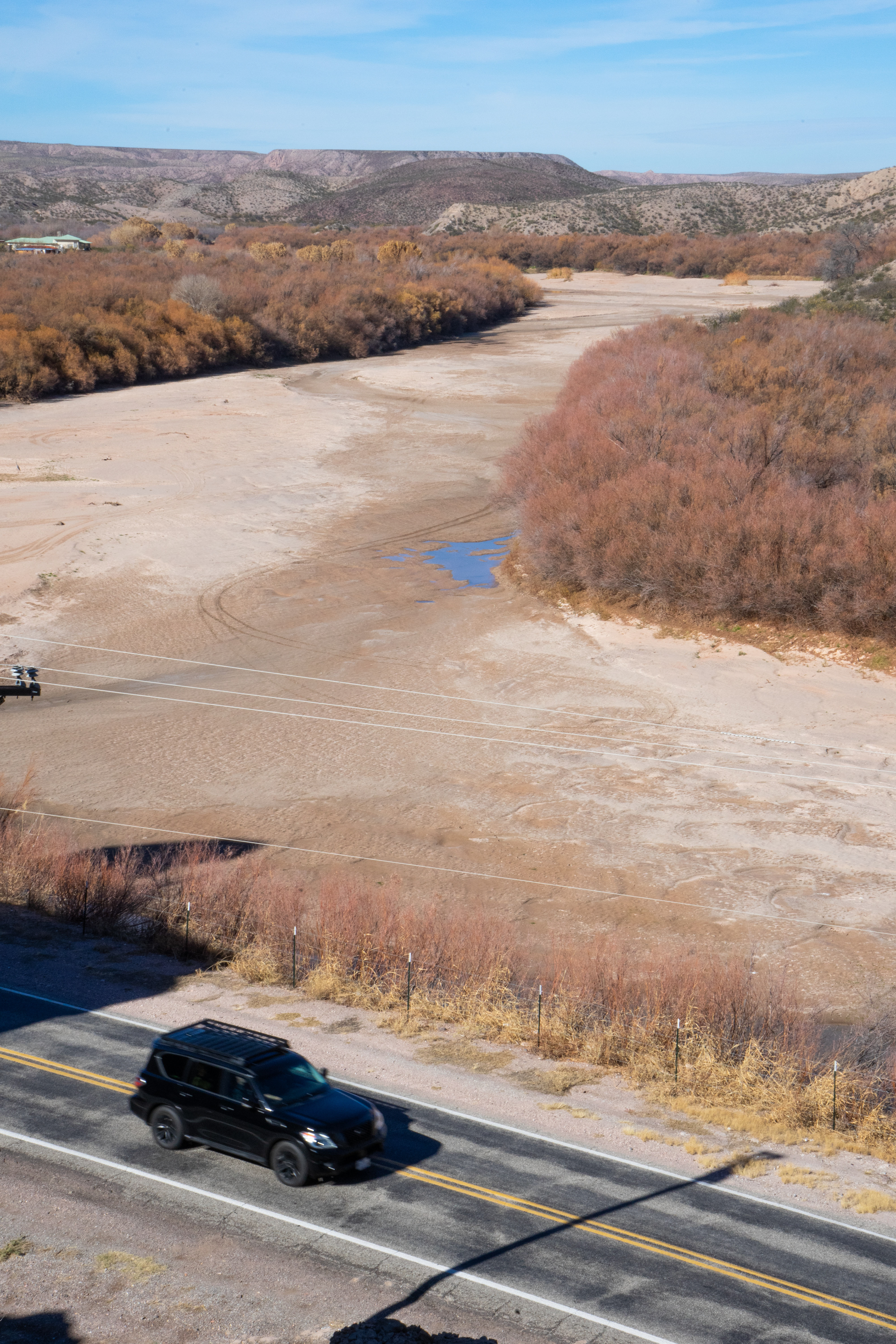
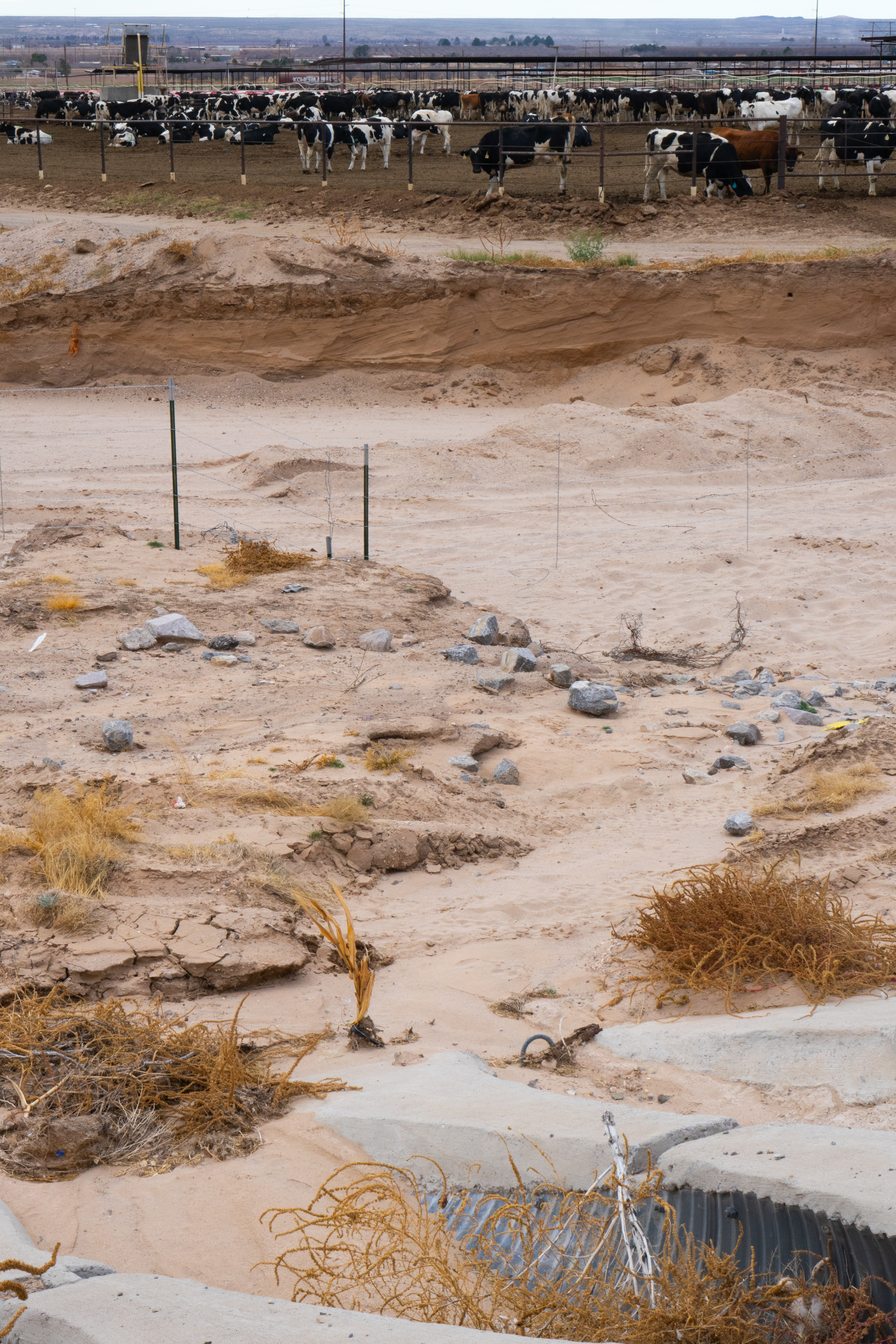
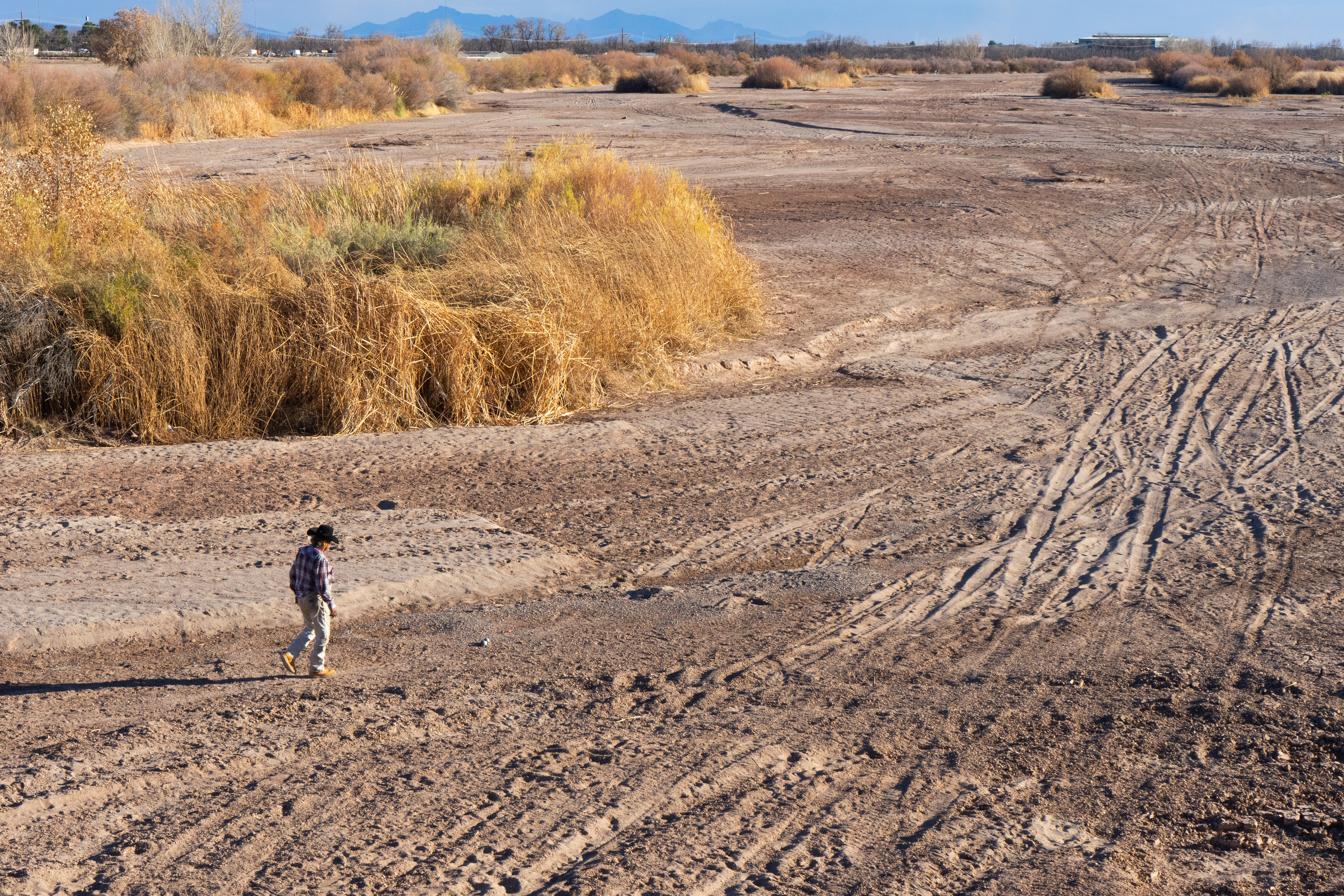
The Rio Grande, 2025, digital photograph, 4000x6000 pixels
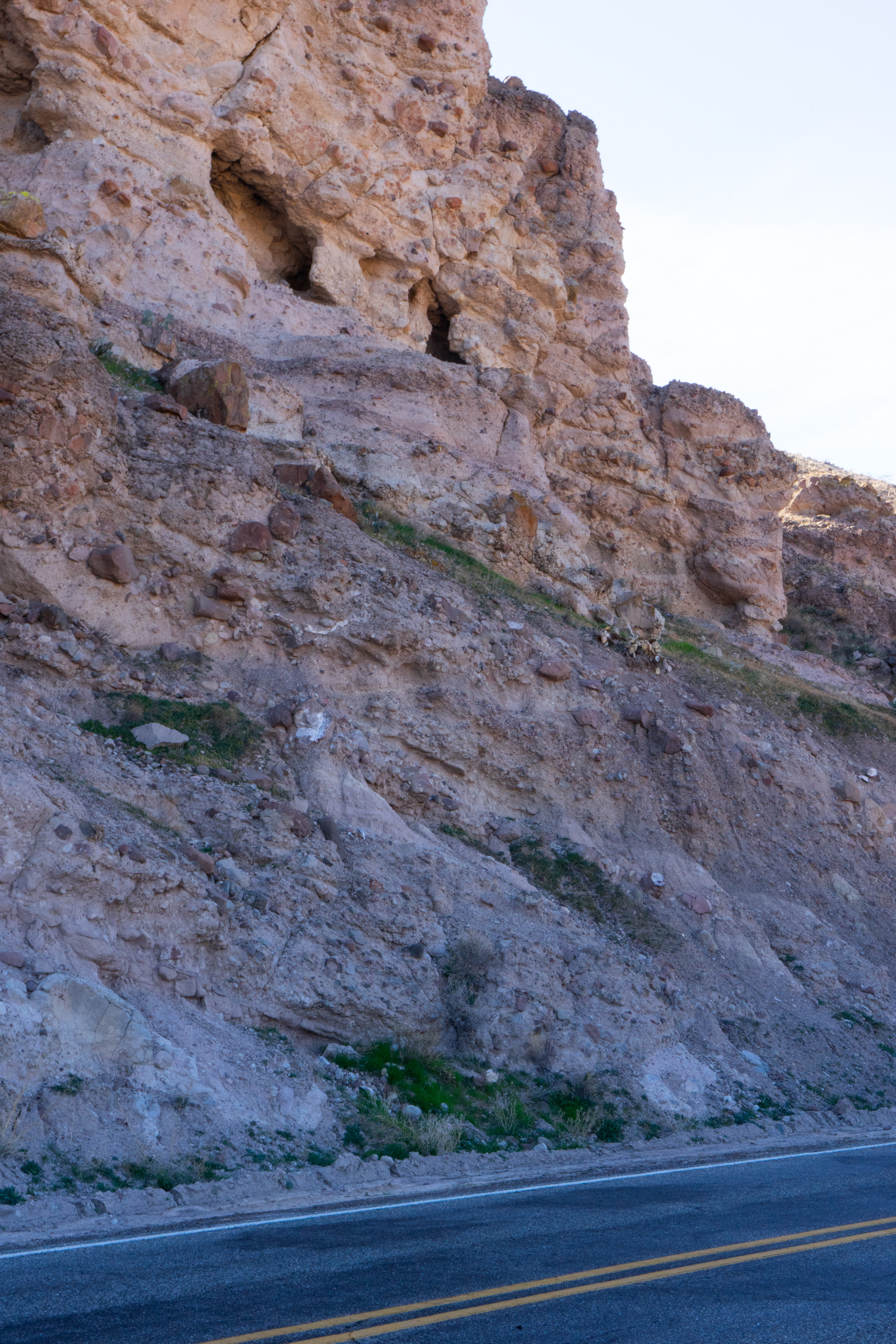
And yet, here it is. The desert. The classic retreat of those seeking the eternal bliss of the Kingdom of Heaven. It’s not even hard for me to get to. Here I am, being driven along by my parents to photograph the dry Rio Grande. There in the cliffs above is a cave that looks exactly like the ones in the icons of the saints of the desert. They have been painted the same way for 15 centuries. I could sell everything. I could call my mom, move out here, and live in that cave. Maybe I’d buy a gun in case any real demons came for me. Maybe my mom would drive by once in a while with a sandwich just to see if I was okay, no matter how much I pleaded with her. “Mom, I’m doing asceticism. It doesn’t work if you keep bringing me PB&J’s. You really have to be out here dying to the self. Remember Satan tempted the Lord with bread? Mom, you’re literally the devil right now.” What’s that movie called again where the delusional rich white kid sells everything he has to drive out to Alaska to live off the land and dies of stupidity by eating what turns out not to be wild potatoes?
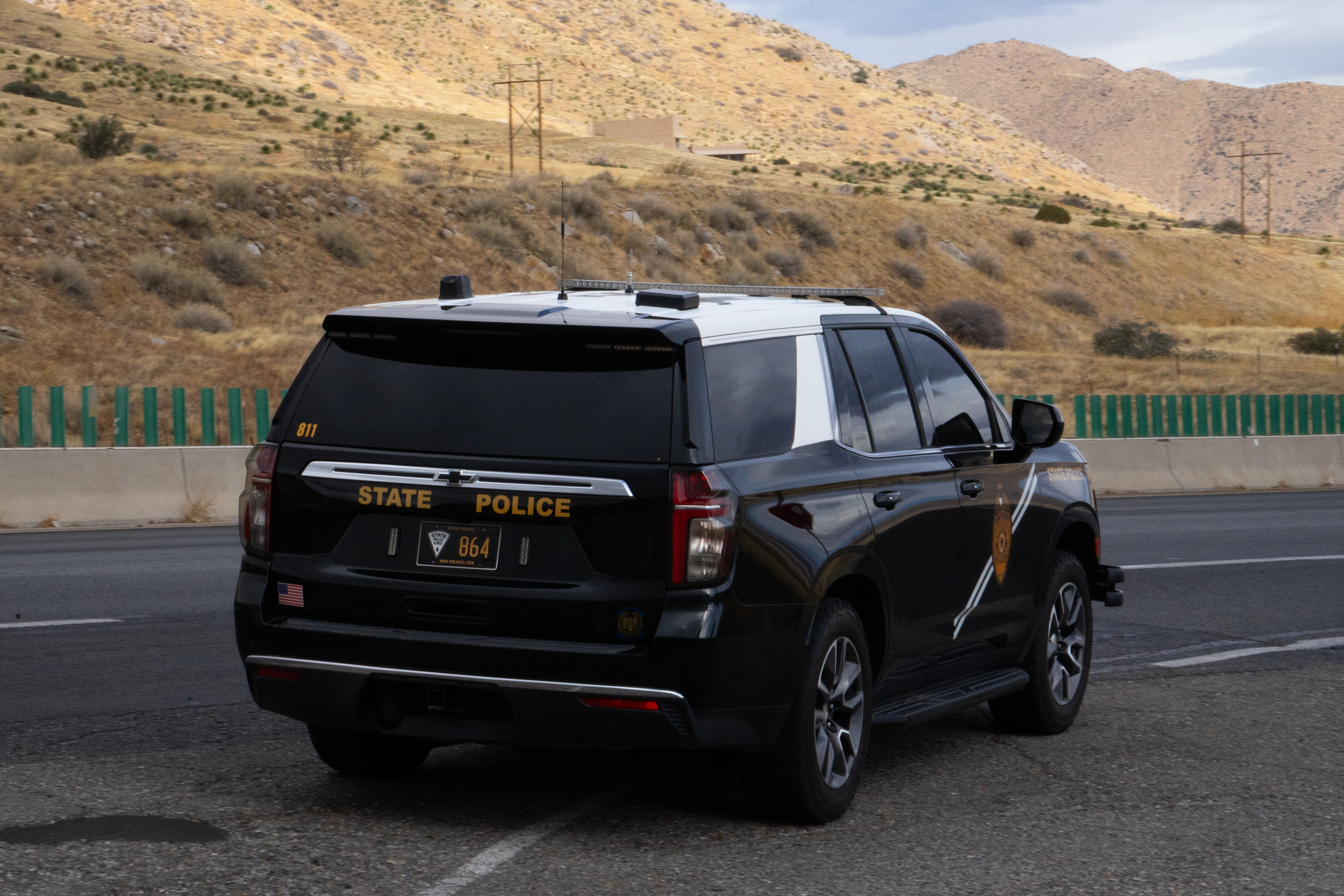
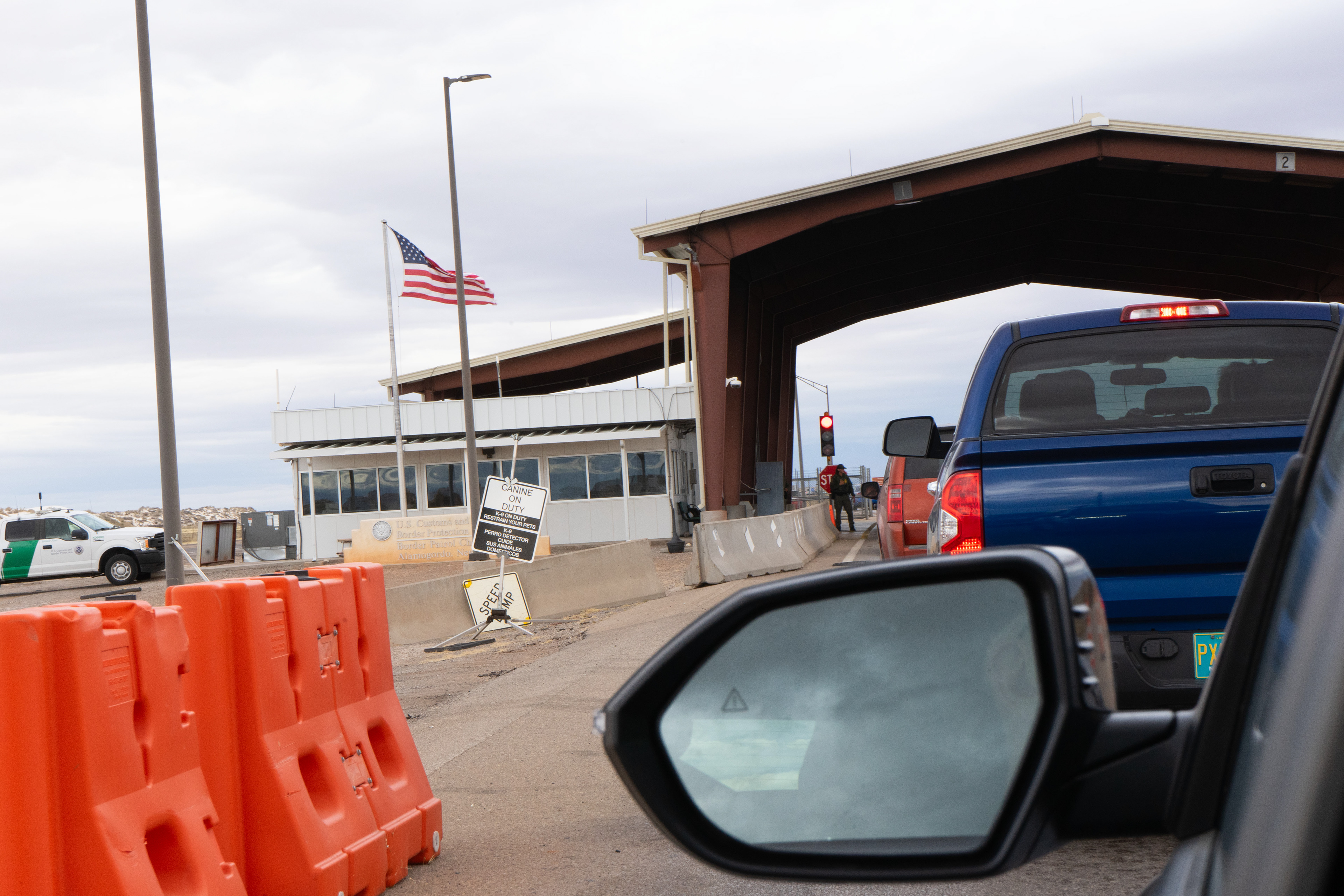
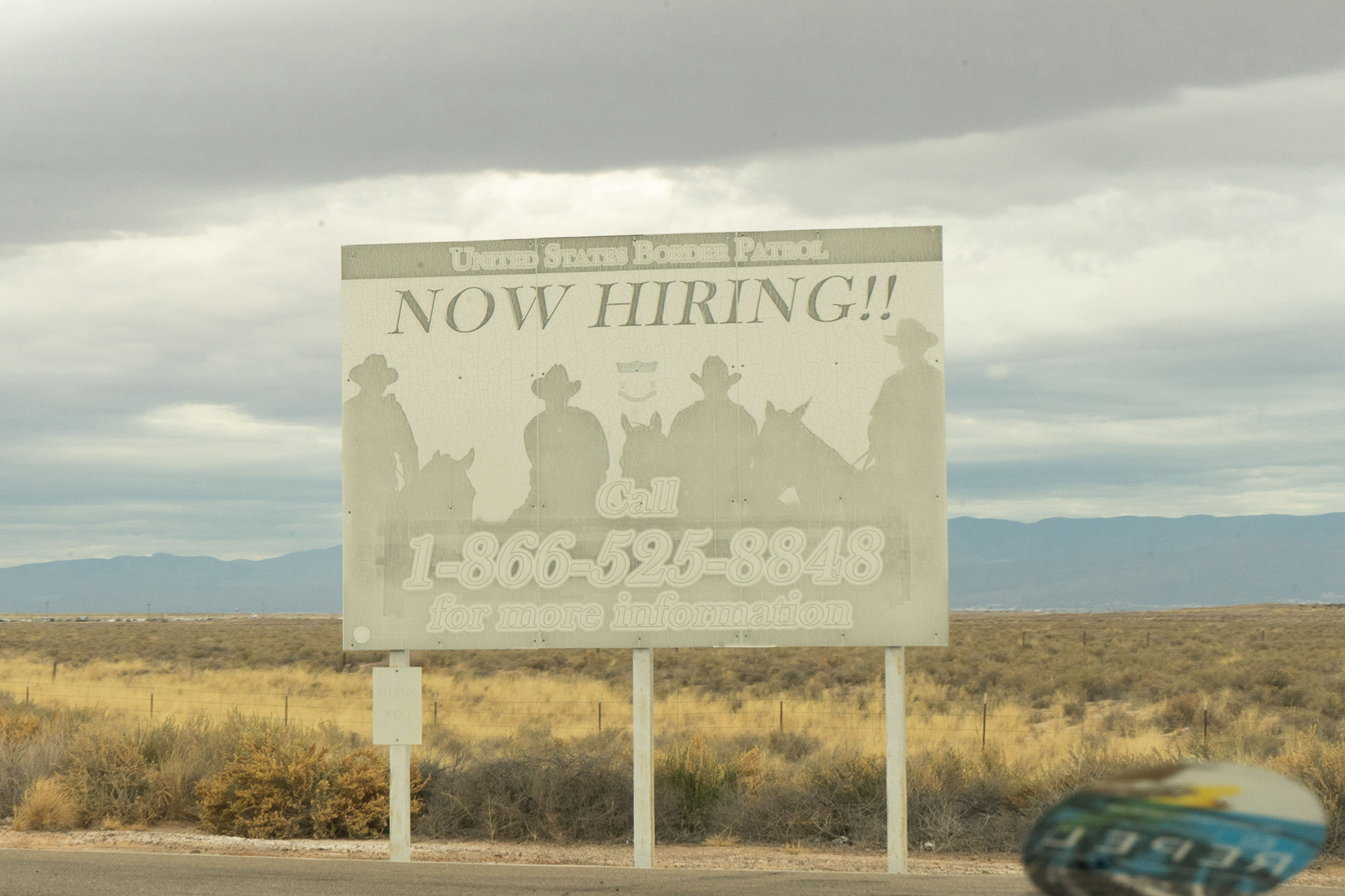
I was hoping there would be people riding ATVs and Side-by-Sides in the river bed to photograph. The first time I was out here Mom and I came to the river bed and saw them kicking up big arcs of dust. It looked stunning. My camera battery died just before we drove through a border patrol check point where a very pleasant soldier saw four nice white folk in a Honda and waved us on.
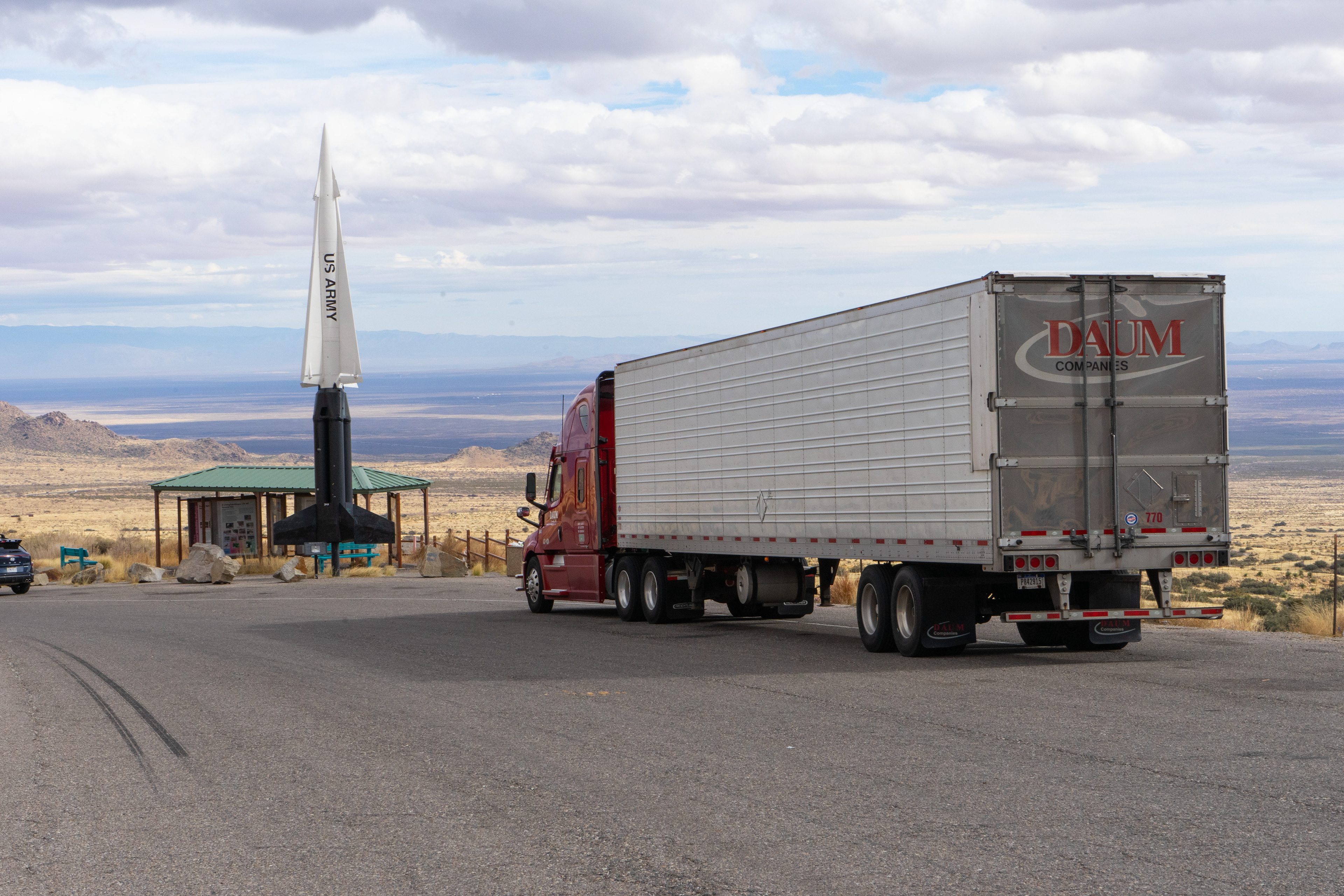
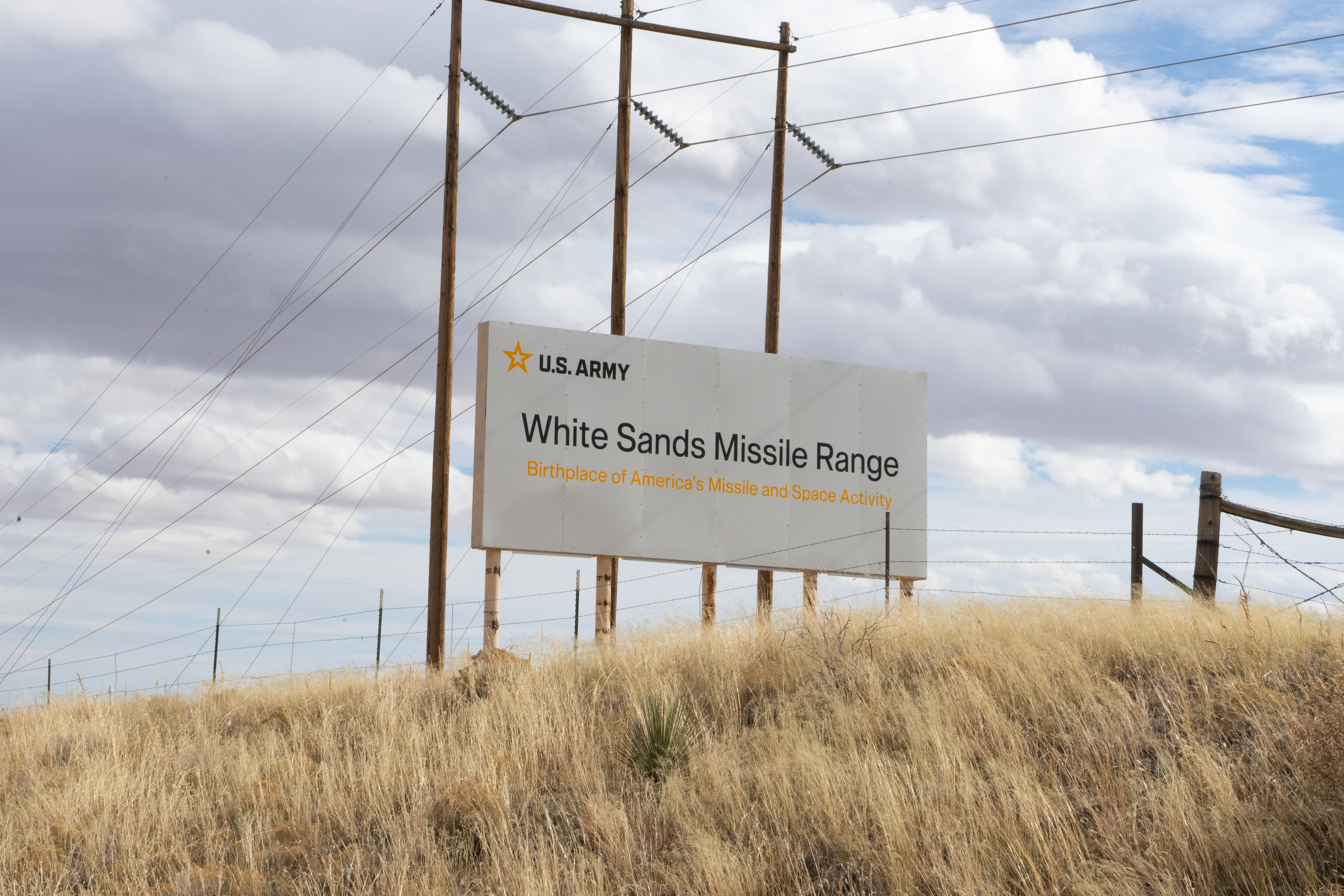
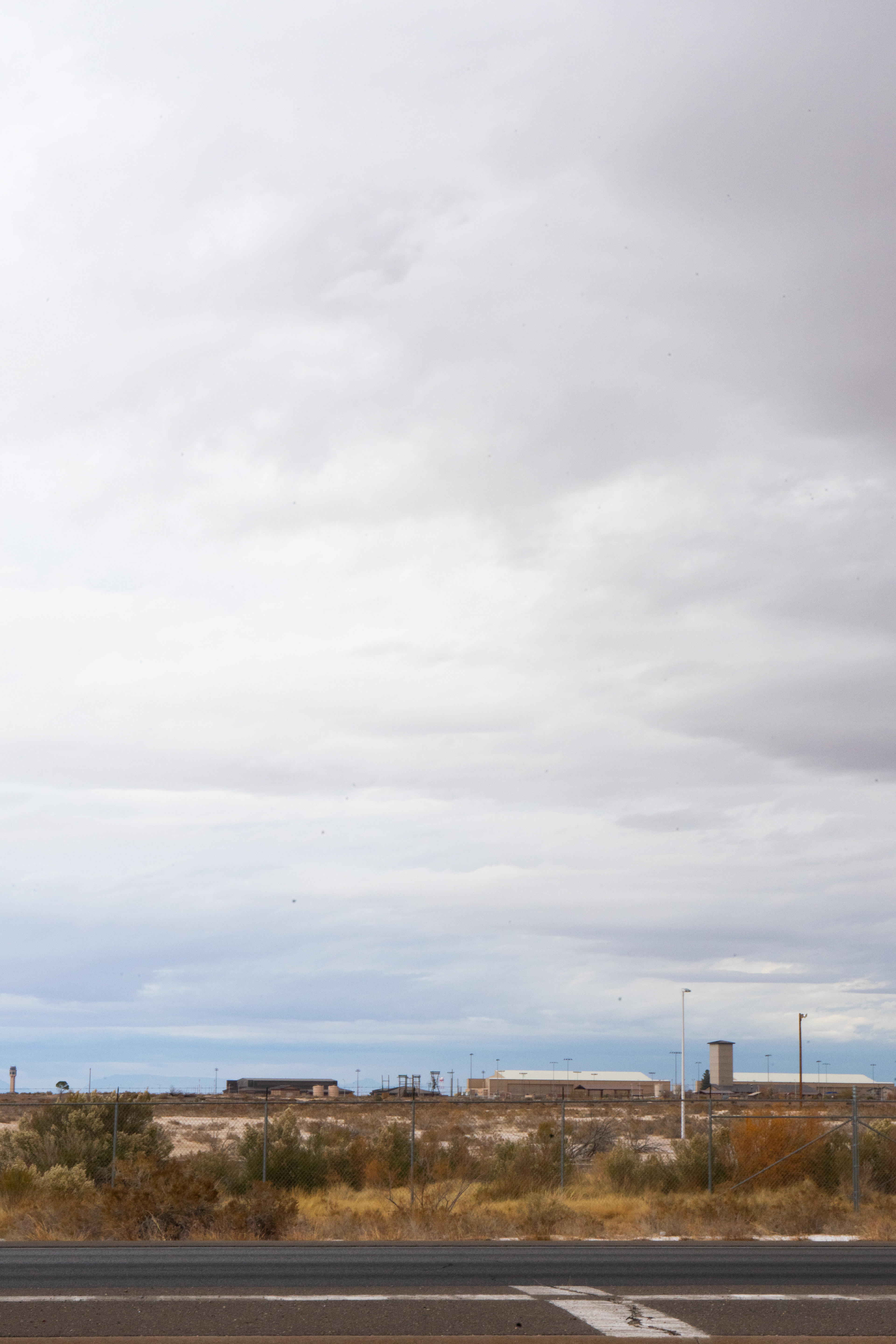
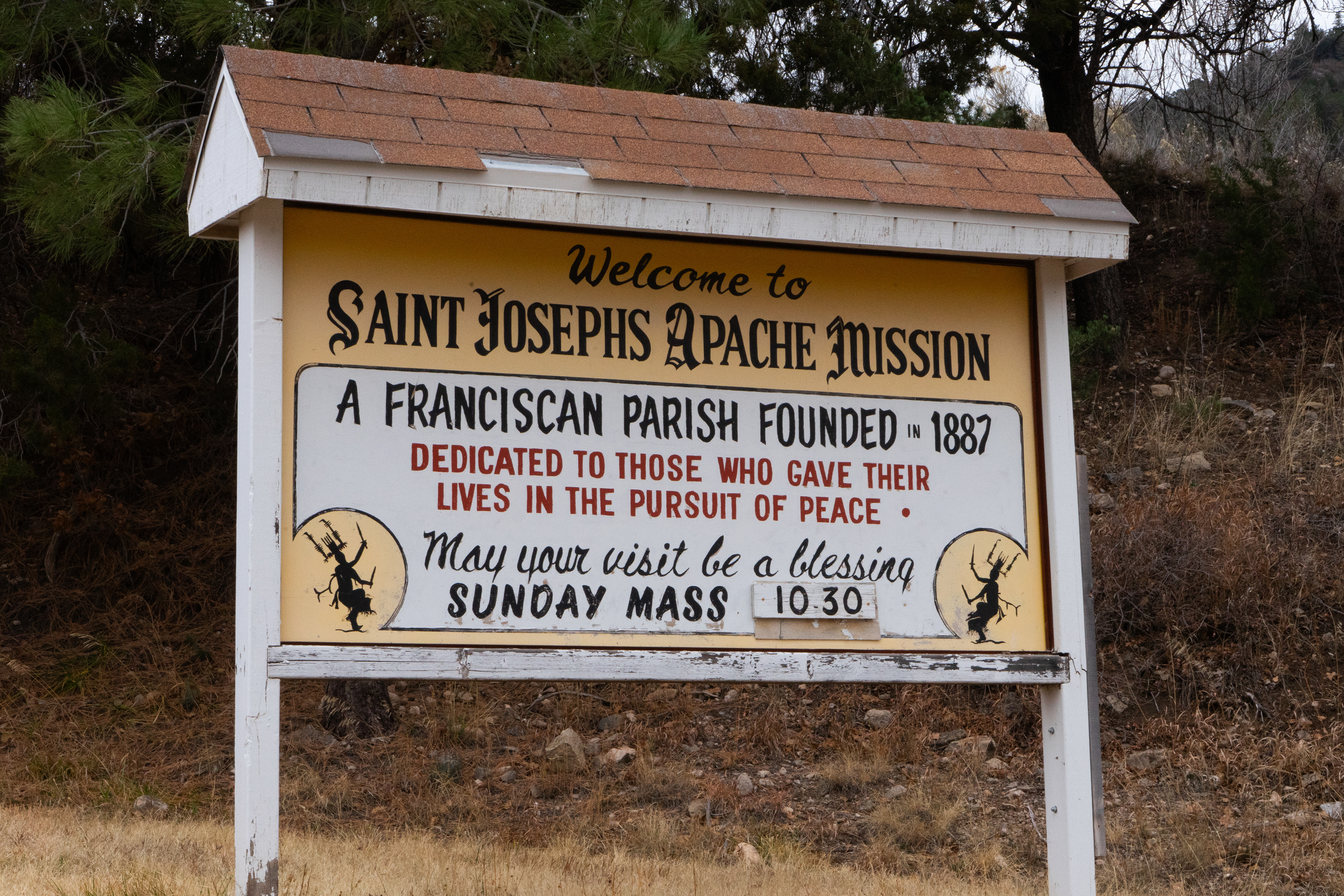
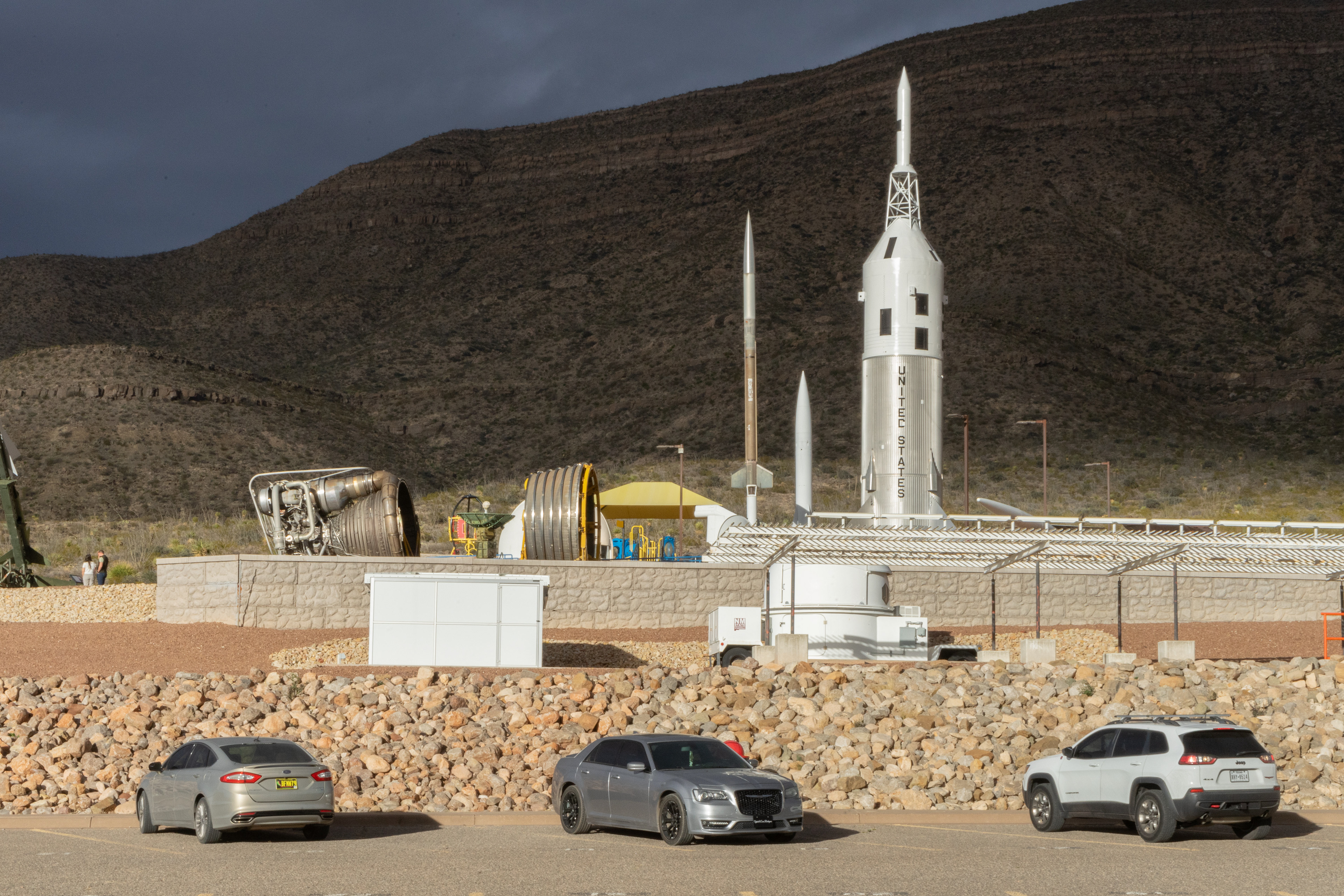
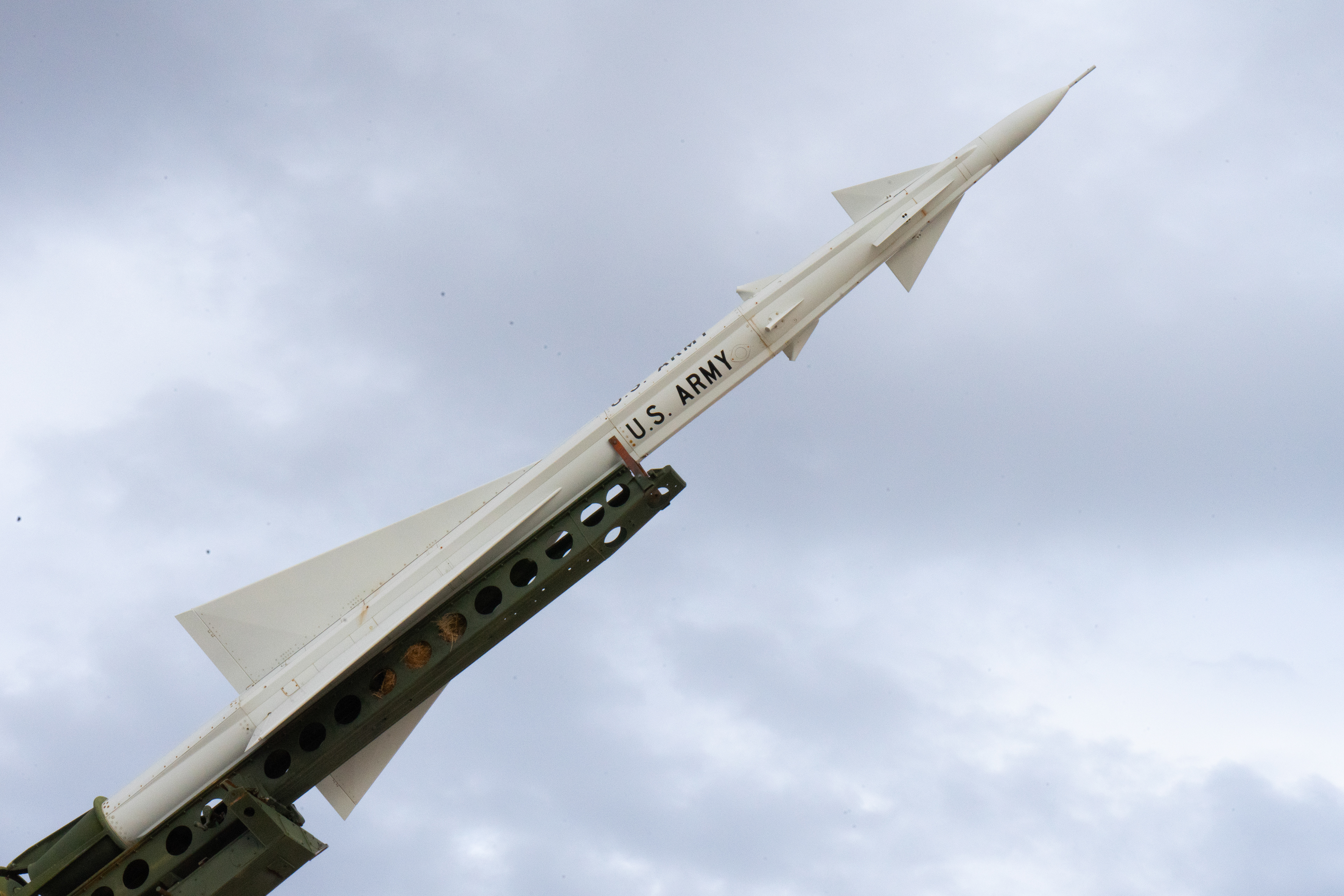
The next day, the family and I pile into a new Hyundai. We have three cars to choose from, none American - the Escalade I’ve been mentioning isn’t real, despite what I want. Because it’s big, it’s there, and it may have something to do with why the city of Las Cruces is also there, we drove to the White Sands Missile Range. The sign reads “Birthplace of America’s Missile and Space Activity,” and what they mean is that this is where J Robert Oppenheimer had the American Government build Los Alamos in order to destroy the world. He had had a spiritual experience here, and he wanted to be close to that. Also, White Sands remains big and empty enough to blow the living hell out of nothing without really bothering anybody. These ideas are connected. They share the same essence, as the church would say.
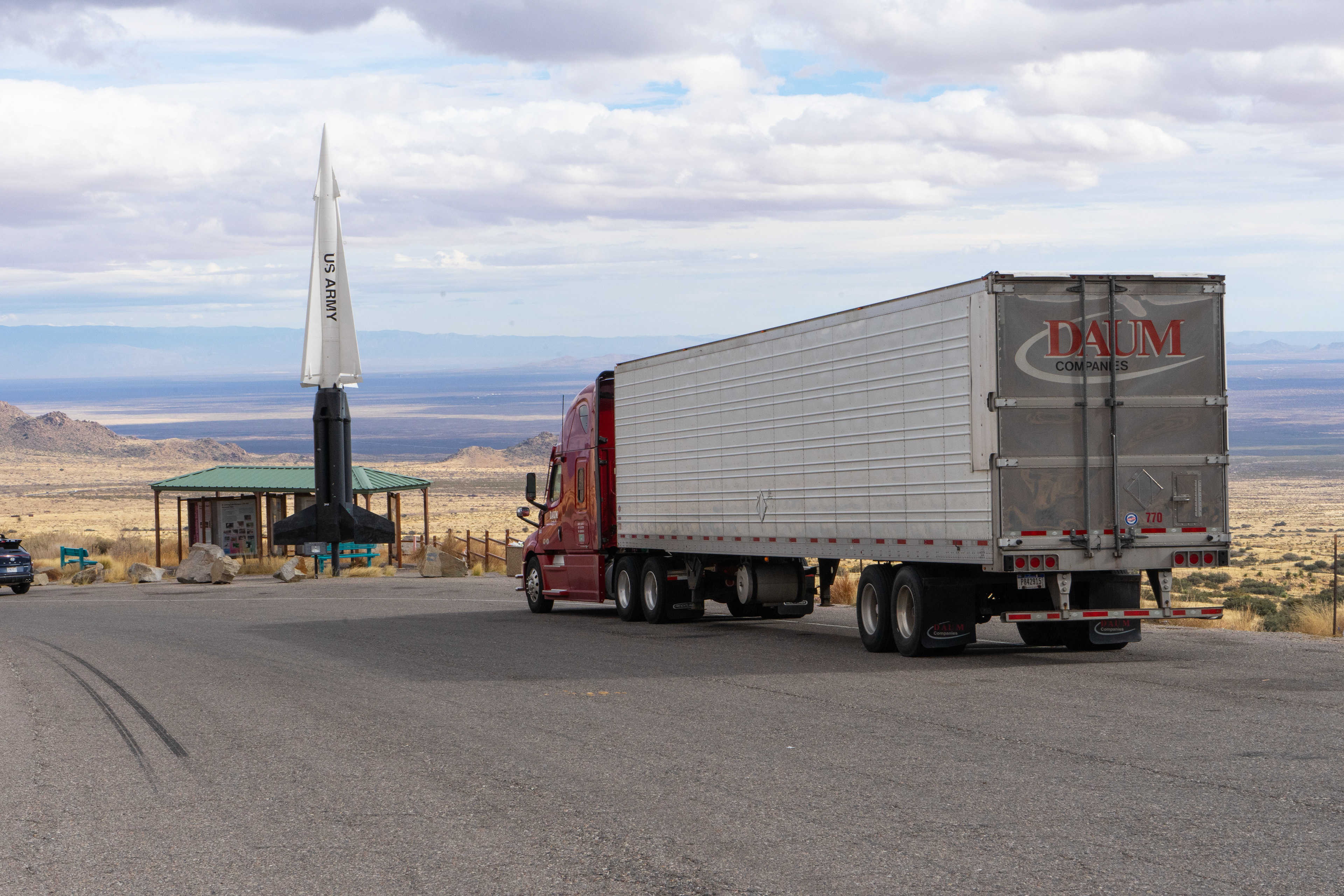
Daum, White Sands Missile Range, 2025, digital photograph, 4000x6000 pixels
Space, Aliens, God? Of course they all touch down on Earth in a place where the existence of life is stripped to is naked essence. Where life’s absurdity and its fragility are plain, the overwhelming urge to create and destroy are brought into harmony. The mind calls forth from the desert sky its most potent creators and begs for a fantastic death, a death with a story as wide as the rim of the earth. Is that what it is? Or is it just that in these places we see that we really do have to beg for our daily bread, which makes us nervous, so we devise monuments of destruction? To ward off God or to bring him close, depending. We peer into the sky with all the force that a superpower can bring to bear. Jet fuel launches particle detectors into space. In order strip the signal of noise, we put the James Webb Space Telescope into Lagrange 2, optimally shielded from the Sun and the Earth’s errant infrared radiation. As a technologically disembodied eye, we stare into the past, at bare photons traveling from shortly after the moment of creation. Or, we stare into a computer screen emitting photons, at an image of what our distant detectors recorded, at an image enhanced so that we can even see anything. We try to bring it closer, we try to wrap ourselves around it, in the same way the night sky wraps itself around us. Existence is in front of us in the desert. Of course that’s where we see aliens, Thoth, Christ, and whatever else it is that you’re out there looking for. I don’t think that’s particularly strange, or unique to Las Cruces. What is strange about Las Cruces is just that they build all these new houses unceasingly there, with air conditioning, in fake “Southwestern” Stucco made of plastic instead of plaster. That people drive around without being tasked with their existence, without coming face to face with it, even though, seemingly, that’s the main reason to be here, is the strange part. The fact that Americans don’t have to come to terms with it. That fact is, just like everything else, more visible here. How can we shut out the sky? We do it so well. With products, and mostly with cars. Speaking of the South and its slave plantation houses, Joan Didion wrote, “Southern houses and buildings once had space and windows and deep porches. This was perhaps the most beautiful and comfortable ordinary architecture in the United States, but it is no longer built, because of air-conditioning.” All of Las Cruces was built by, and for the production of more, air conditioning, cars, and dams.
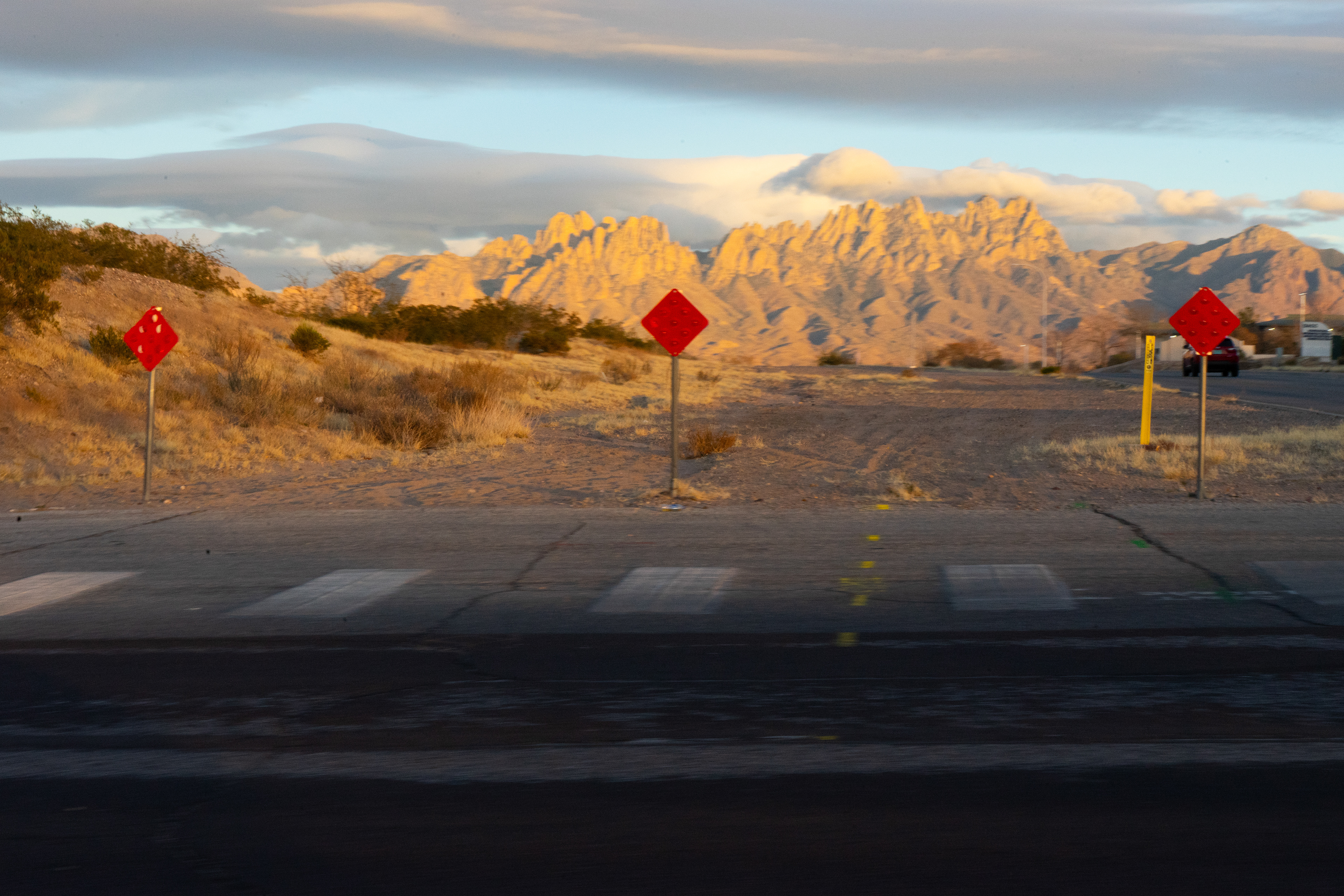
I should explain that while I was in Las Cruces, and away from my routines and accustomed places, I used the chance to quit smoking cigarettes. I would get up early in the morning and go on walks with my mom in order to keep moving ahead of the anxiety and cravings. In soft grey light over the immense space of The West, the air itself was the main thing to look at, died various purples and chartreuse by whatever it was my pupils happened to rest on, like a tea bag leeks color into the water. I’m mesmerized by it all, the enormity of beauty around me, but I can’t tell my mom. You may remember, she has been positioning agents to produce exactly this affect in me. So, I tell my dad later on: “If it doesn’t work out in New York, if I was forced to move to Las Cruces, and I wasn’t known for some artistic thing that I had to keep doing in order to live, I think I’d be perfectly happy moving here just to be a pure impressionist painter.” Without the slightest hint of knowing irony, or aspiration to invention, greatness, or knowledge. Simply the desire to paint the colors. It would be sadder to move down here still hoping to appeal to New York’s local taste for the Global Contemporary Art. The object within white walls and under fluorescent lighting that looks the same in the City as it does in Basel, Basel, Basel, or Basel Plus. Unspecified. With the air removed from the space between your retina and the object that is supposed to leach color into it. Much better to just come here to make something pretty, since this place has this one resource, its own beauty. Much better to come here without the ego or the ambition. Much better to make a lot of small paintings, and try to sell them into local hospitals, where somebody might need something pretty to look at for a minute, rather than the image in their head of their loved one struggling with a surgery, or a cancer, or a suicide attempt. Muted colors rather than blood red. Is that why people like Georgia O’Keefe and Agnes Martin? I think I could move here and get a car, a silly painting-mobile like Josephine Halvorson had, and just make impressionist paintings and be perfectly happy. Chartreuse grasses, scraggly, sparse, yet-to-be straw brooms set head up in the unfired pink earth. All of it suspended in grey. The lack of the bottom, of the sweetness that makes the drink okay, the suspension of it all is the beautiful part in the morning, before the light pins the arrows to wall, nails things down with shadow. But honestly, that part’s pretty too. Just another hour among many.
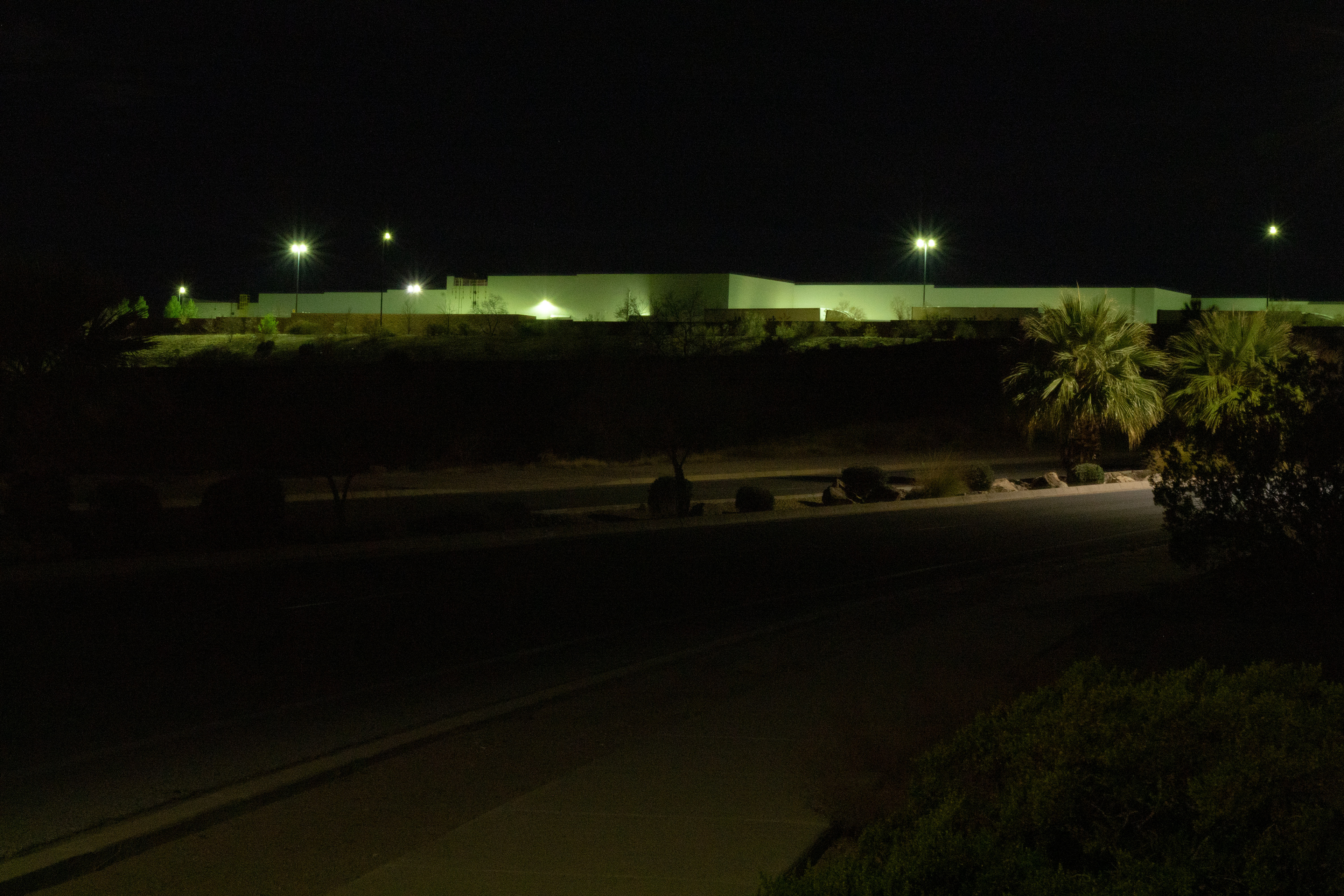
Walmart, 2025, digital photograph, 4000x6000 pixels
~Sunday, after Christmas on Thursday~
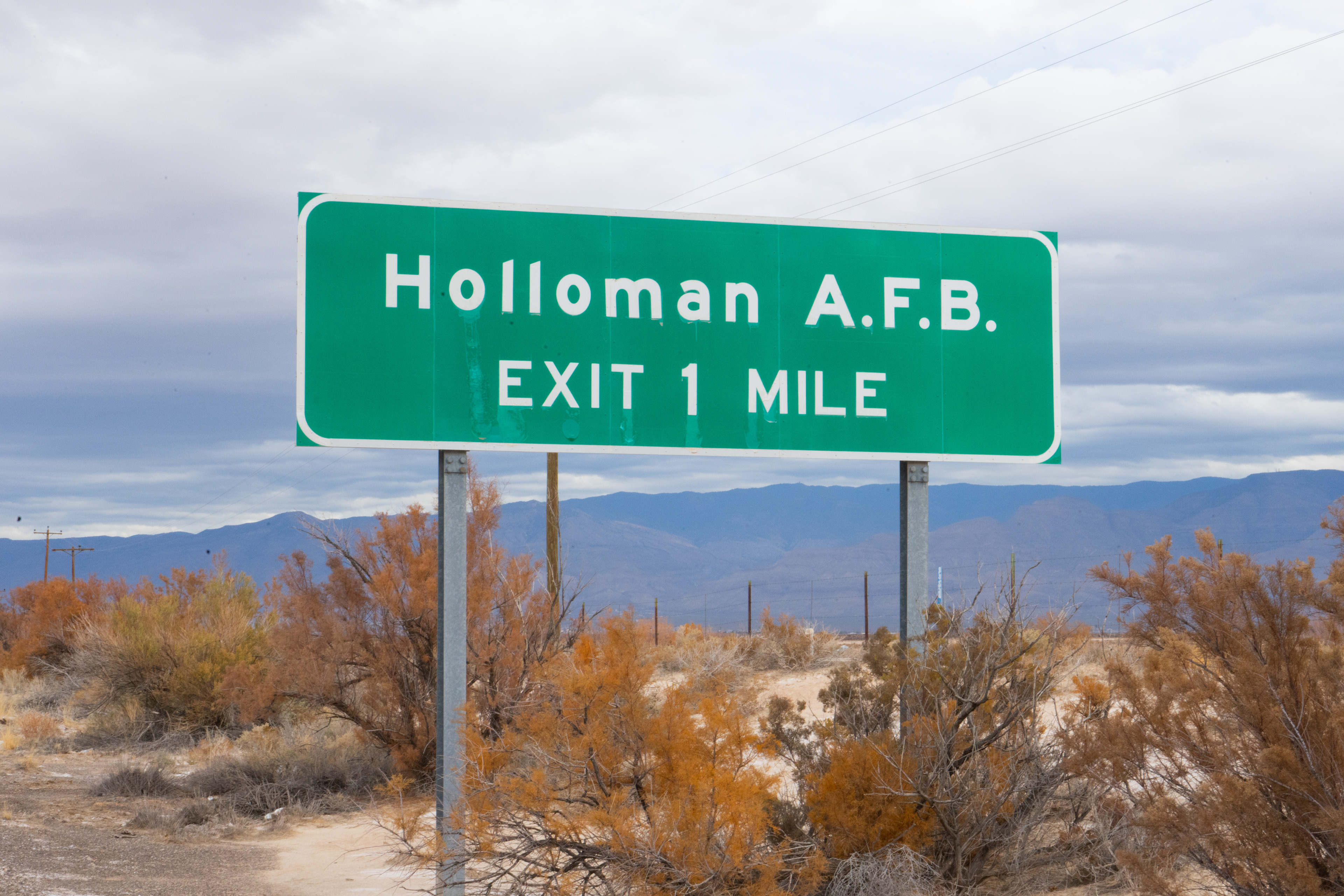
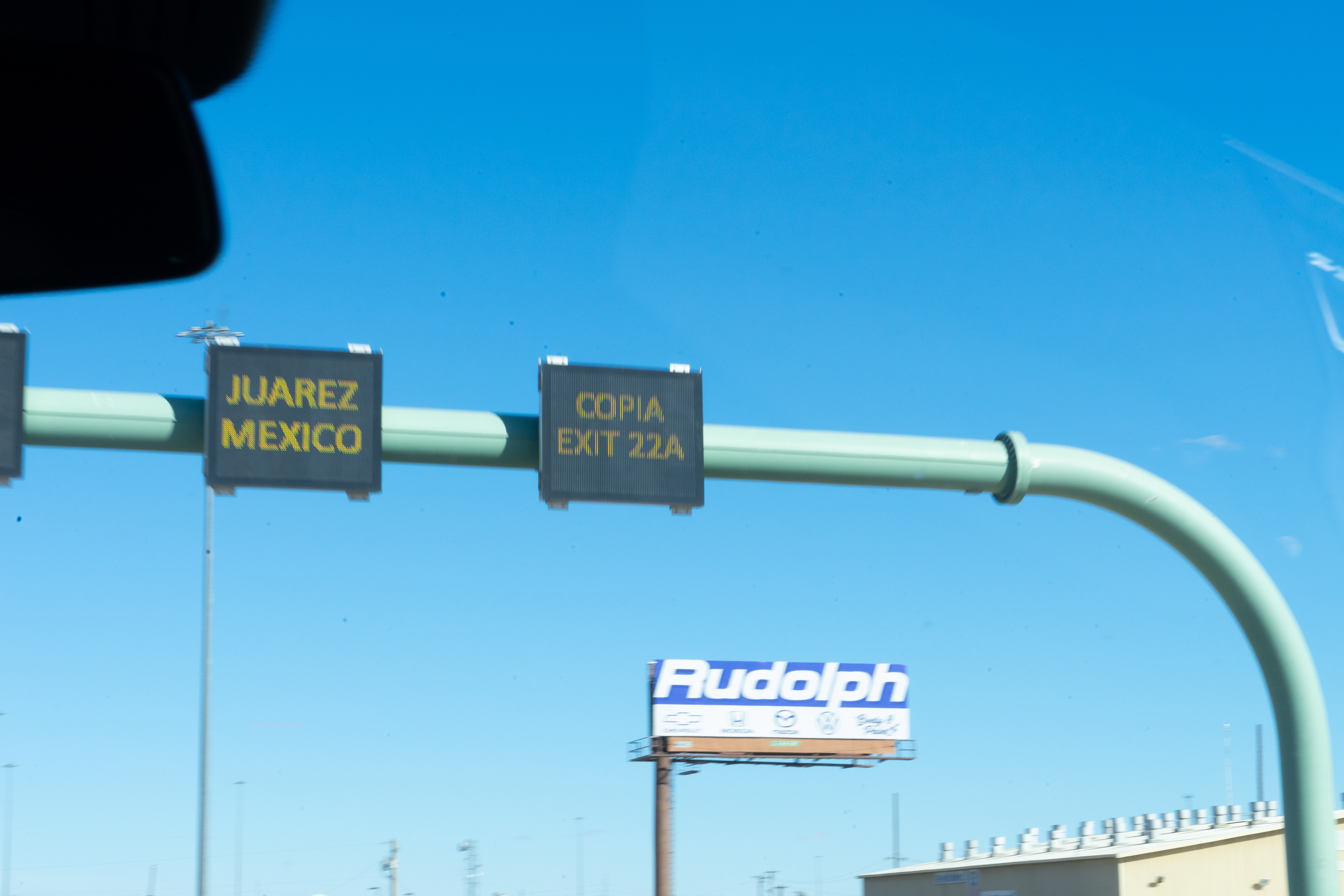
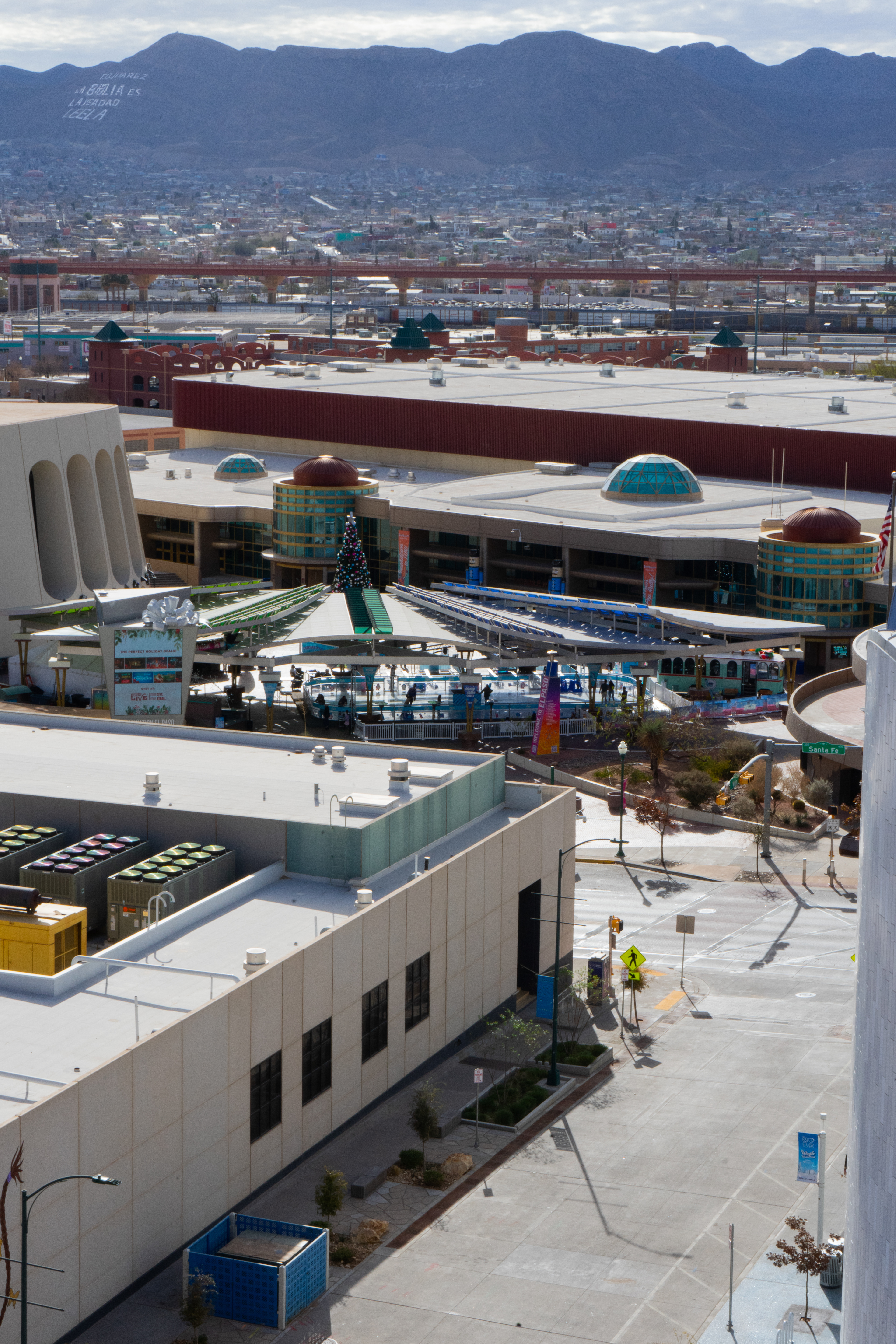
I took a photo of Juarez from the top floor of a parking garage in downtown El Paso. Juarez surrounds El Paso. It is something like three to five times the size. For no related reason, the largest division of armored vehicles in the US is based in El Paso, and it is called Fort Bliss. I forgot to go down to the river to see if it actually flows there, if the division between the two nations is actually there. A twenty two year old I met at church is stationed there, and he told me that Fort Bliss is the worst possible place for a mechanic to be, because there are so many tanks, and that only 17 percent of them work. He also told me that he can’t go to Juarez, that it is black-listed by the military. A third world country right across the river, if the river exists. I think to myself that I should come back and stay in Juarez. And I remember the sign by the river bed in the park, and the dam it mentioned. The dam that saved all the river for later, and I think I should go there, too, and see if there’s any river left.
The kid said that he would not be re-enlisting. The Jews, basically, were to blame for this. Perverse excitement swept over me as he said this. I had found something to write about. He says he doesn’t want to die for what this country stands for. I don’t either, but I think for different reasons. What’s his deal? He is paranoid about the country, his role in both it and its military, and about his own death not being in his control. His life is not his to live, and he’s blaming who he mistakenly takes to be responsible for his instrumentalization. He’s angry at the people who are using him to achieve their ends. All of this I think is reasonable. If only I can stay with him long enough to redirect his anger from “The Jews” toward the American government, to capitalism, to my own pet scapegoats. Am I supposed to be here to listen to this kid? To judo his hatred into Christ’s love? Maybe I’m also supposed to realize that I have no more understanding or control over my own role in grand movements of power, class, race, nation, etc than he does. Or that the absurdity I see in his antisemitism is the same absurdity God would see in my own fears and motivations.
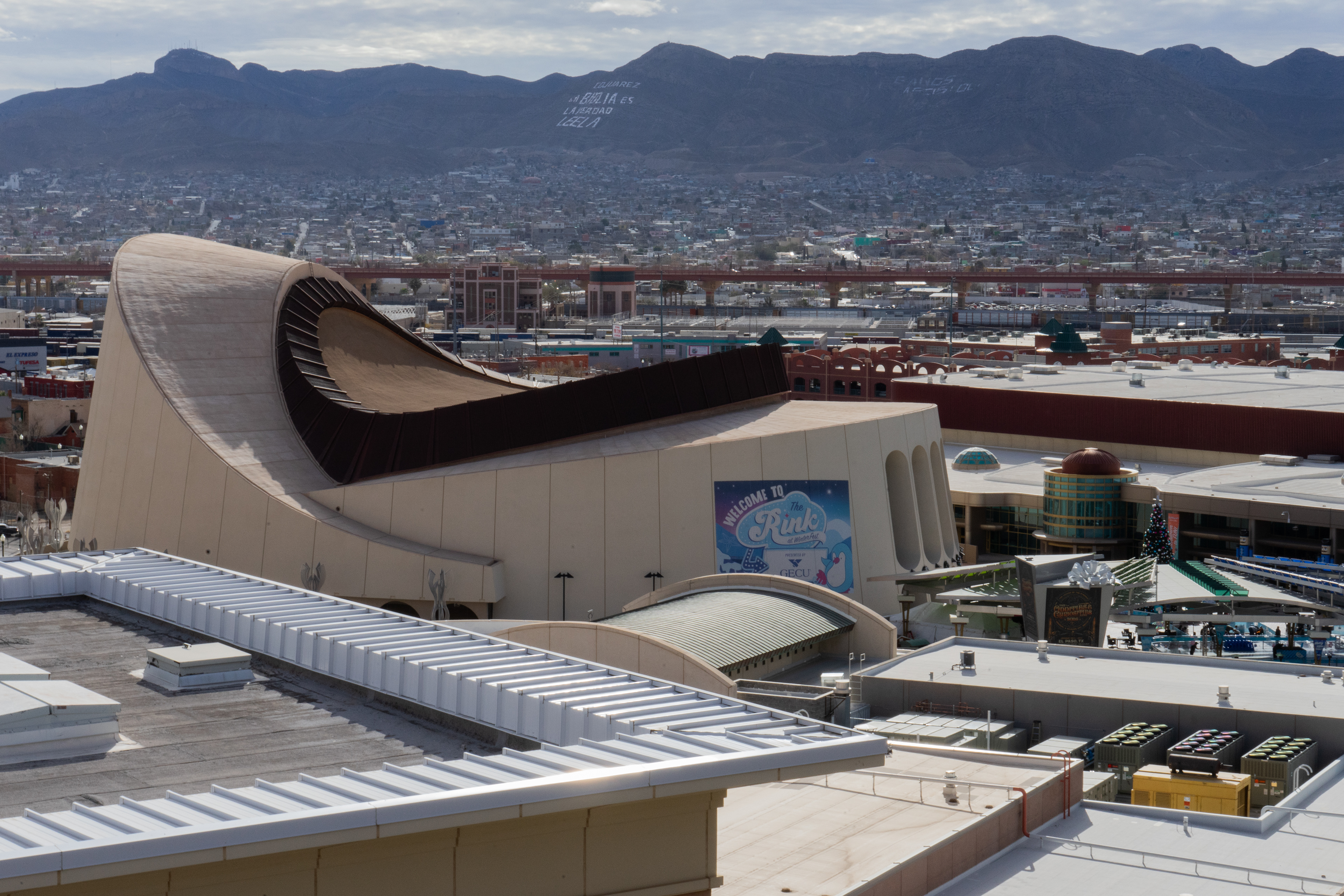
El Paso and Juarez, 2025, digital photograph, 4000x6000 pixels
He tells me that if he doesn’t have a wife and a kid by the time he’s 35 (I’m 32, what’s he saying to me?), that he’s going to say “f*ck the World, and go to Mount Athos to be a Monk. Sorry for cursing in church.” “That’s fine,” I comfort him. Maybe that would be good for him. Mom doesn’t think the Holy Mountain would take him. She thinks that you have to be qualified to go there, that they would want you to have been somebody before giving up on the idea of being somebody. I think about the parable of the poor woman and the two mites. I think its funny that he only wants to give up everything if he doesn’t get the objects he really wants: a living pocket pussy and progeny, someone to inherit his things and his genes. I get it. That’s a practical way of thinking about leaving the world. I love haggling for the Pearl of Great Price. He was wearing merch from an orthodox Youtube channel to church, like wearing a band tee to the same band’s show. The shirt said “Death to the World.” I think I saw a meme on Instagram somewhere recently about people turning to reality for a break from the internet. That’s what this all this really was. He was also telling me that the Book of Enoch explains how dinosaur bones were really the bones of giants, or something. I tried to explain that Moses used the best language of the time in which he lived to describe fundamentally inexplicable processes that science has since gone a long way towards developing new language for. That revelation takes place within time and context. He was open to the idea. I hope he doesn’t kill my parents. Or anyone. But, I guess that is his job. He is currently on active duty because of the operation to “obtain complete operational control of the southern border of the United States,” (thank you, war.gov). The quakers probably have it right, that you cannot be a Christian and a soldier.
The most frightening thing about the conversation was that I think he was probably drawn to the church because of the antisemitic language of the gospels themselves. I’ve just never thought about that before. John may say that your prime commandment is to love one another, but everywhere, over and over, he and the other Evangelists continually condemn “the Jews.” Why therefore, at church, the book club for these four books, am I shocked to hear someone stoked about those parts of the gospels? Why not the parts I like? Why does it have to be my parents’ church? They say that eating the body of Christ, when you take communion, you become part of the living body of Christ. And that, when returning to church after a long period of absence and sin, you have been a dead cell in that body. That you begin to heal through repentance, and eventually you have life in Him, who so loved the world that he died on the cross for it. The kid mentioned that the Orthodox Church’s emphasis on repentance drew him to it. And I think that we’ve both been out of the church for a while, and that it’s good that we’re here, and I look forward to a new life in Christ.
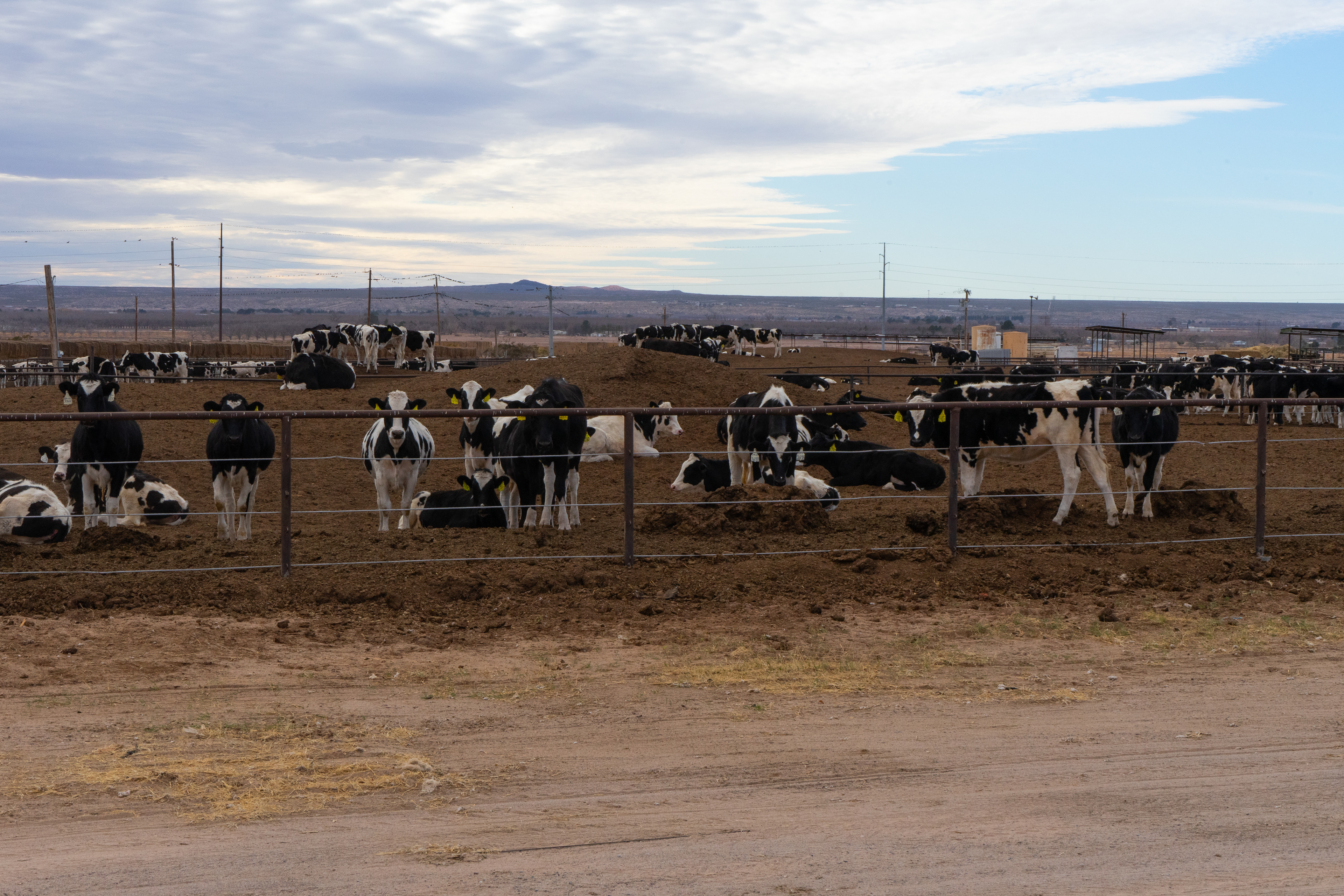
Wait, wait, wait. I shouldn’t minimize what he said, or my behavior with him. I should have just told the kid to fuck off. You don’t hold the door for hate. I should have at least treated him like the weirdo he was: walked away from him, let him know that I don’t welcome this type of thinking. Instead, I entertained him for fifteen minutes and made him feel at home. My mom says that the priest has been doing good work with soldiers. Does our priest hate jews? Does the military hate jews? “They’re not sending their best guys,” as the President says. Rapists, Murderers, there is an active invasion. El Paso is surrounded by Juarez. In the entrance of the church, there was an icon showing people climbing a ladder to Christ in Heaven, and demons picking some of them off. He thinks the Mexicans and the Jews and the Government Shills are the demons. I think that the fear itself is the demon, including my fear of him. And me writing that, “Including my fear of him,” as an example of my self awareness, is an example of me still thinking I’m better than him for being self-aware, which is another one of the demons, ant it's called self-righteousness. Is he one of the demons? Do I hate him for his hatred? Is he possessed by one? Can I trust the Church to cast out the demon of hate from him, this fellow suffering servant of Christ? The Holy Mountain, Mount Athos, took Hitler as its personal protector after the Nazis occupied Greece. Best not to think about it too much. All this paranoia, this fear re-ingested. Before I left, I had a conversation with someone who I should have found more sympathetic: a lady, who was also an artist. She told me that America wants artists dead. On the way home, I took a picture of a massive dairy next to the empty river bed. The cows got up from eating their own shit to look at me.
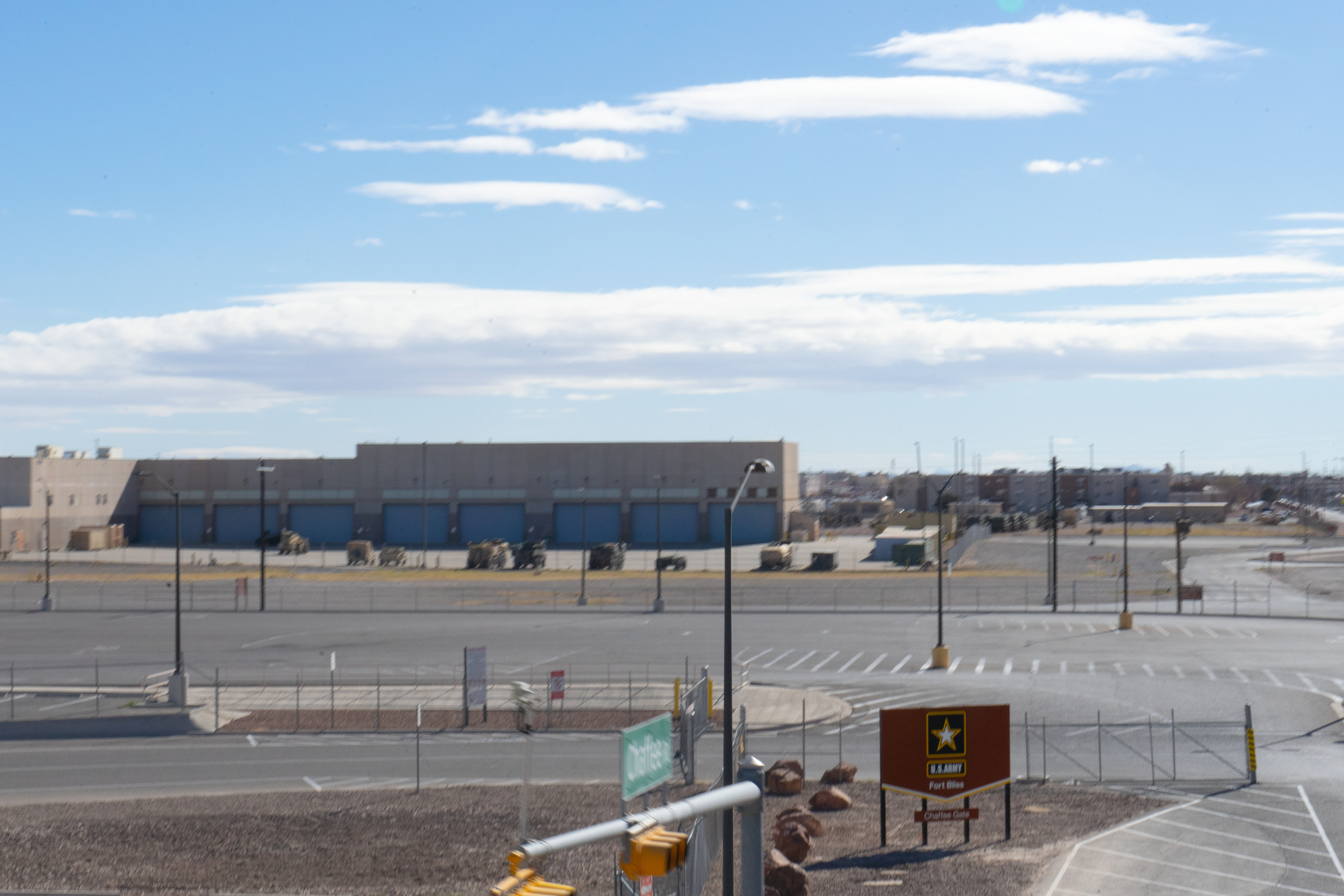
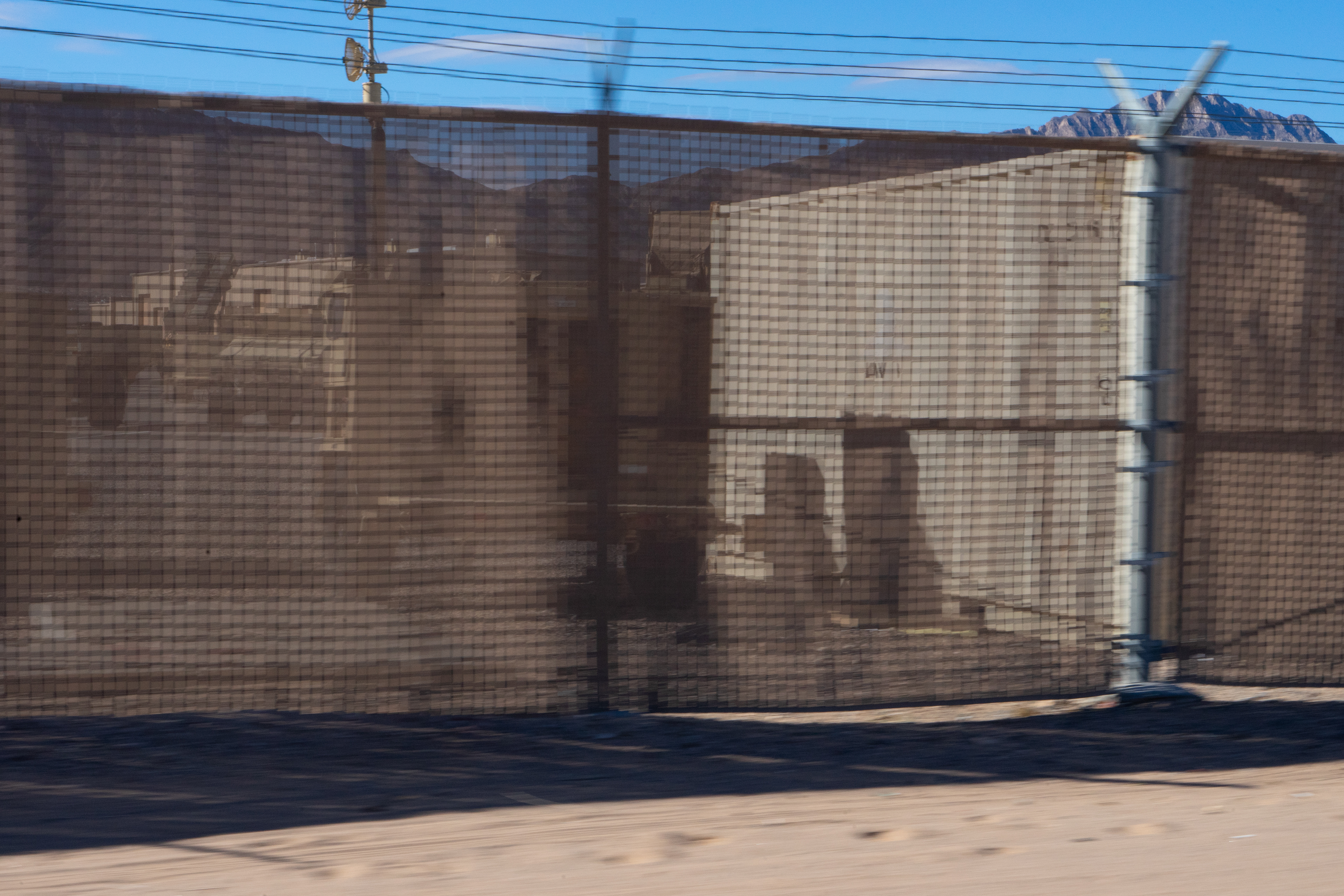
I should have been terrified, I should have felt revulsion, justification for living in New York. But, I felt like I was right where I should have been. I was having a spiritual experience with other people, even though I didn’t agree with them. I said earlier that Americans were great at shutting out their existential dread in the desert with products, but who am I and what do I know? Here we all were going to church and talking about exactly what we thought it was. I was grateful to be in church in El Paso. I went to go take a couple of photos of Fort Bliss itself, but the best I could do was get a picture of some tank-like-trucks behind a fence. Maybe, since the Priest does so much work with the soldiers, I could talk to one of them about how to get a guest pass when I come back. They don’t let just anyone into Fort Bliss.
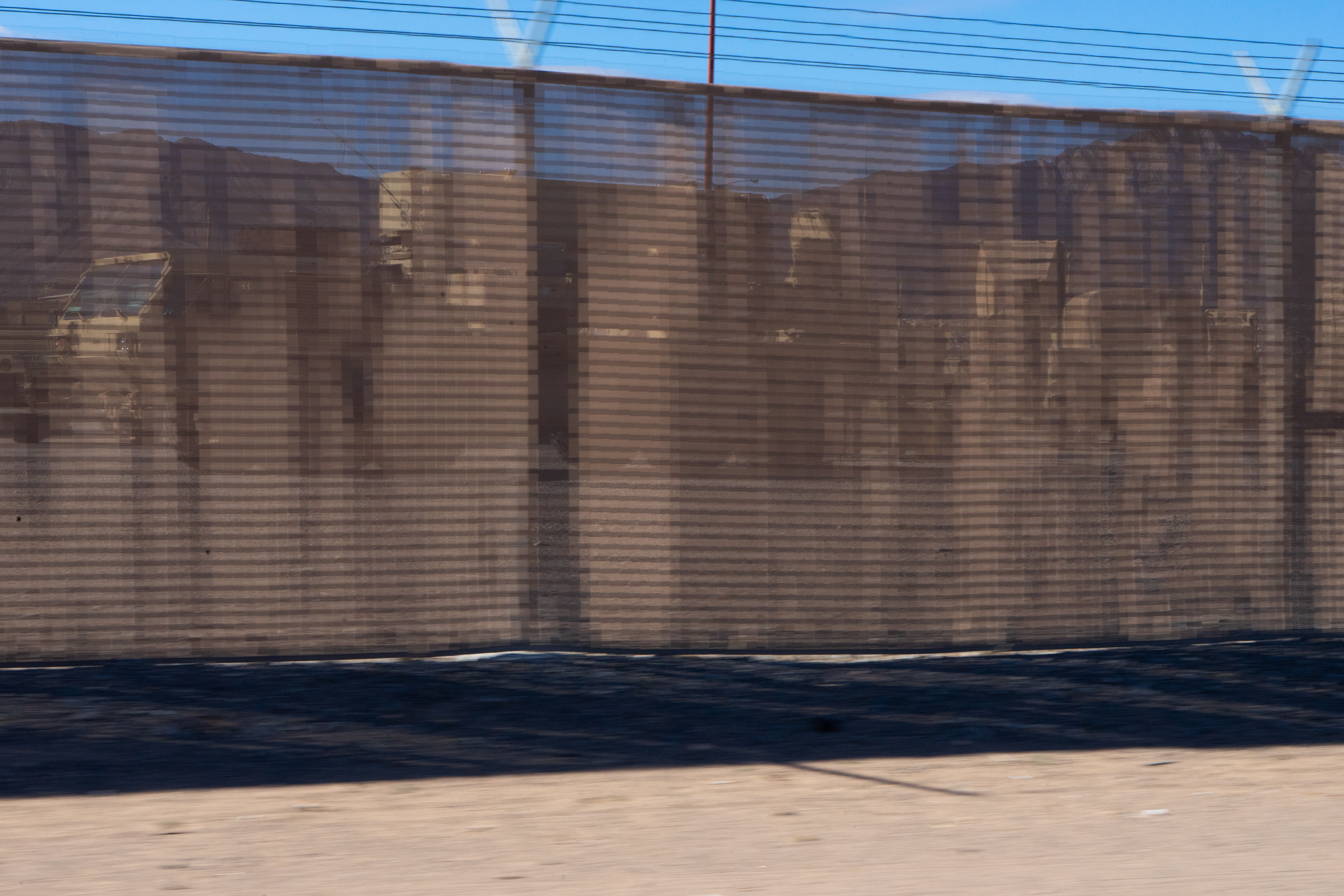
Fort Bliss, 2025, digital photograph, 4000x6000 pixels, above
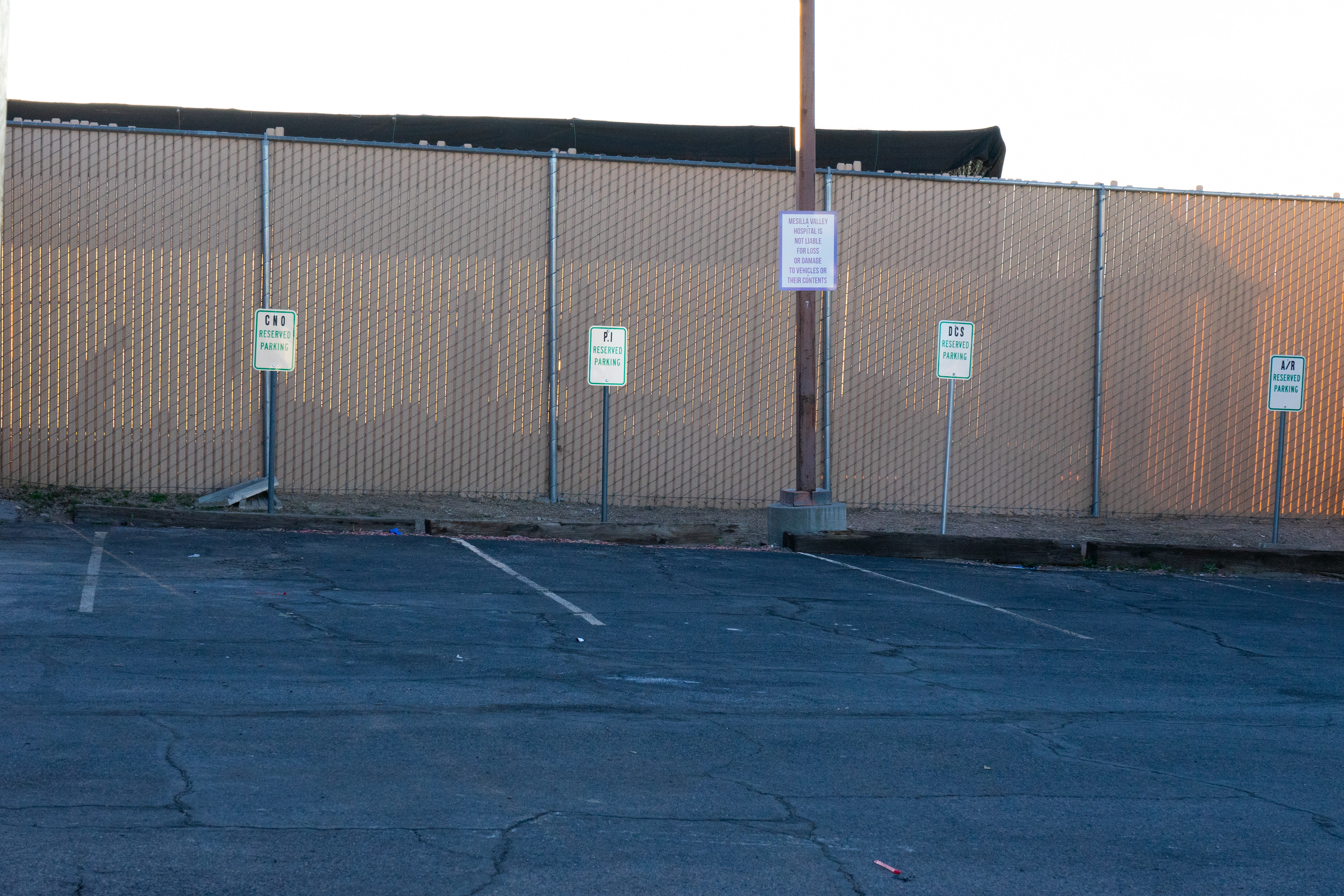
Kids Playing at the Psych Hospital, 2025, digital photograph, 4000x6000 pixels, below
~People, and taking pictures of them~
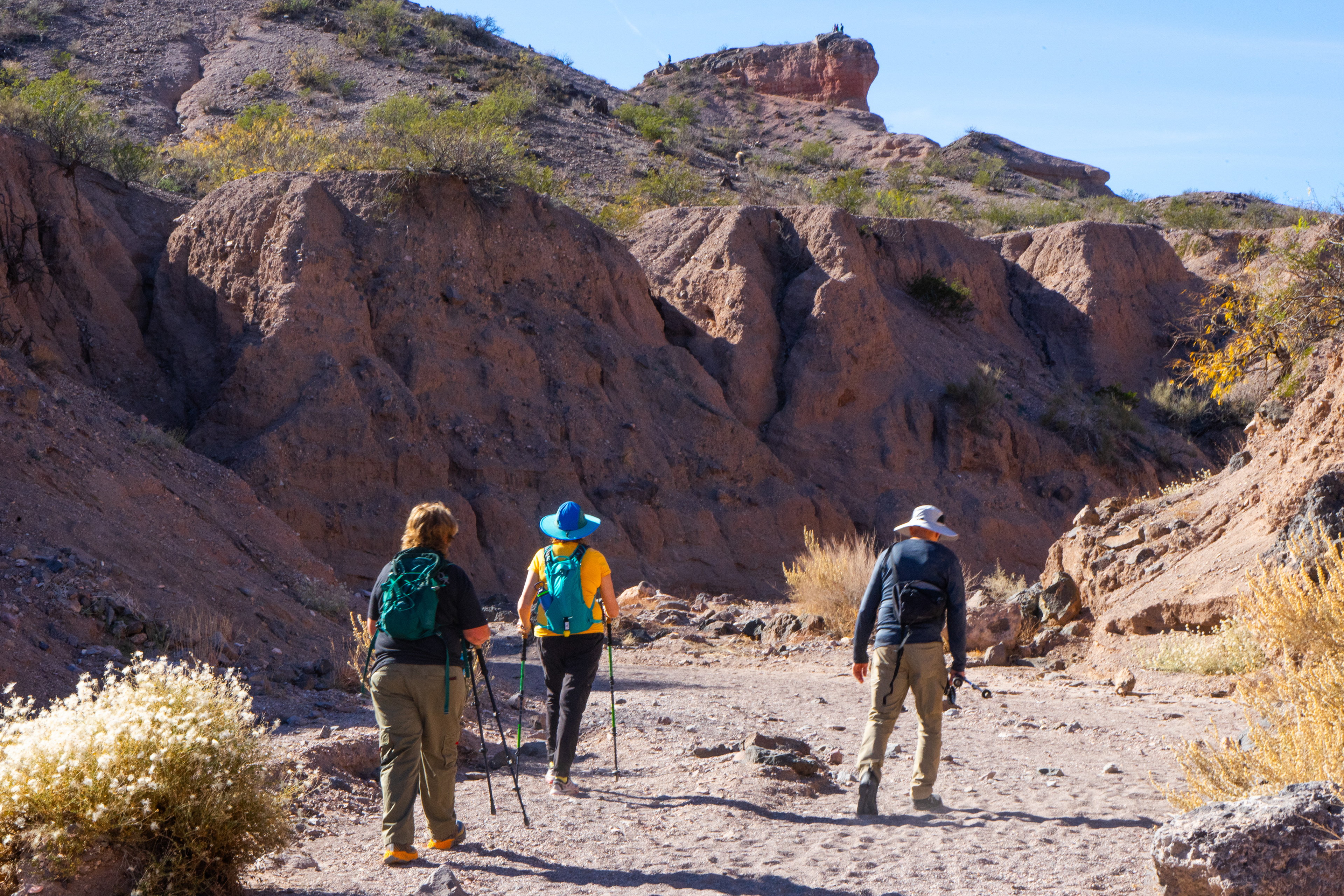
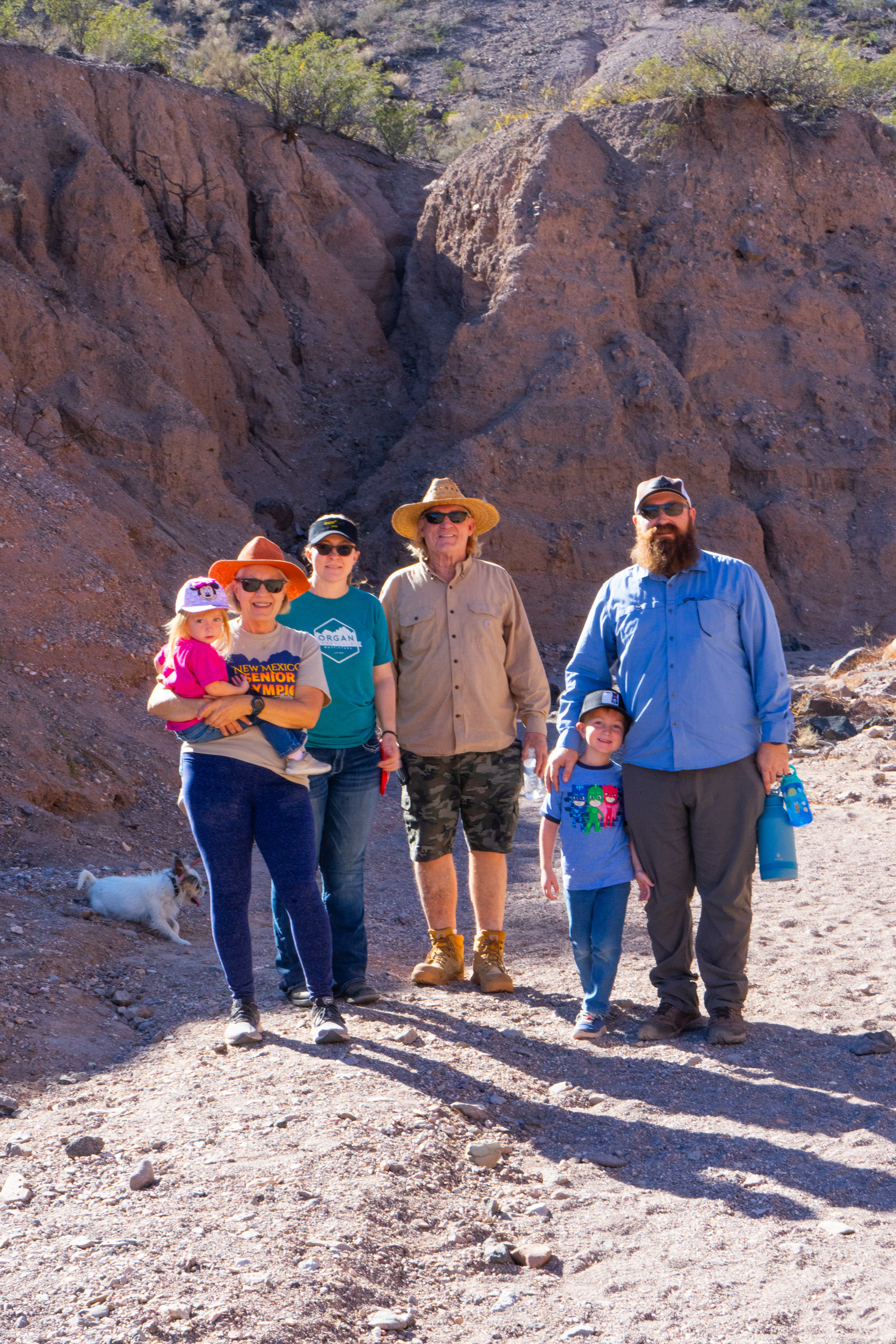
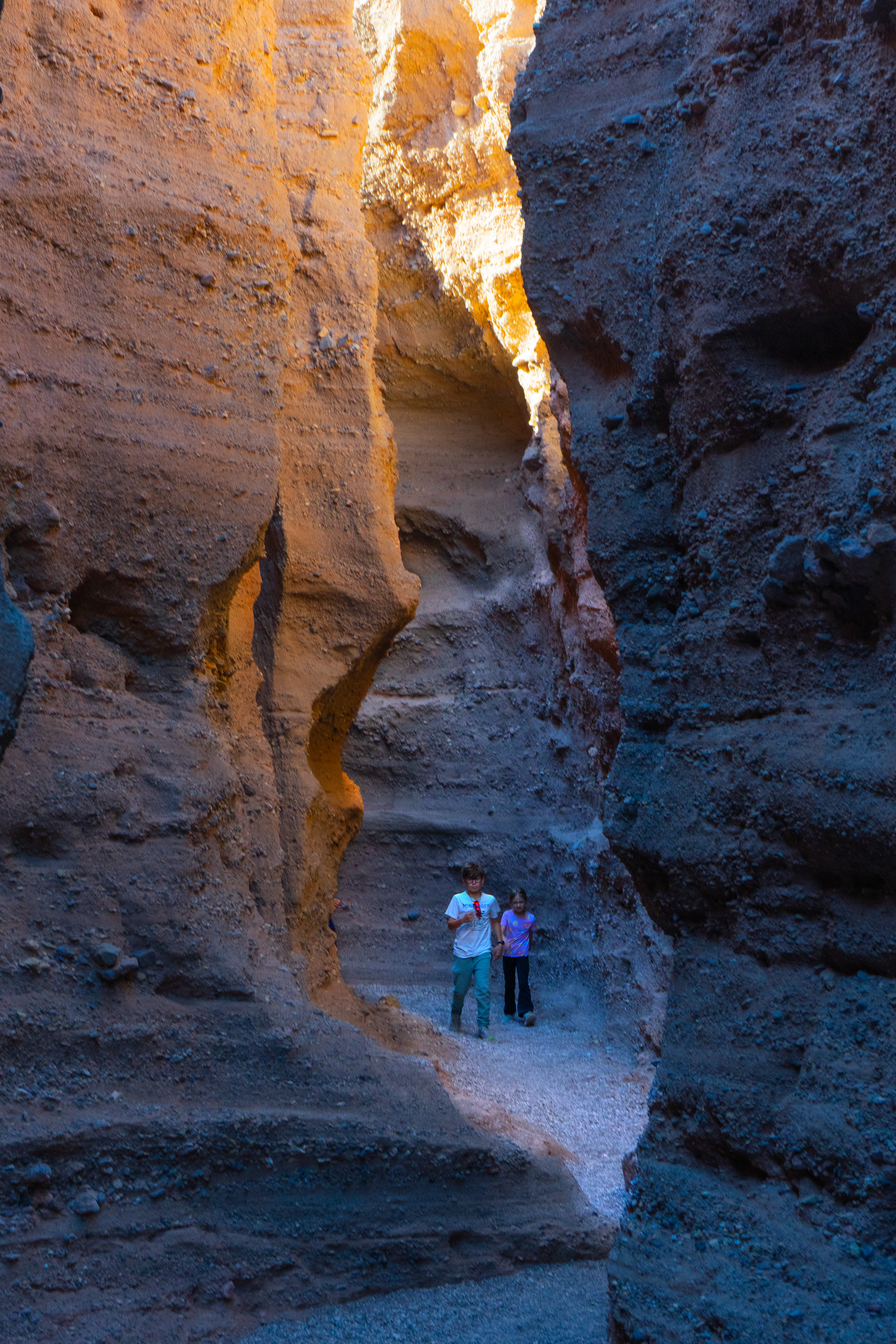
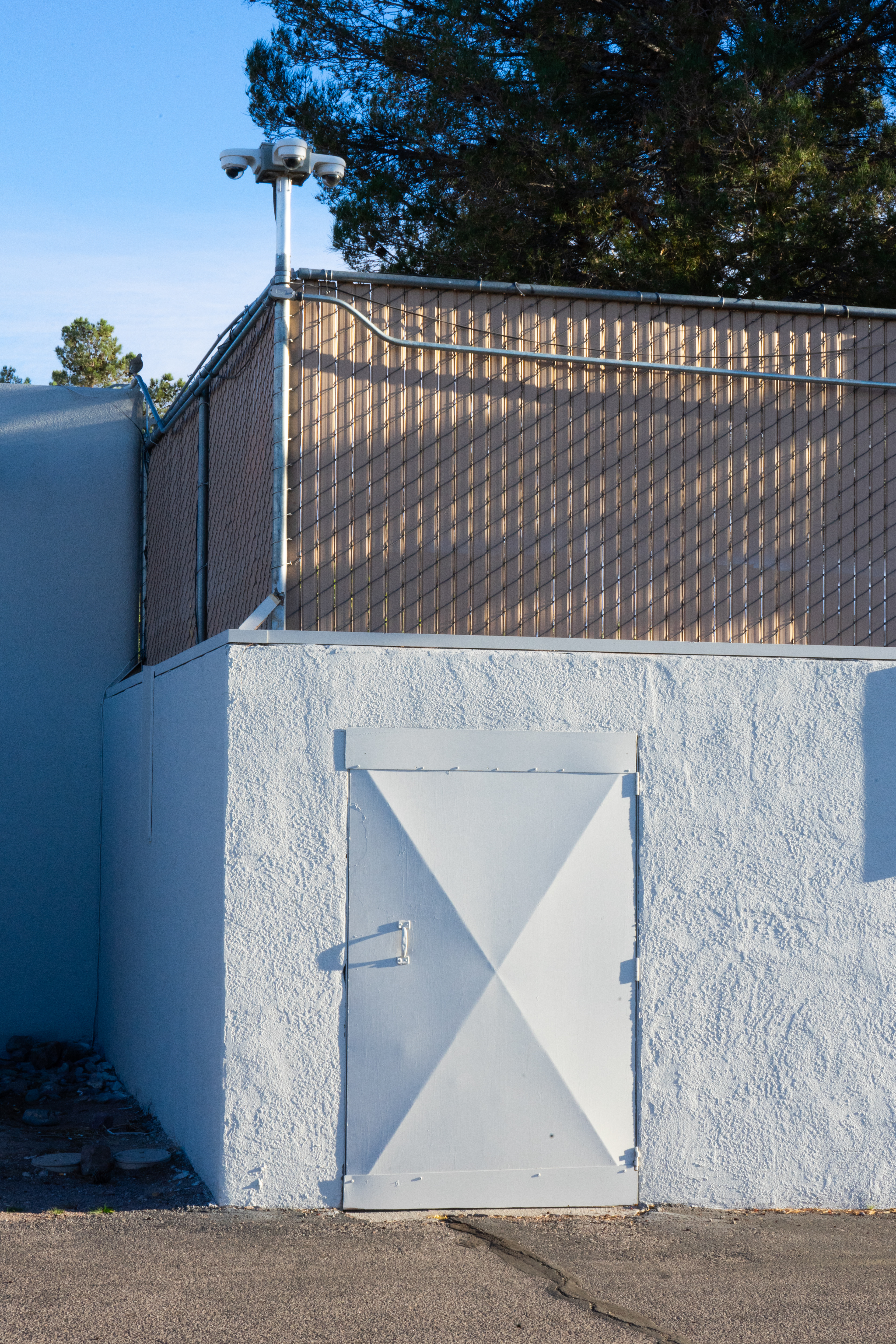
My mom runs a psych hospital in Las Cruces with high fences that look like the ones surrounding Fort Bliss. I know that those fences would drive me insane if I was interred there, in a hospital to help me recover from my insanity. Kids cast shadows on the fences while they were playing behind them. They were patients, and they couldn’t leave. I wasn’t allowed to to photograph them directly. Going through the photos I’d taken so far, I wondered why I didn’t take more pictures of people besides these shadows at the psych ward. It occurs to me that we only really “care” about as many people as will fit into the car with us. A nuclear family, and that there are nearly as many cars as there are people in this family, so we don’t have to spend too much time with any of them either. Are more loving people just naturally drawn to buses? Maybe that’s why hippies are so stereotypically interested in them. Connection is key, they say. If this place looks this weird, its buildings and nature, then think of how weird the people must be. Think of the stories. More reasons to keep coming back. Earlier in the trip, my family went hiking through a narrow, very Instagramable gorge. The pass tightened, and a line built up as people slowed to climb over some rocks that had fallen in the way. Stopped there, with some strangers, my aunt started a goofy conversation about how long the rock had been there. Was it there the last time they went hiking here? Or not? Nobody remembered, but it was nice to talk to each other. My family is small, and we keep to ourselves, and because of that we may spend a bit too much time concerned with just our own concerns. Small issues, real or imagined, inflate to take up the whole room.
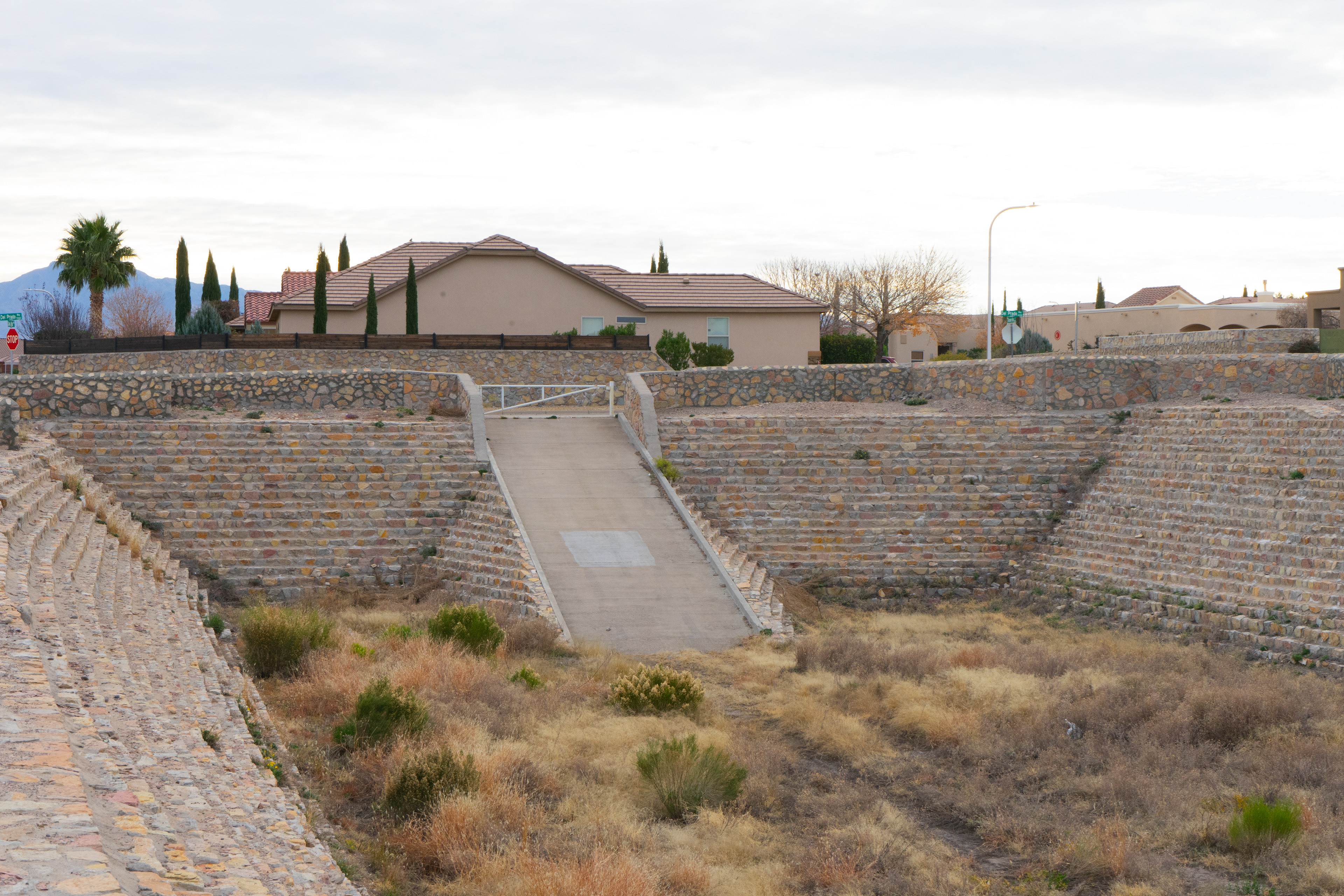
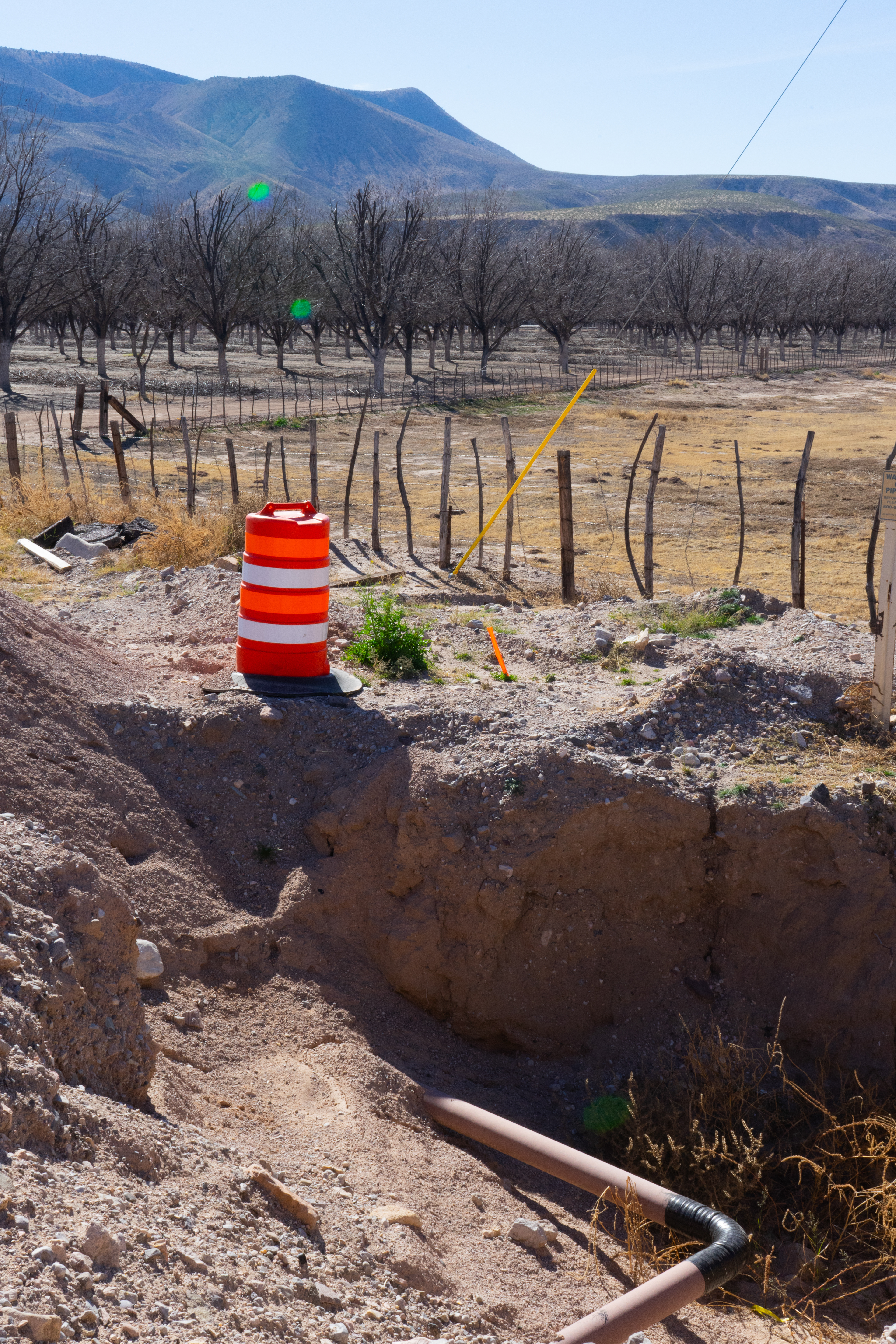
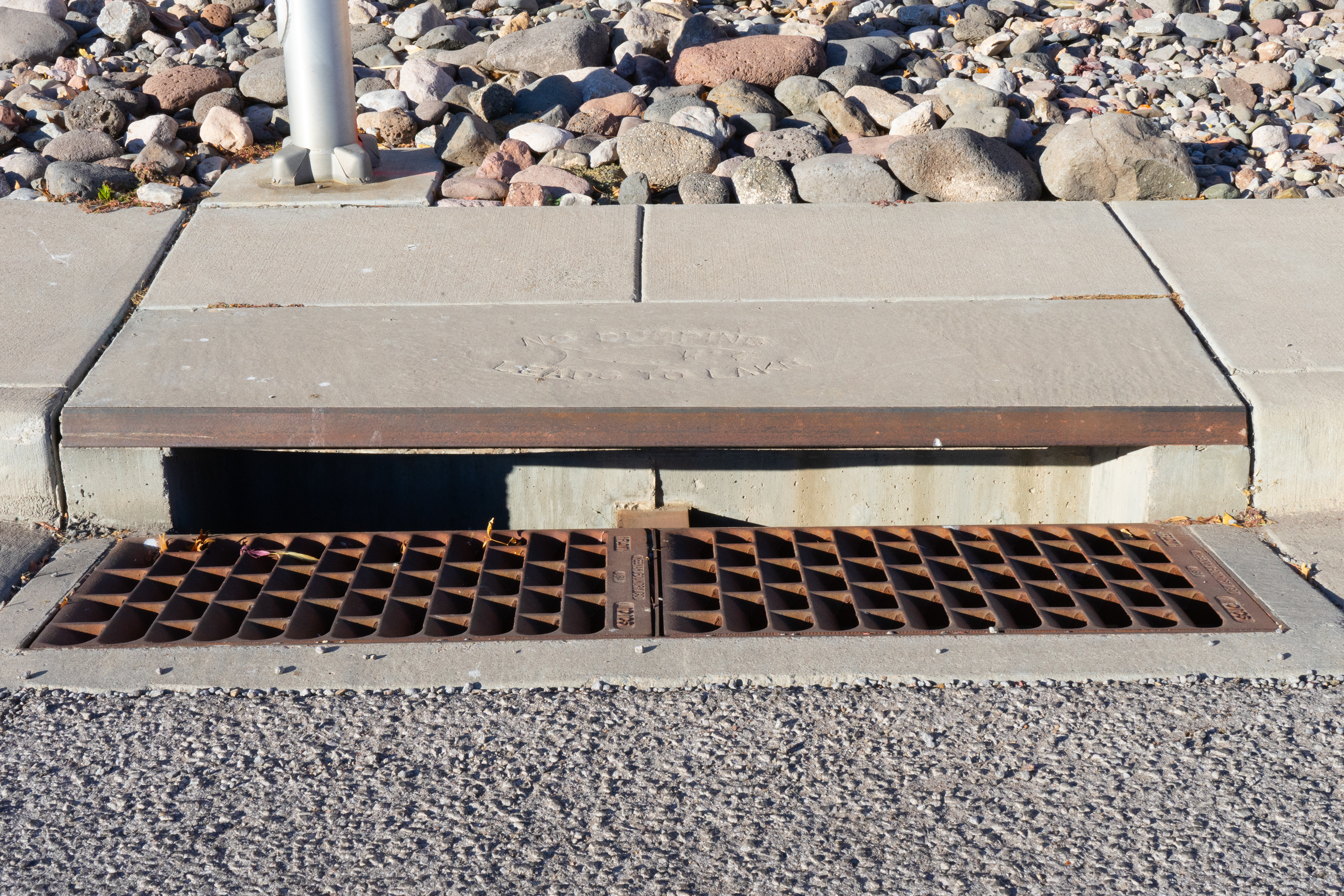
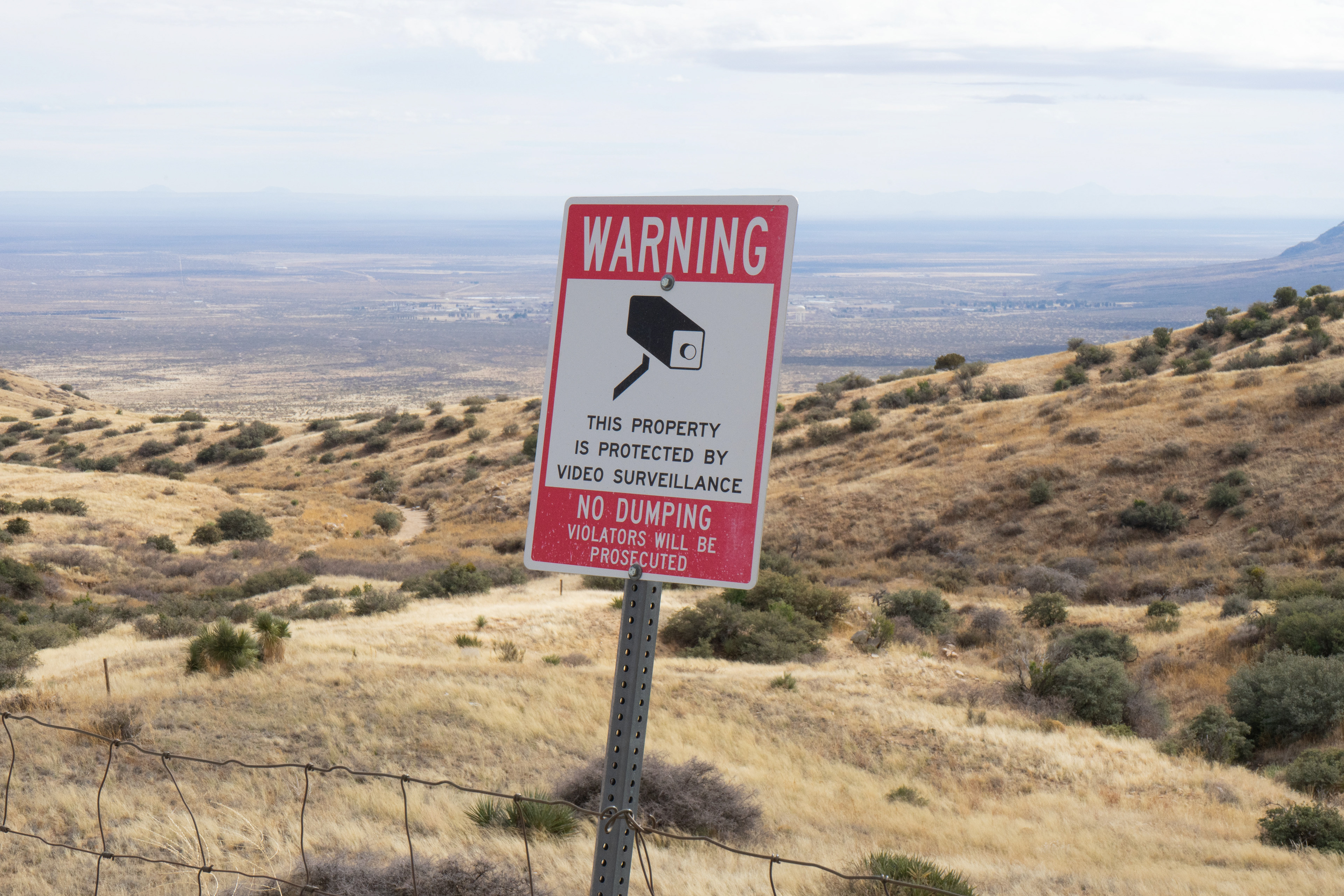
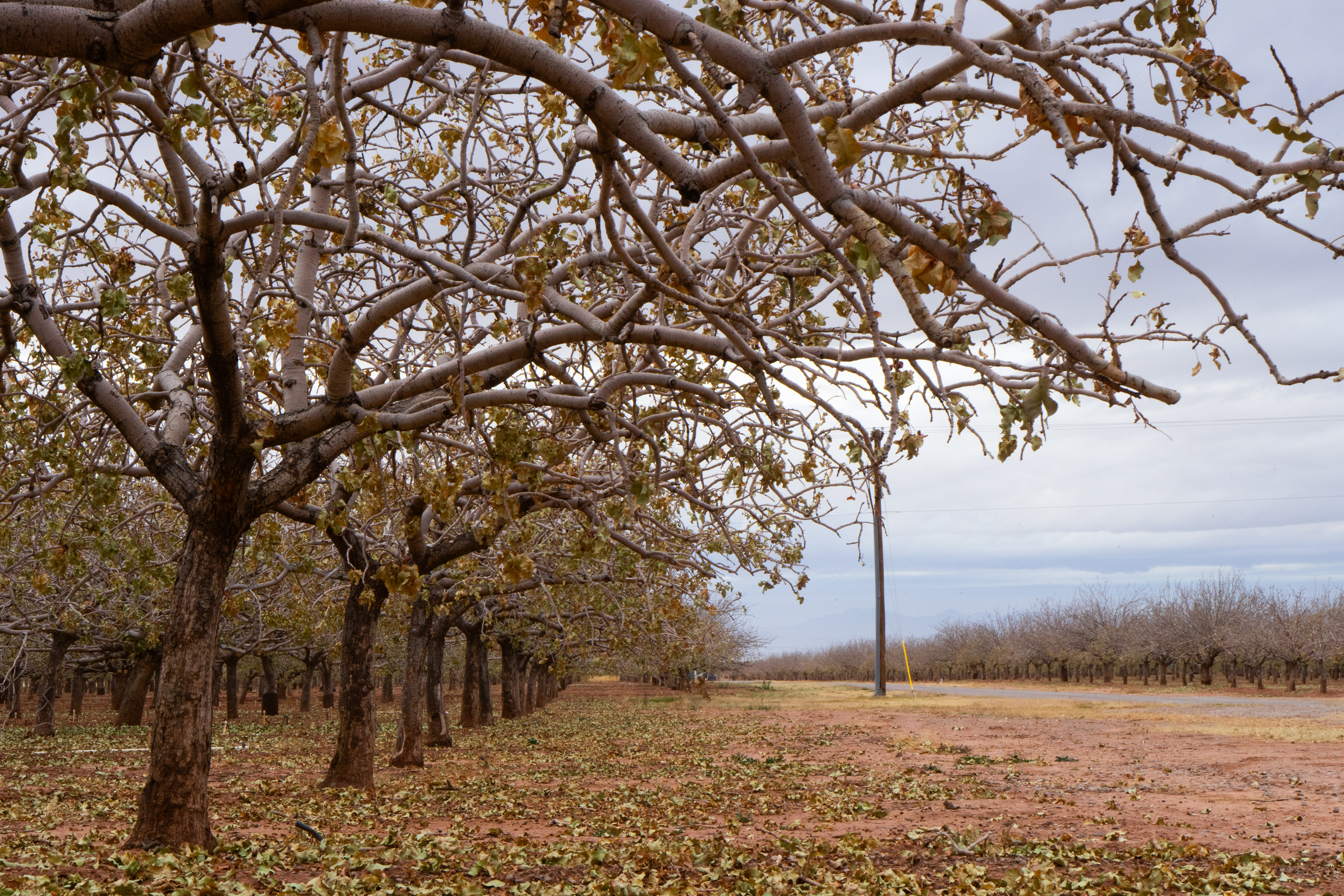
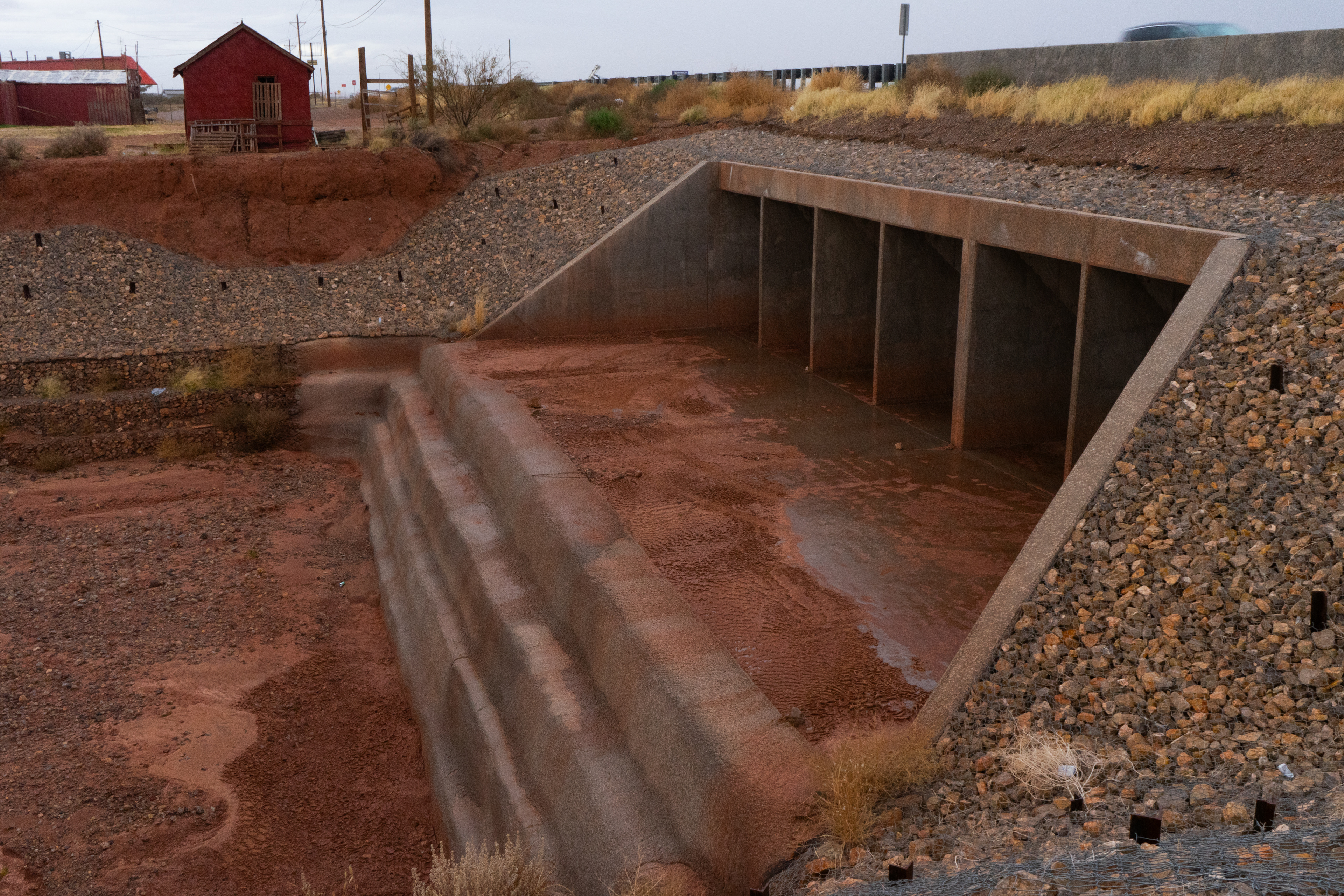
We’ve been following signs for the “World’s Largest Pistachio” in Alamogordo, and we’ve just driven over a hydrological structure managing water movement down from the mountains and protecting the road. The water has cut a 10 or 15 foot high little gorge in the red earth, and it looks like the perfect thing to photograph. Really serious stuff. Existential stuff. Military Installations, Civil Engineering Projects, the ways people conspire to protect themselves from death in the desert, and I realized the best thing I could do was exactly what everyone else was doing: wait in line to take a photo of the people I came here with in front of the stupid pistachio. On the way home we drove past a hotel called “The Big Chile,” but there was no line to take a photo with The Big Chile in front of this hotel. The Chile needs to be erect. As it stands… well, it doesn’t. It lies. The Big Chile is horizontal. I’m guessing it was cheaper that way. Put that bad boy up vertical, get some billboards, and people will come. They will make their families smile at how stupid it is, and have something to remember them with when they all leave. As it is, I did not take a picture of The Big Chile.
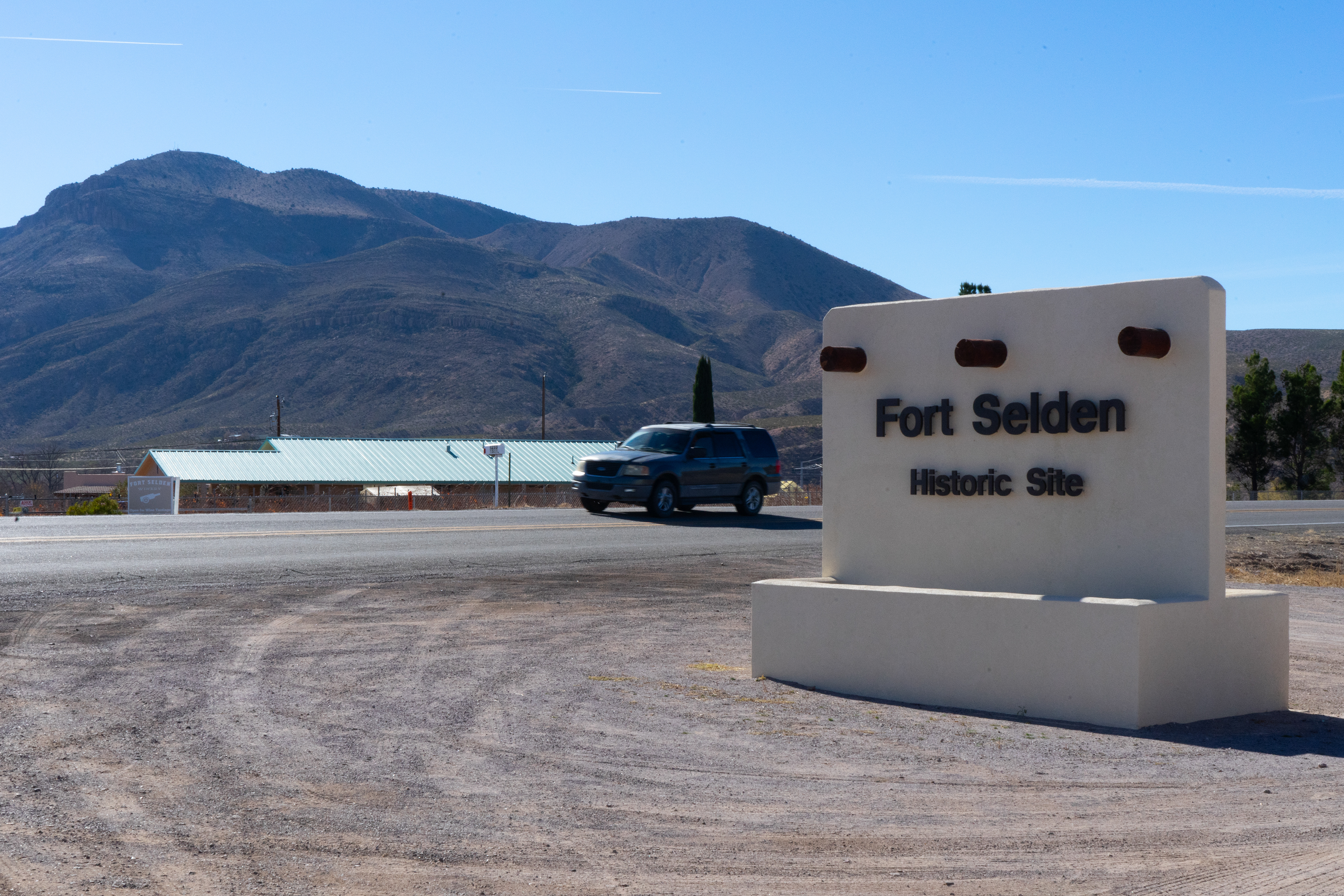
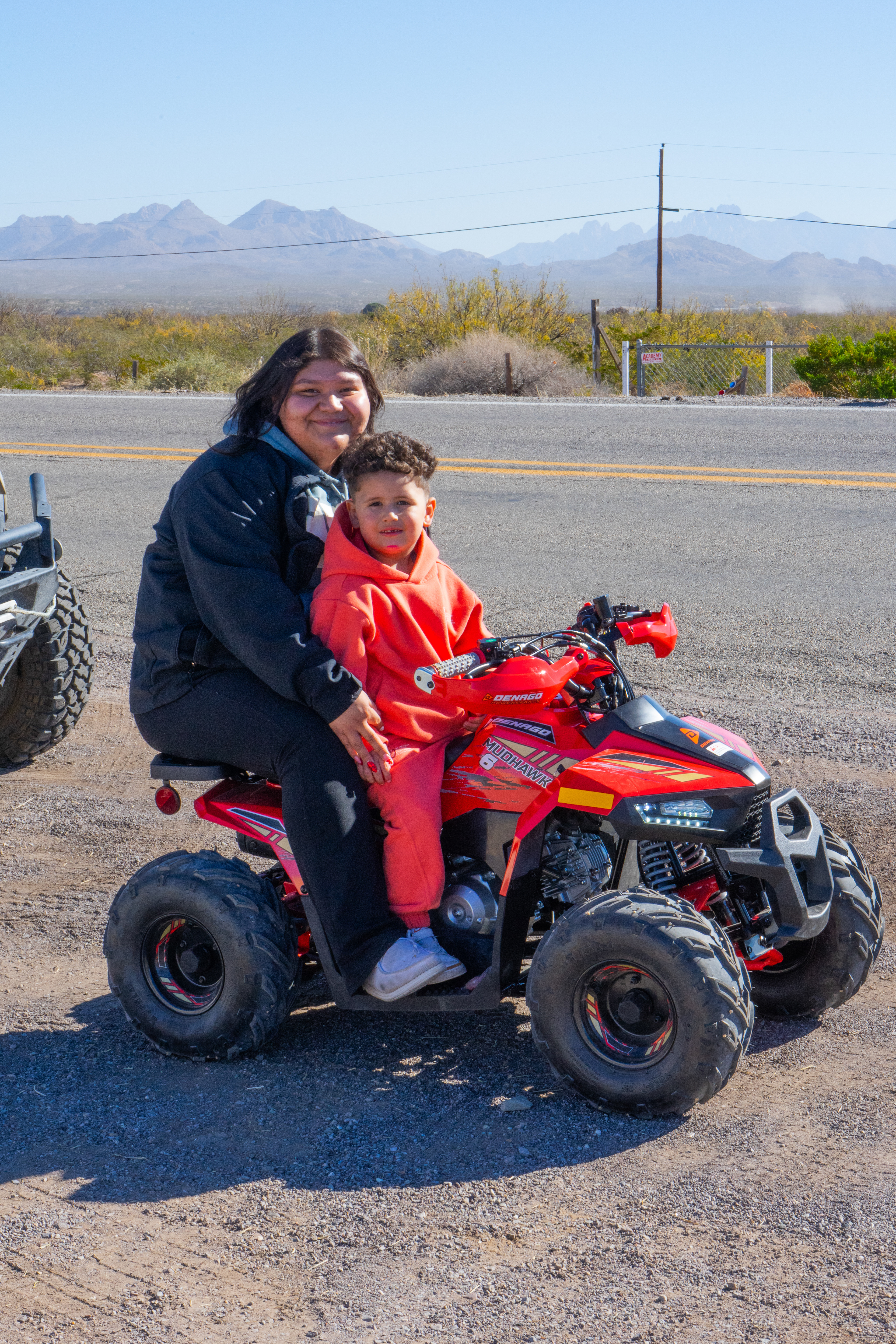
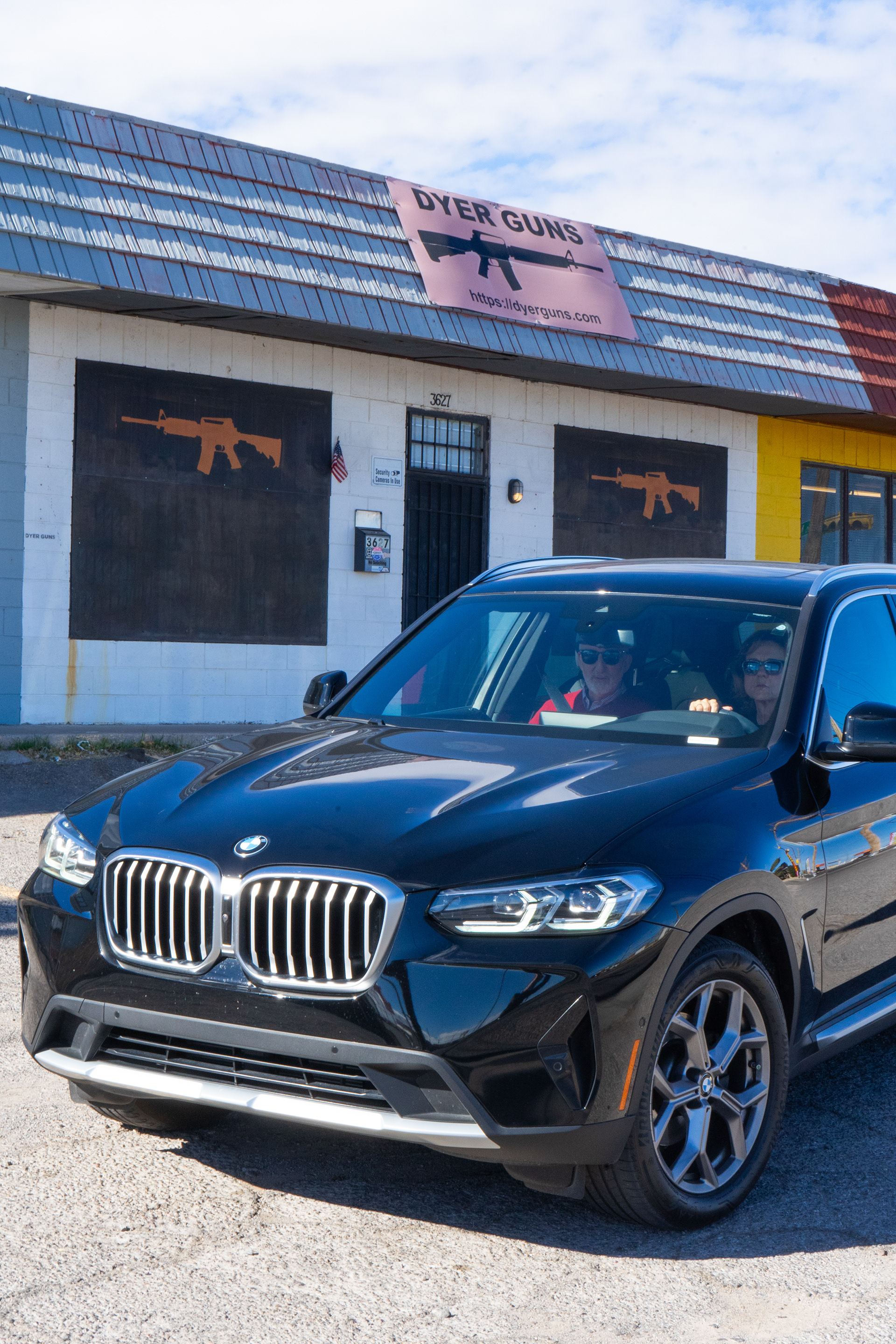
The same aunt that told me she had a spiritual experience out here, also told me that she moved here because of the people. We were driving around, in her Escalade, looking for the entrance to a museum concerning Fort Seldon, a remainder of the Indian Wars, when a native looking family came along in side-by and riding an ATV. She asked them how to get into the museum, and I stopped and asked if I could take a photo of them. They politely said yes, and drove off with a “Have a blessed day.” “You too.” I said it slowly, cherishing the meaning of what she had said to us. To me. For the first time. My aunt says, “it’s the people,” that’s why she moved here, because “they’re …”
She trailed off.
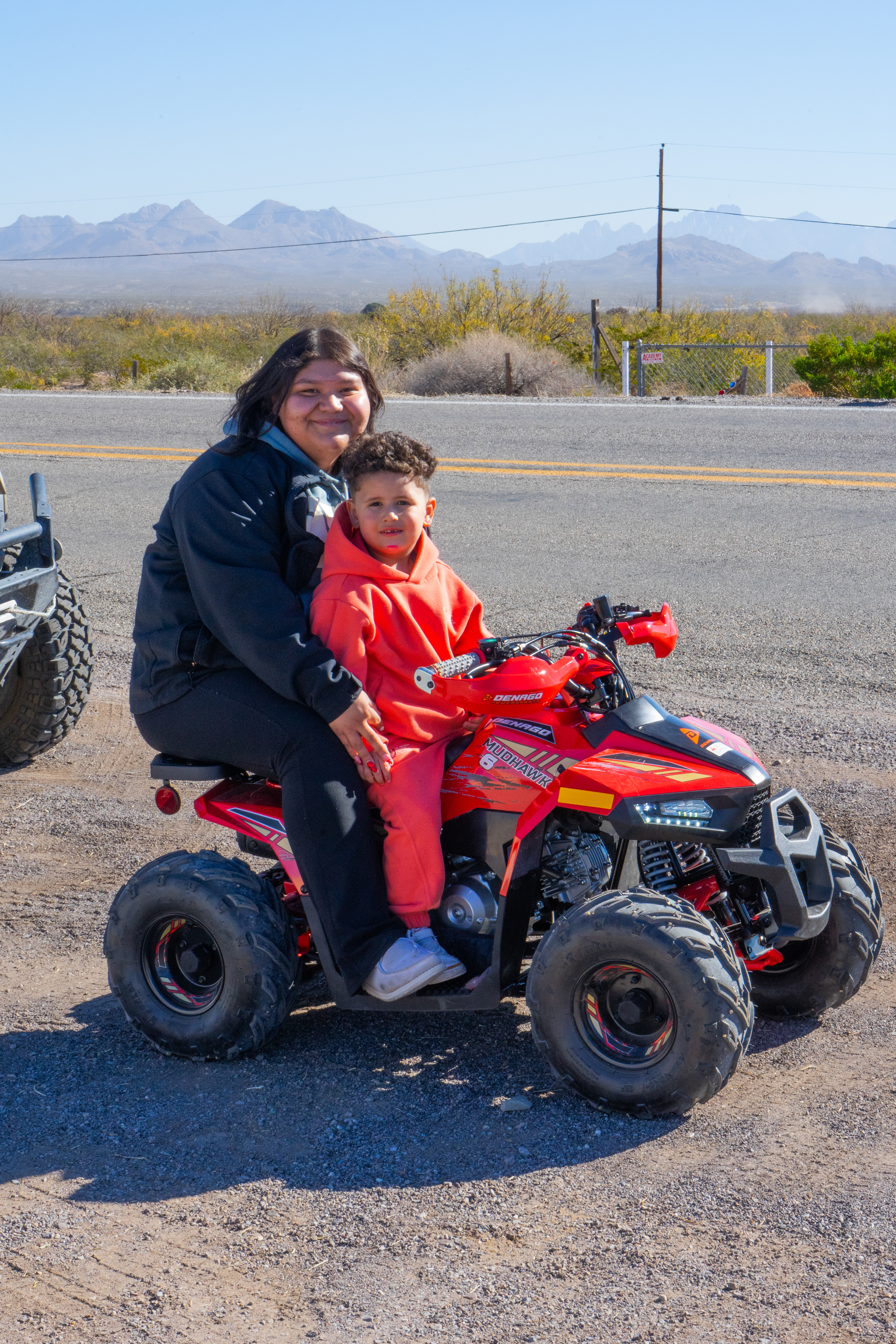
ATV Family, 2025, digital photograph, 4000x6000 pixels
I once took a girlfriend onto a strip mine near Morgantown West Virginia. We walked around it in the cold for hours trying to get a photograph because I thought I’d make a painting of it. We couldn’t. It was too large, too enveloping. It could not be photographed. It could not be pictured. The uniform enormity, the sheer amount. There were different areas, all mostly one dark gray, chiseled into the sky. You could walk from one part to the other, and they were different, but I couldn’t describe them to you, or show you what it looked like to be in one area as opposed to being in another. I live in New York, which, of course, I think is beautiful, but is covered in shit and graffiti and trash and rats and unbelievably cruel poverty and violence and the worst things men do to each other. I have never been anywhere that wasn’t beautiful, and the world is overflowing with meaning and purpose. There is a superabundance of it. Las Cruces gives me anxiety because I think it shouldn’t exist. There isn’t enough water, it was built for cars not legs, etc. Manhattan makes sense to me because they say the only reason the sky scrapers are so tall is because of the unique strength of Manhattan Shist, the pure and unique bedrock, and because of the confluence of rivers and the protected bay created by Long and Staten Islands, all coming together to create, naturally, geographically, the center of world trade. Absurd. But that I look at the sky, I do not see nature in New York. I find it strange that people in Las Cruces shut out death with their air conditioning and cars, without considering how much New Yorkers have done, floor by floor, to push God back into the sky, all the way back out into space. And we draw curtains on the stars with light pollution. The frightening thing about Las Cruces is just how close Death is. How close a particularly inhospitable nature is. That the neighborhoods run right up against the desert, and they just keep building and building, and that the line is so visible. New York is comfortable because its been here a while, because I can look at it and think this is the way it should have been. While in Las Cruces, I have to look at it and make that decision myself. The sky touches the earth and they’re both bigger than me, and in New York, you just don’t have to see that.
“I am at home in the West. The hills of the coastal ranges look “right” to me., this particular flat expanse of the Ventral Valley comforts my eye. The place names have the ring of real places to me. I can pronounce the names of the rivers, and recognize the common trees and snakes. I am easy here in a way that I am not easy in other places.” - Joan Didion, South and West
“An Elder said: Here is the monk’s life-work, obedience, meditation, not judging others, not reviling, not complaining. For it is written: You who love the Lord, hate evil. So this is the monk’s life — not to walk in agreement with an unjust man, nor to look with his eyes upon evil, nor to go about being curious, and neither to examine nor to listen to the business of others. Not to take anything with his hands, but rather to give to others. Not to be proud in his heart, nor to malign others in his thoughts. Not to fill his stomach but in all things to behave with discretion. Behold, in all this you have the monk.” - The Wisdom of the Desert, Translated by Thomas Merton
I'm not a monk. I’m back now, in a coffee shop, where people are discussing how walkability creates community, about how they’ve made the right decision on where to live, about how it has been ultimately good to work as hard as they do to be here (which isn’t necessarily very hard, mind you). There’s a few things I want to go back and take pictures of — Juarez, the dam, some more people. I want to spend some more time with my parents.
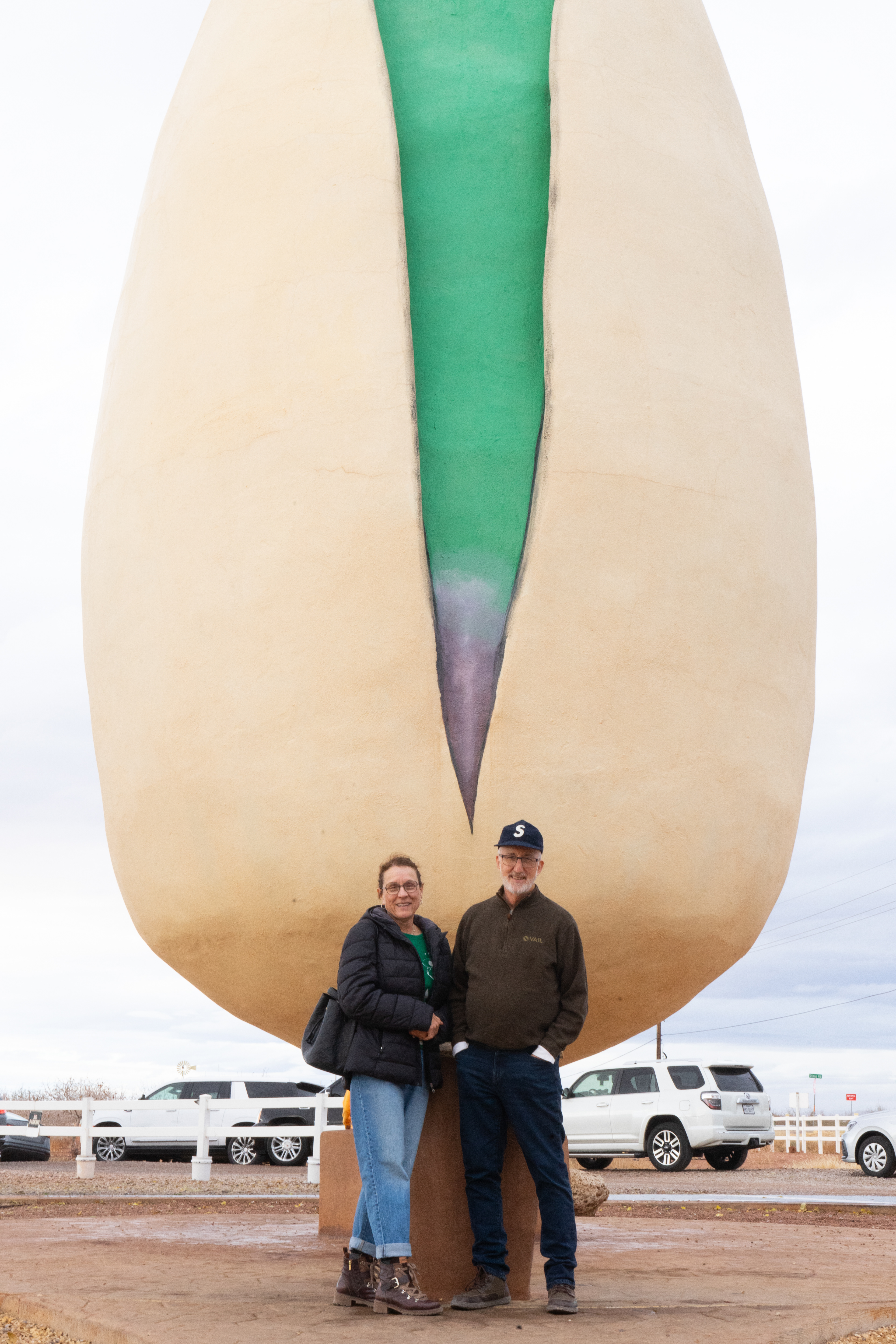
Mom, Dad, and the Big Pistachio, 2025, digital photograph, 4000x6000 pixels
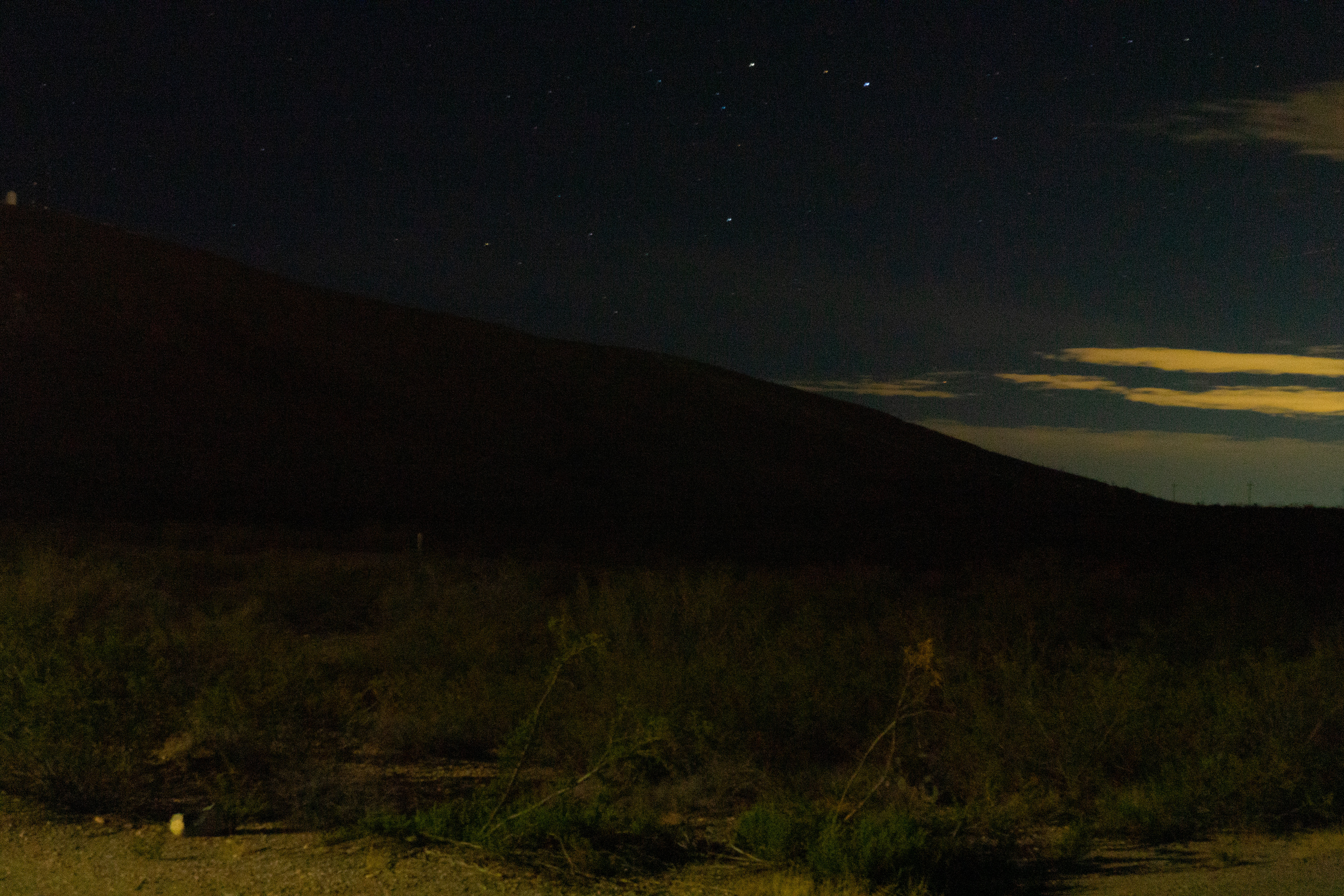
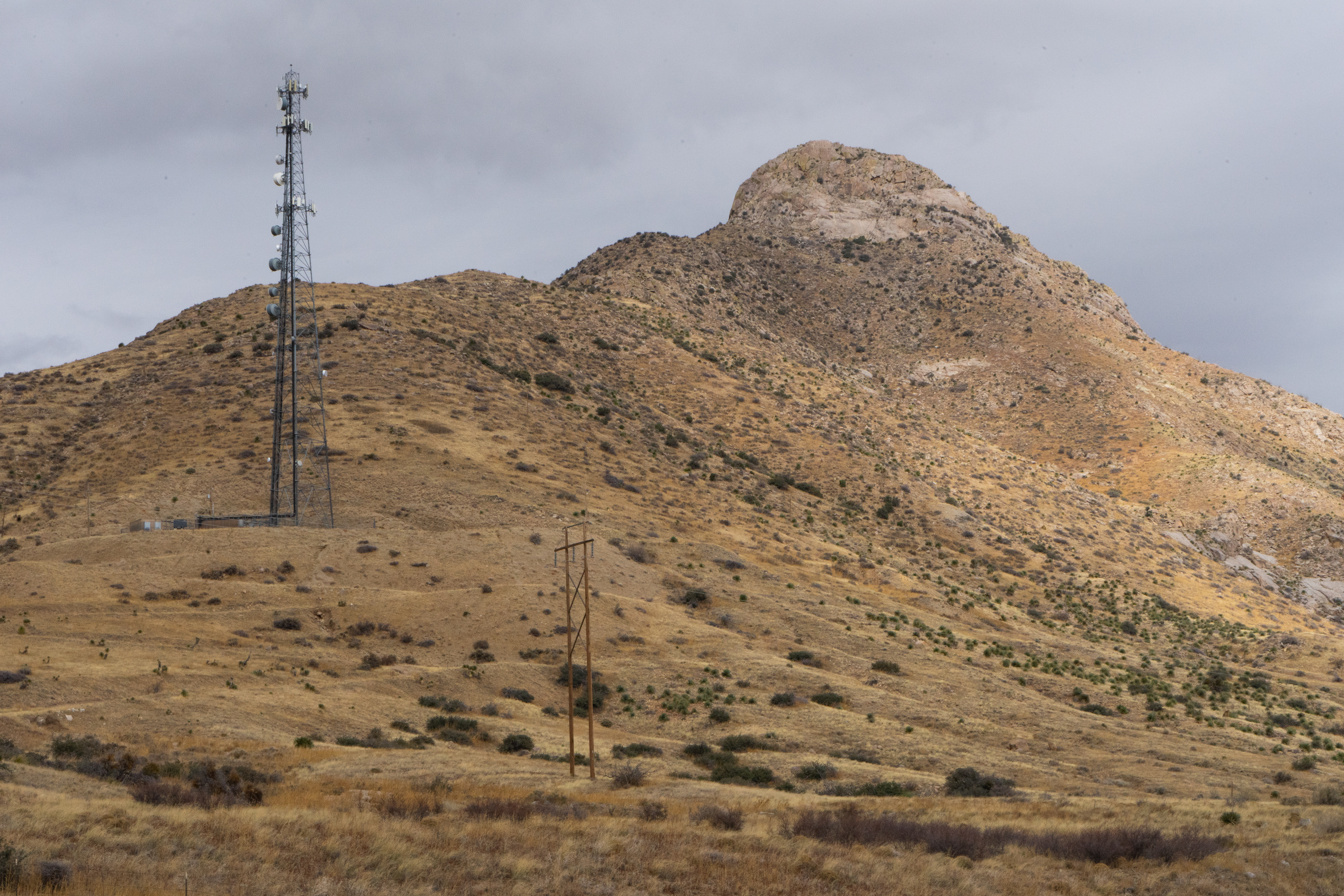
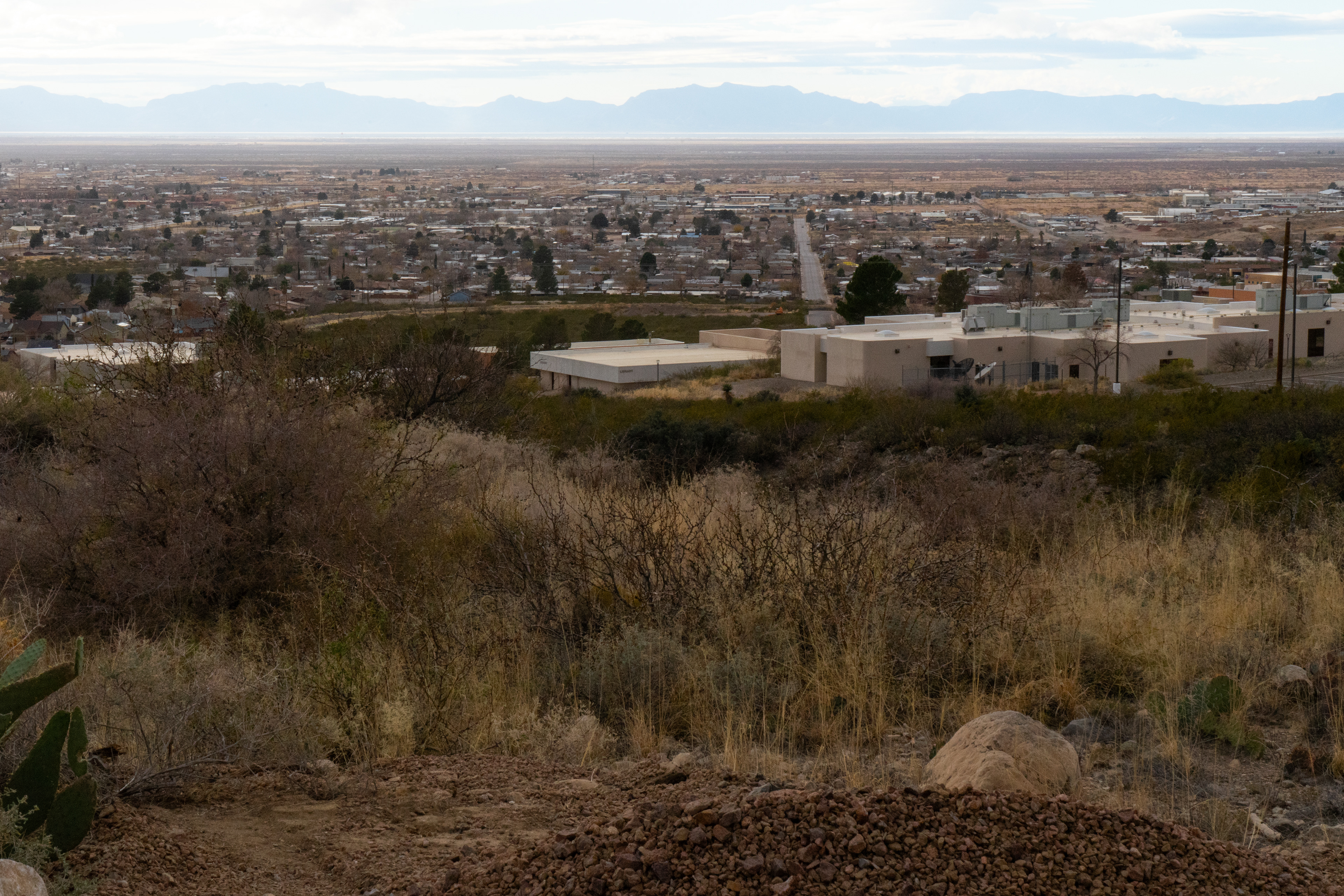
"A" Mountain, 2025, digital photograph, 4000x6000 pixels
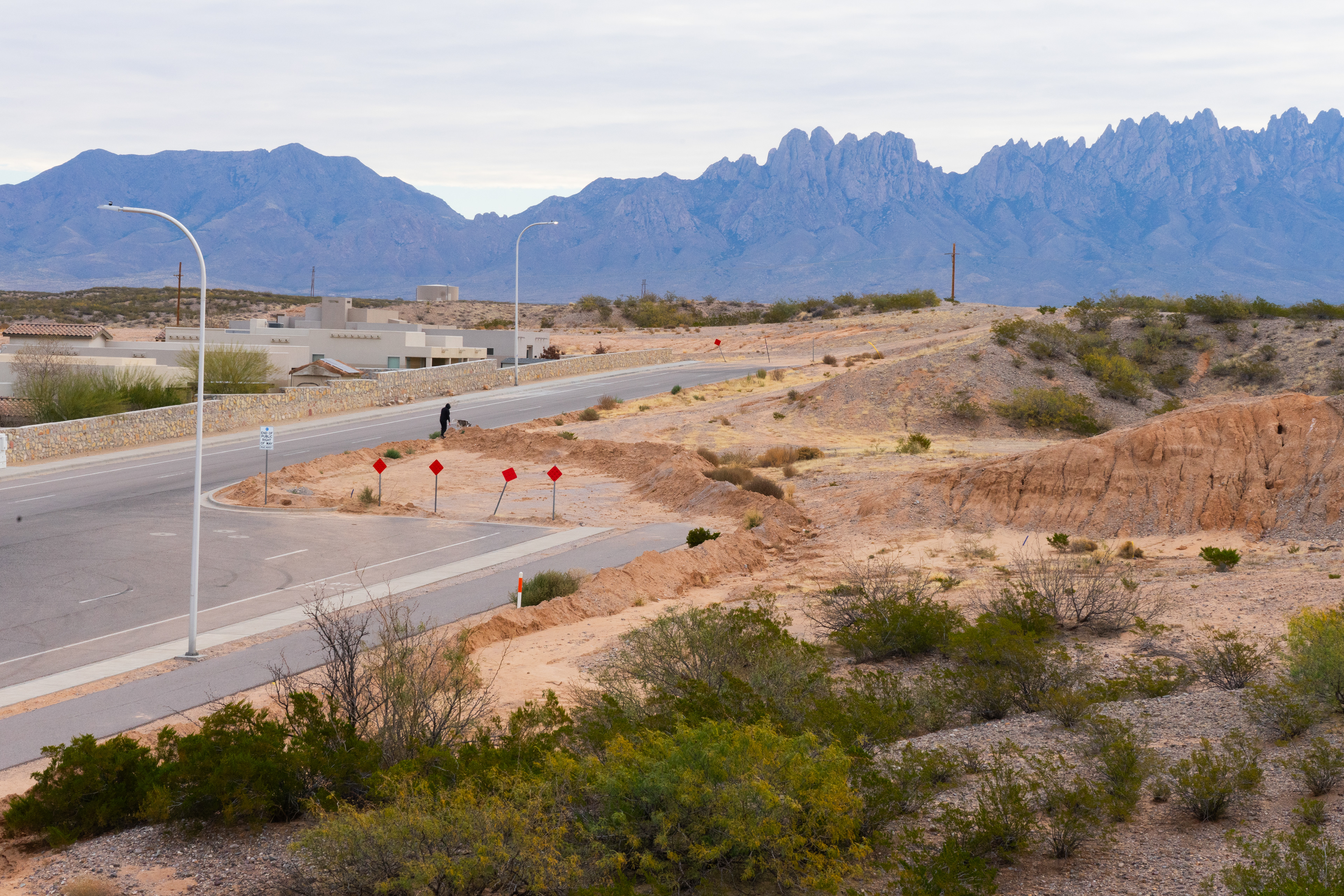
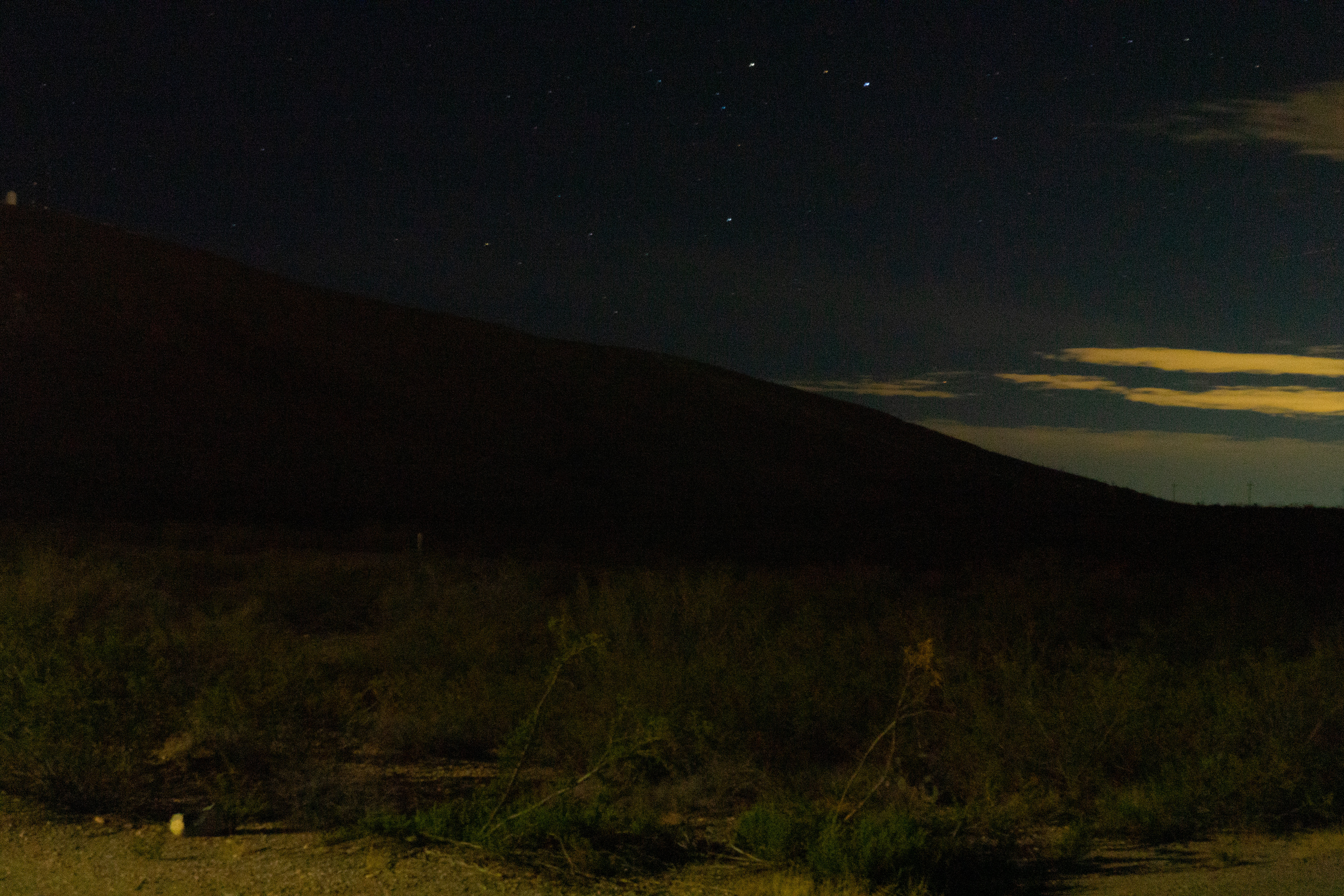

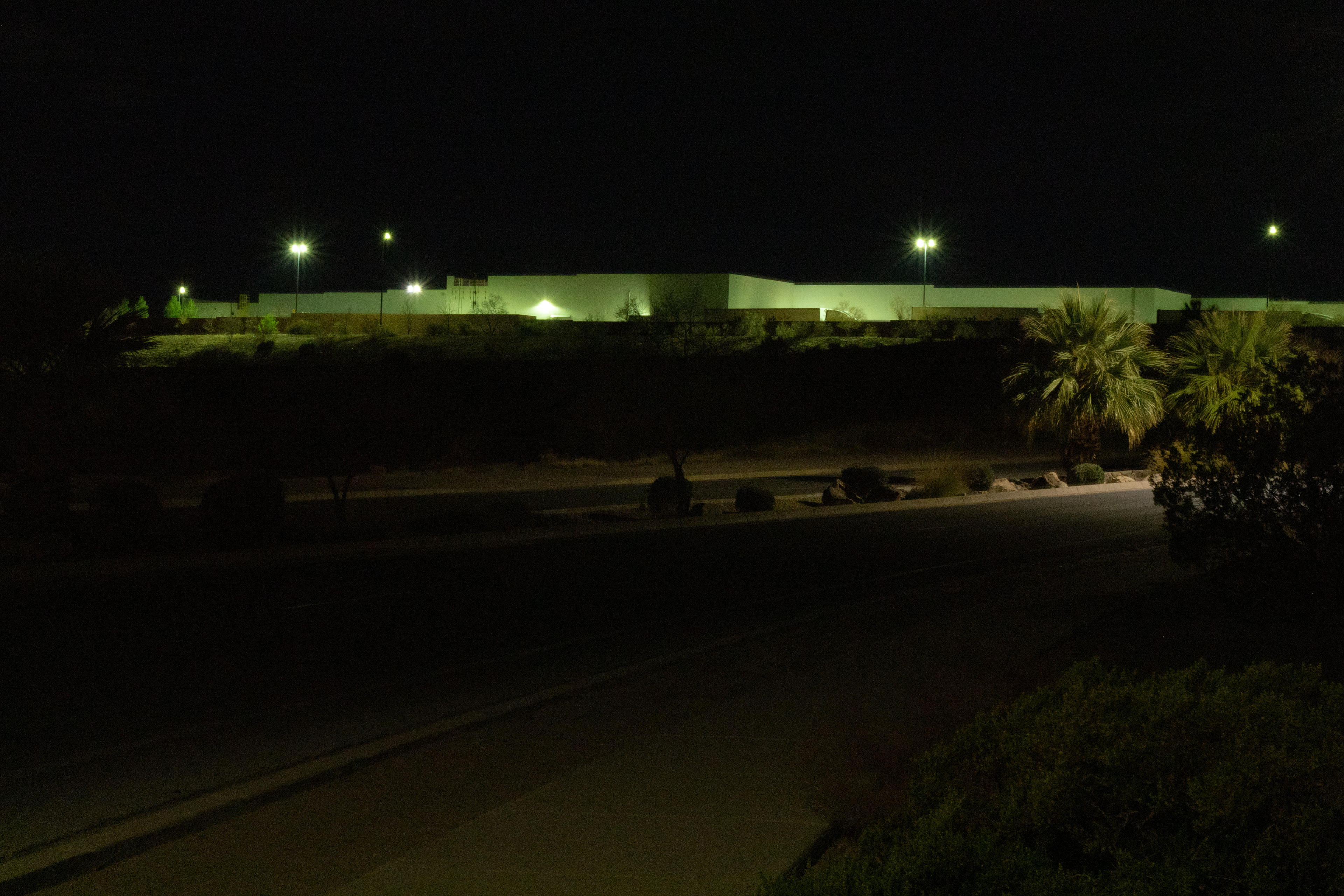



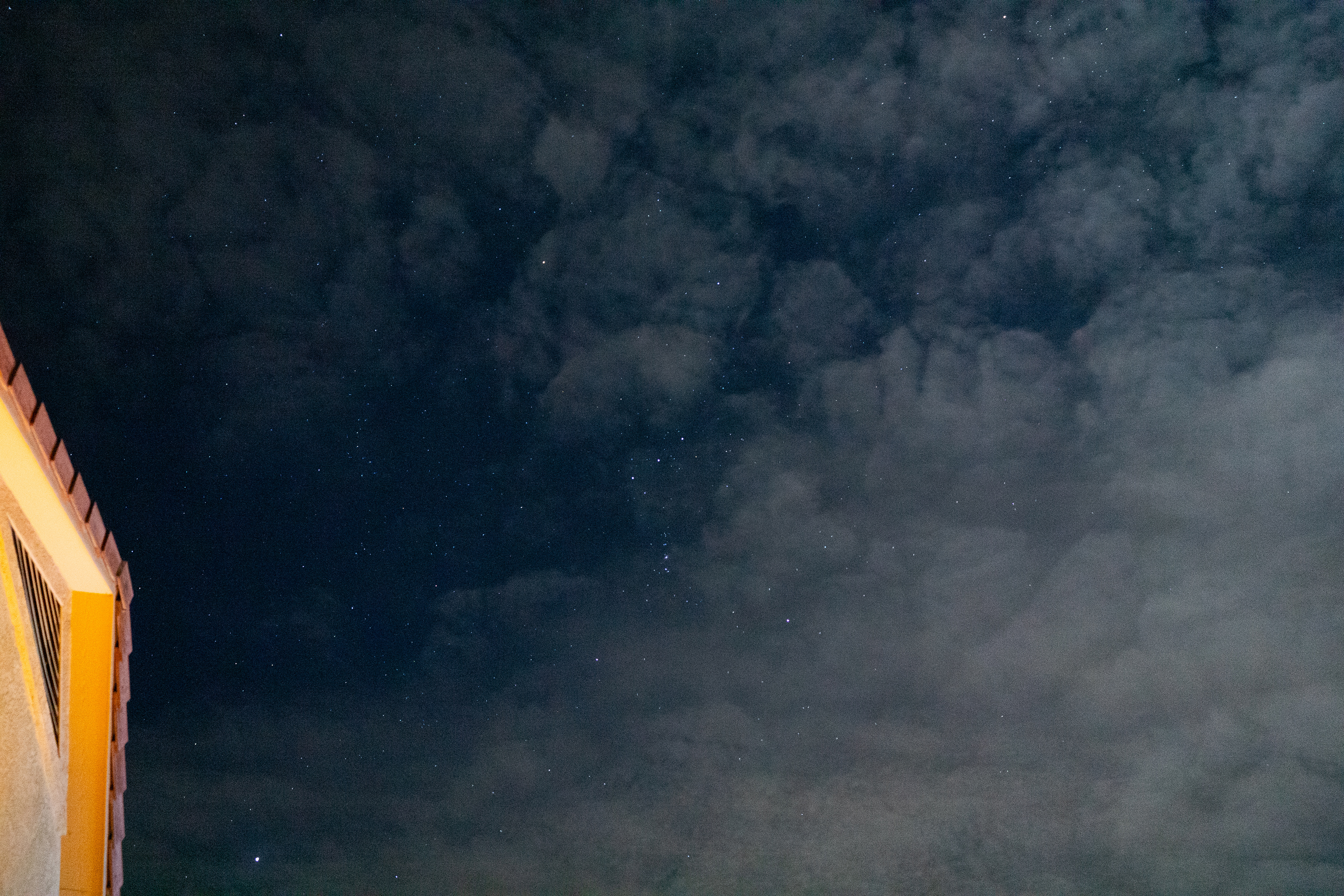
Orion in the Backyard, 2025, digital photograph, 4000x6000 pixels